

THE SOCIAL UNIT

The Social Unit
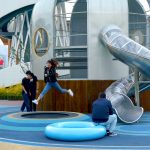
West Bund | Shanghai | Object Plaza
 
Concept
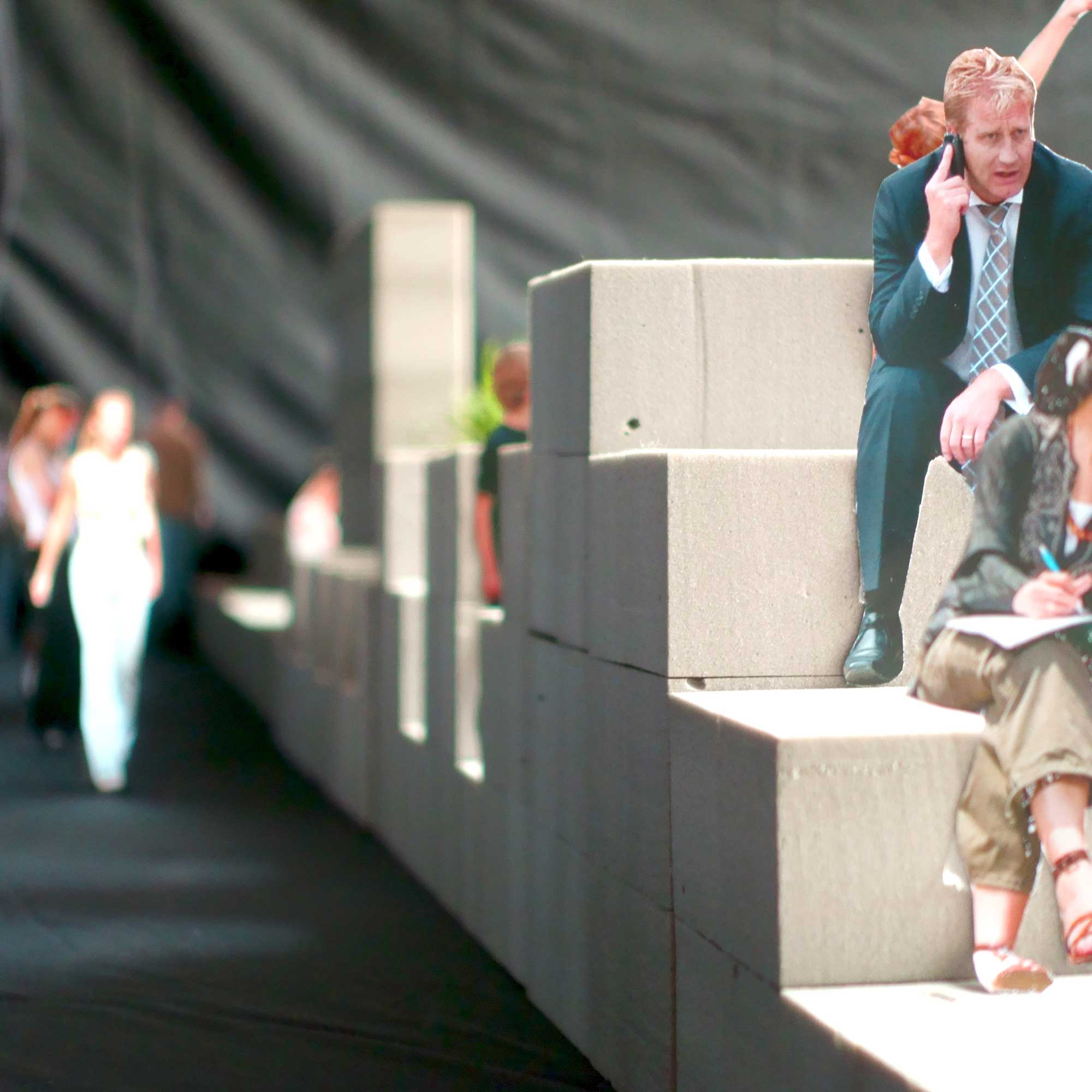
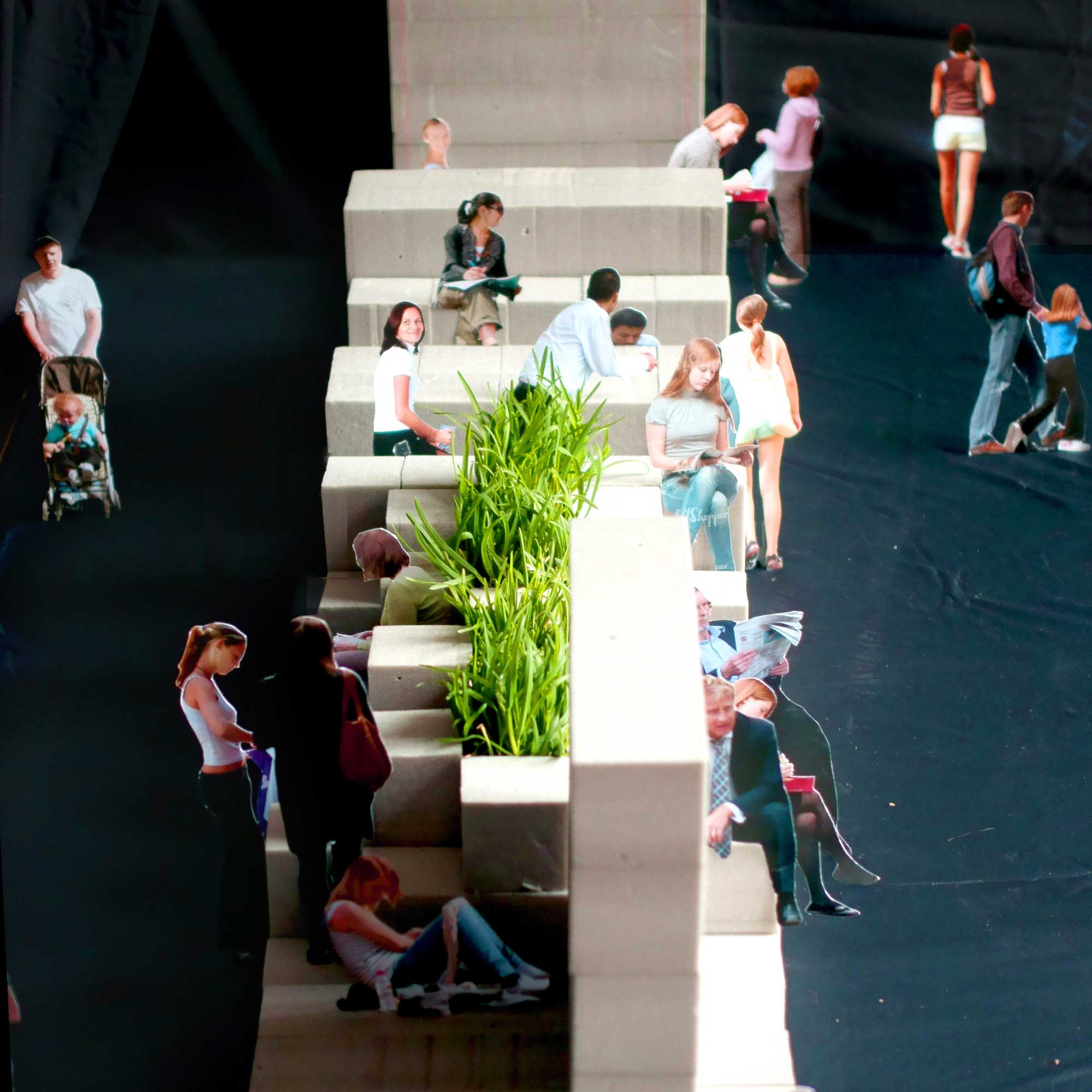
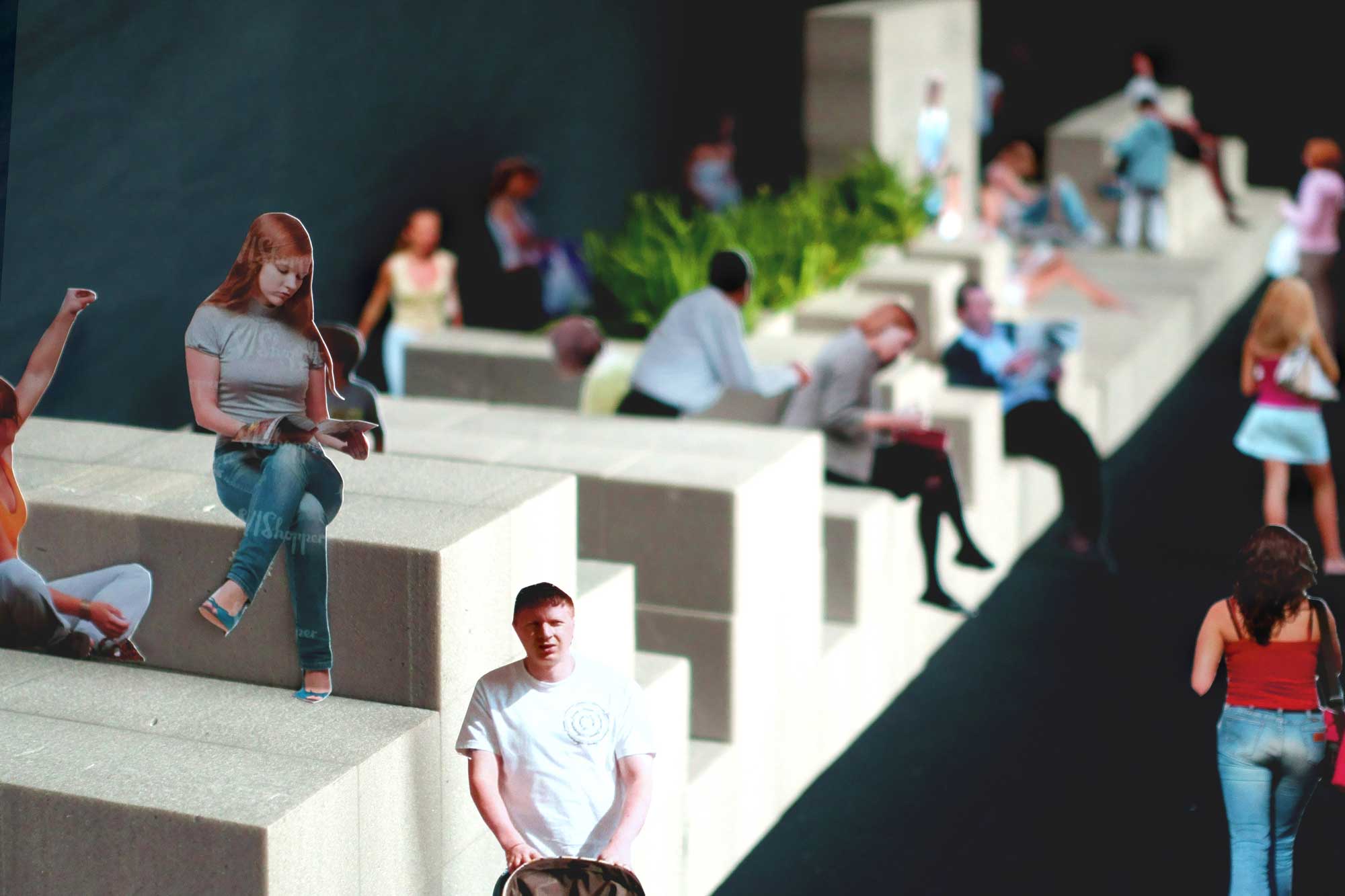
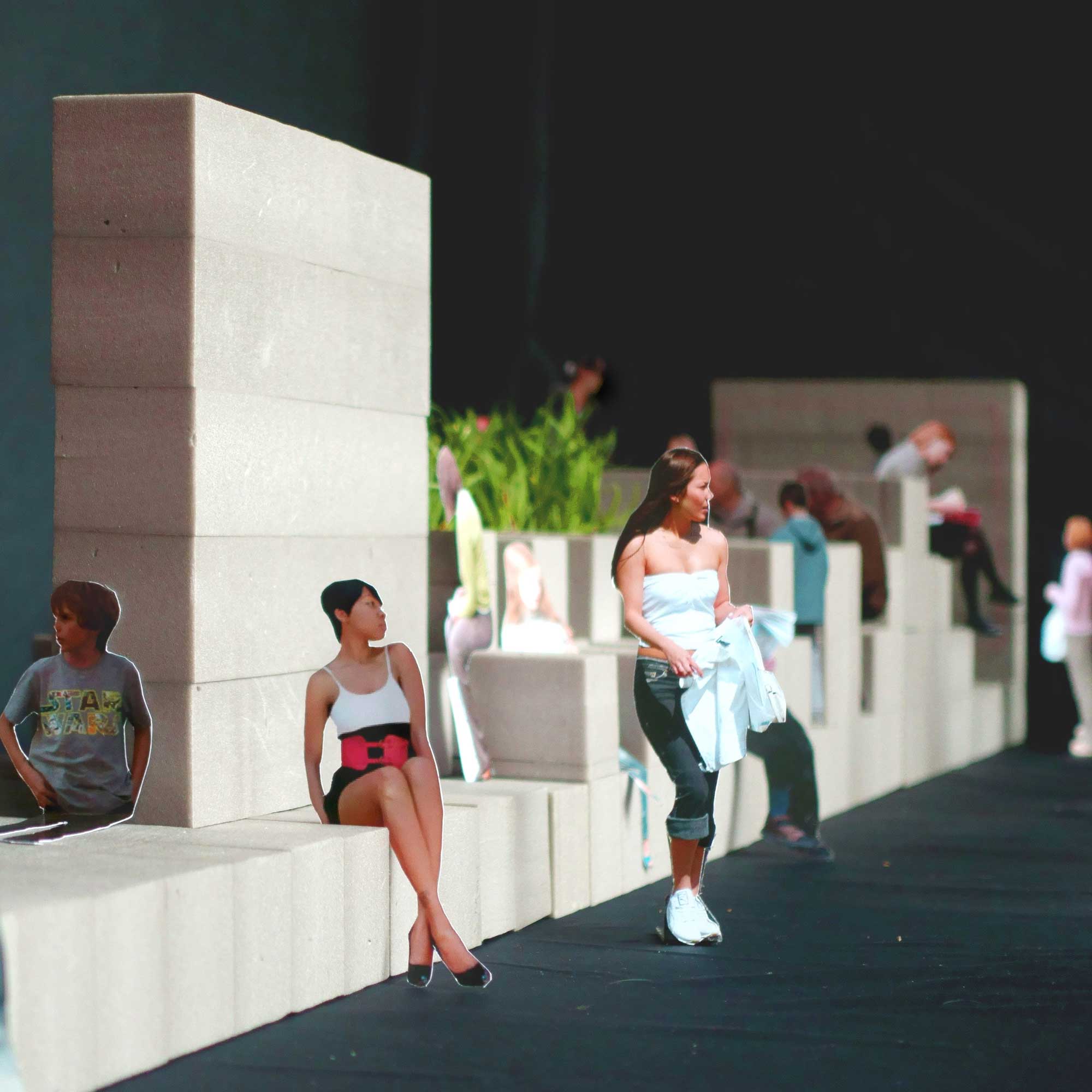
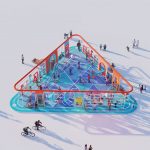
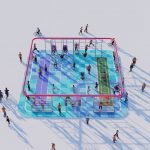
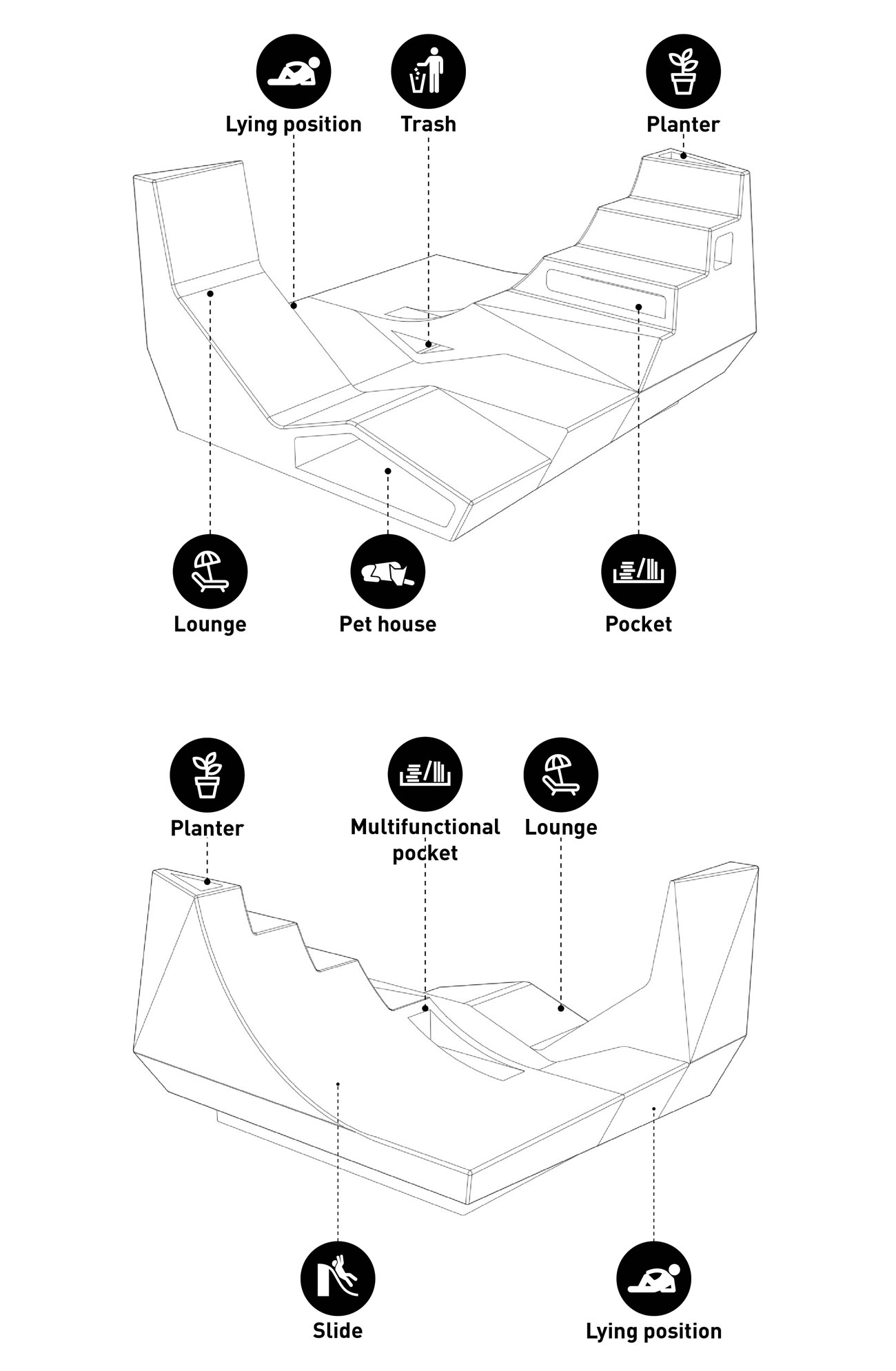
The concept is to generate a scalable object as a platform for enhancing social interaction synergies, hosting multiple functions and several users at the same time.
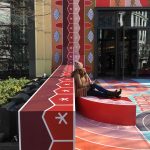
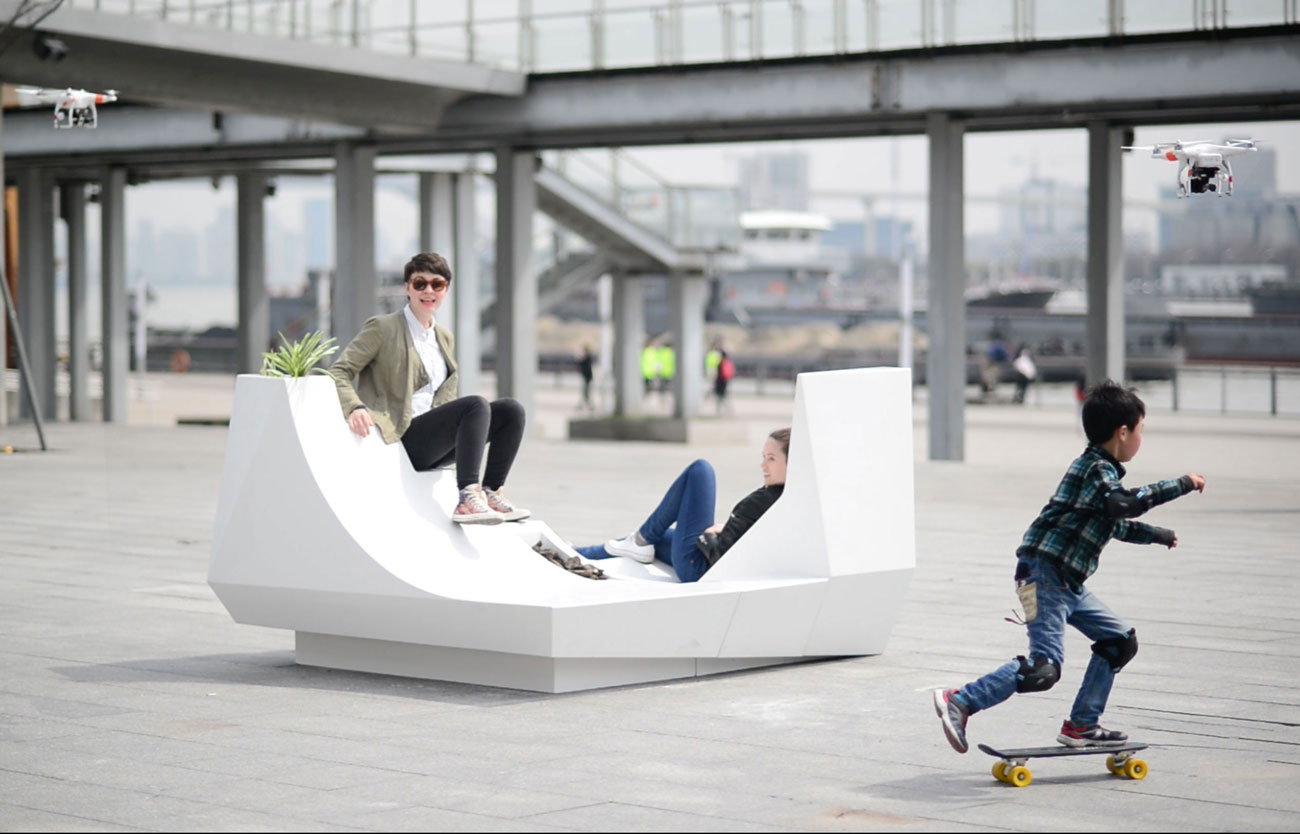
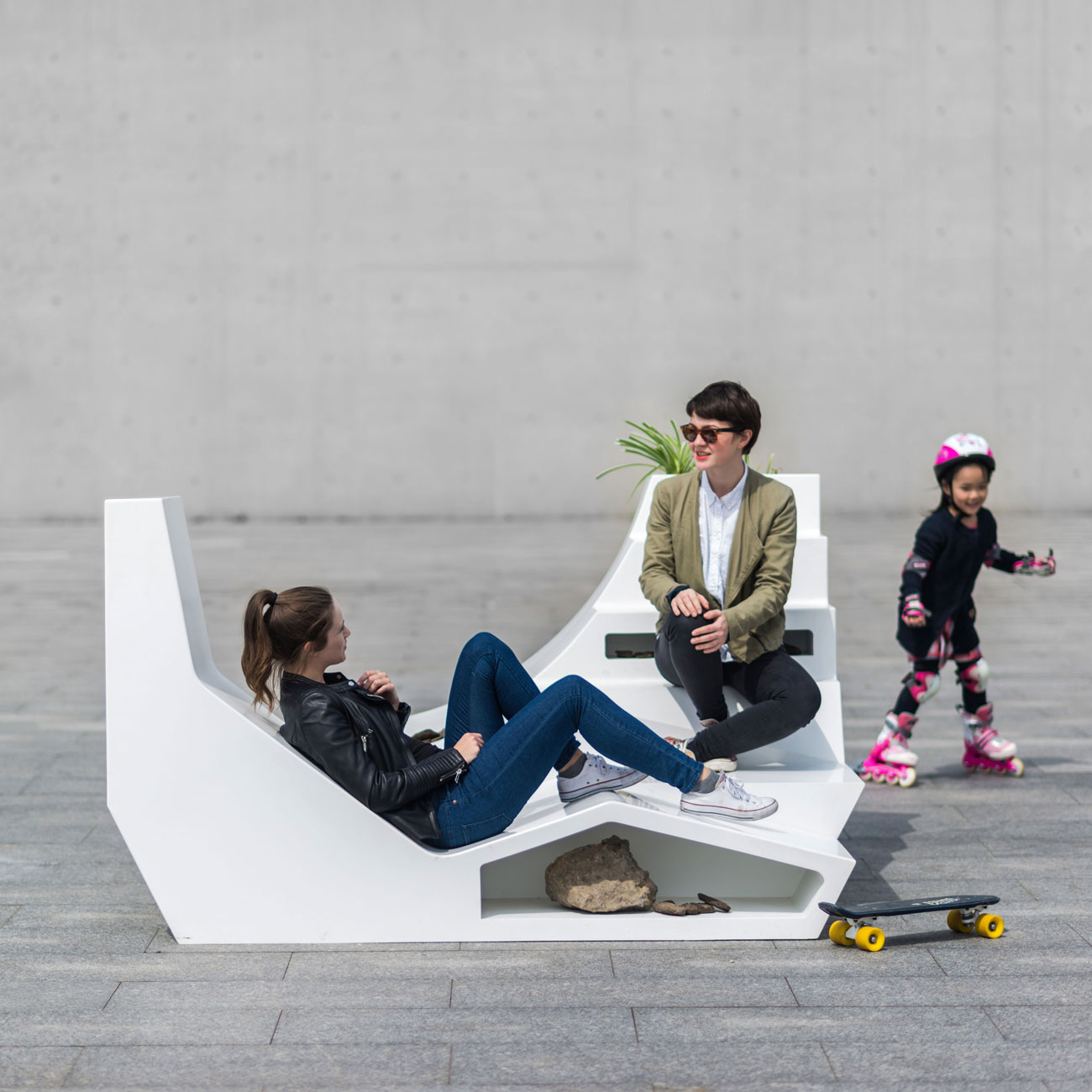
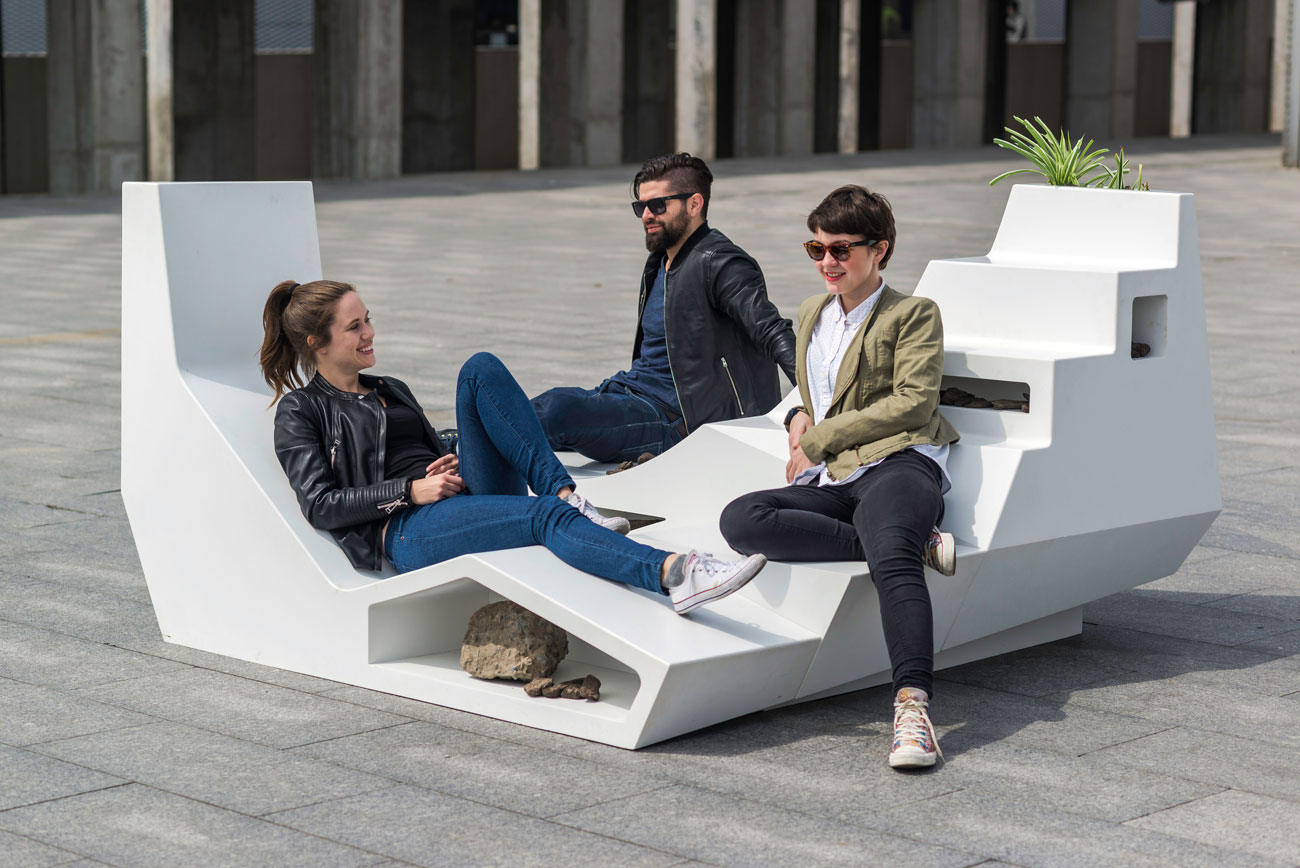
A multi-functional object for resting and playing, it can host up to 5 users simultaneously. Its shape is specially designed to encourage social interactions among its users. It offers an elegant spot to stop, rest, sit, lay down, contemplate, observe, chat, play, and any other activities that users may come up with.


©100architects


© Amey Kandalgaonkar


The Social Unit is a trial to catalyze the integration of social interactions in residual public spaces of the renowned West Bund, Shanghai’s new art district.
After a process of rapid & radical urban transformation of such a scale, which turned the industrialized area into a Cultural Corridor, arises the opportunity of revitalizing residual pedestrian areas at the bank of Huangpu River.


© Amey Kandalgaonkar


© Amey Kandalgaonkar


As a small scale response to that matter, Cloud in the Bund appears as a mixed-use “object” that lies between urban furniture, sculpture, art and public space.
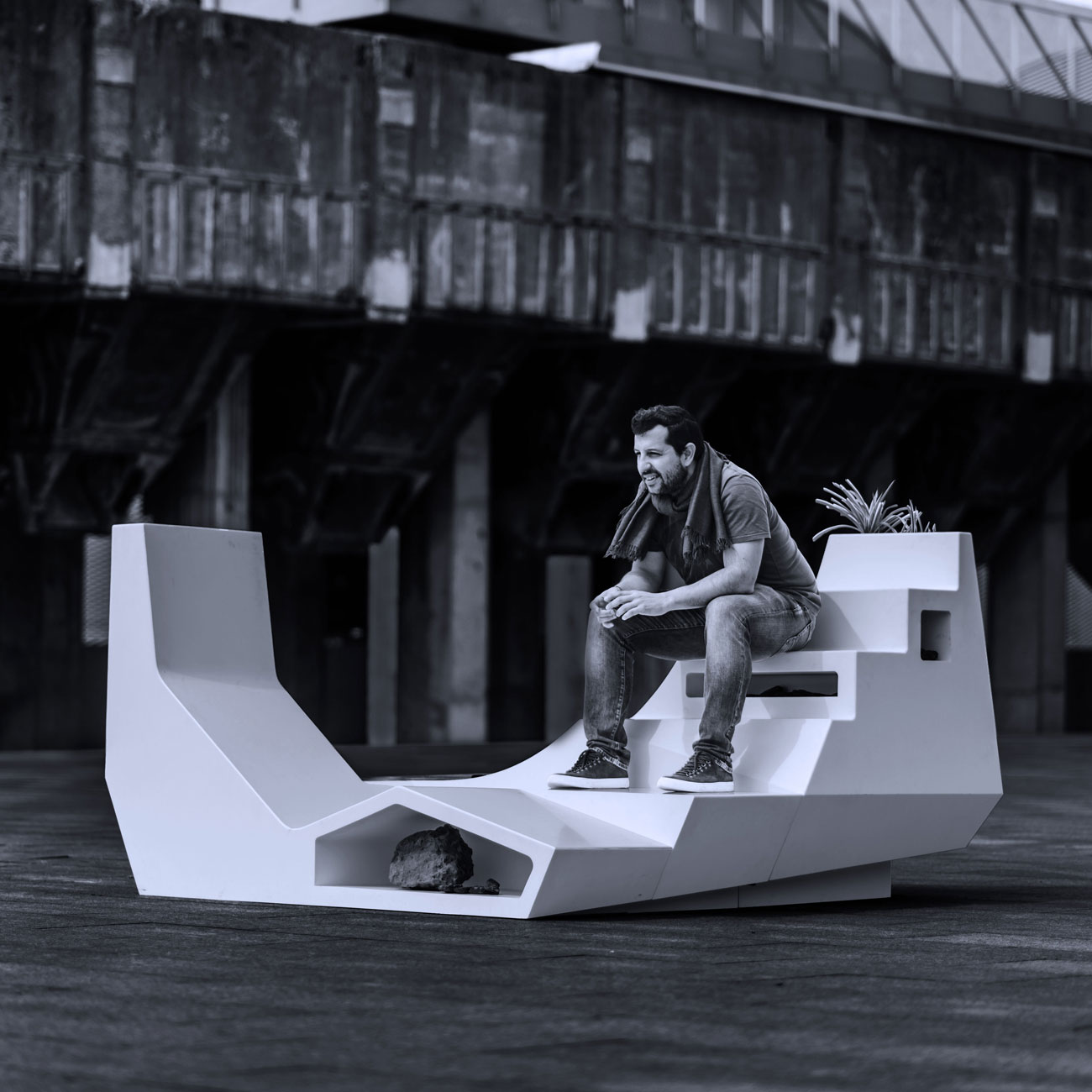
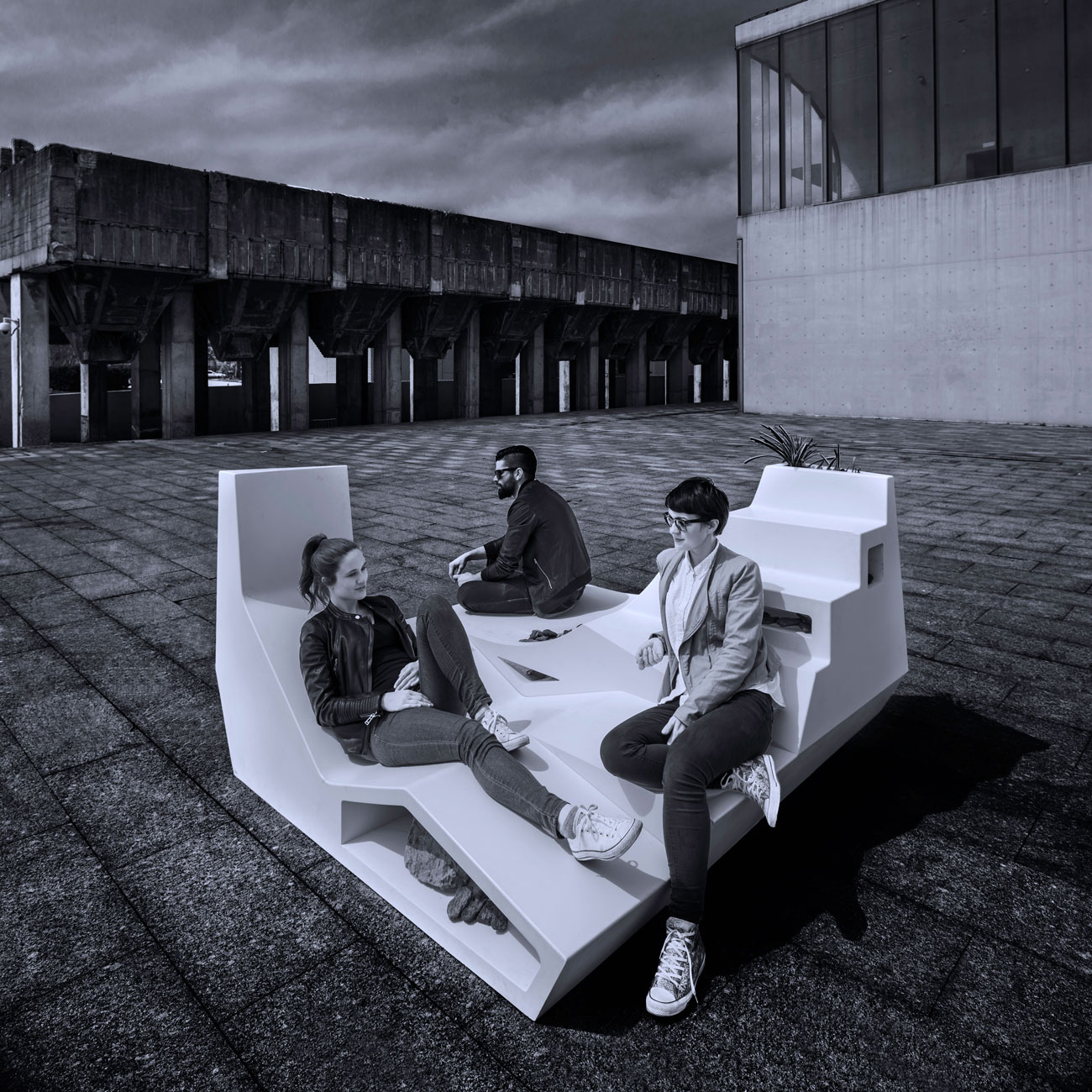
It is a multifunctional object designed to be used simultaneously by several people, literally to ease social interactions, offering an elegant spot to stop, rest, sit, lay down, contemplate, observe, chat, play, and any other activities that users may come up with.
 
In fact, its shape has been intentionally designed providing enough hints of how to use it, but flexible enough for the users to reinterpret it and customize their own way of using it, hence the object looks quite different from each side.


© Amey Kandalgaonkar


© Amey Kandalgaonkar


© Amey Kandalgaonkar


The aim was always to concentrate different functions in a single volume, which through its morphology would allow the users to interact from all its sides. , It is a condensed functional landscape for leisure.
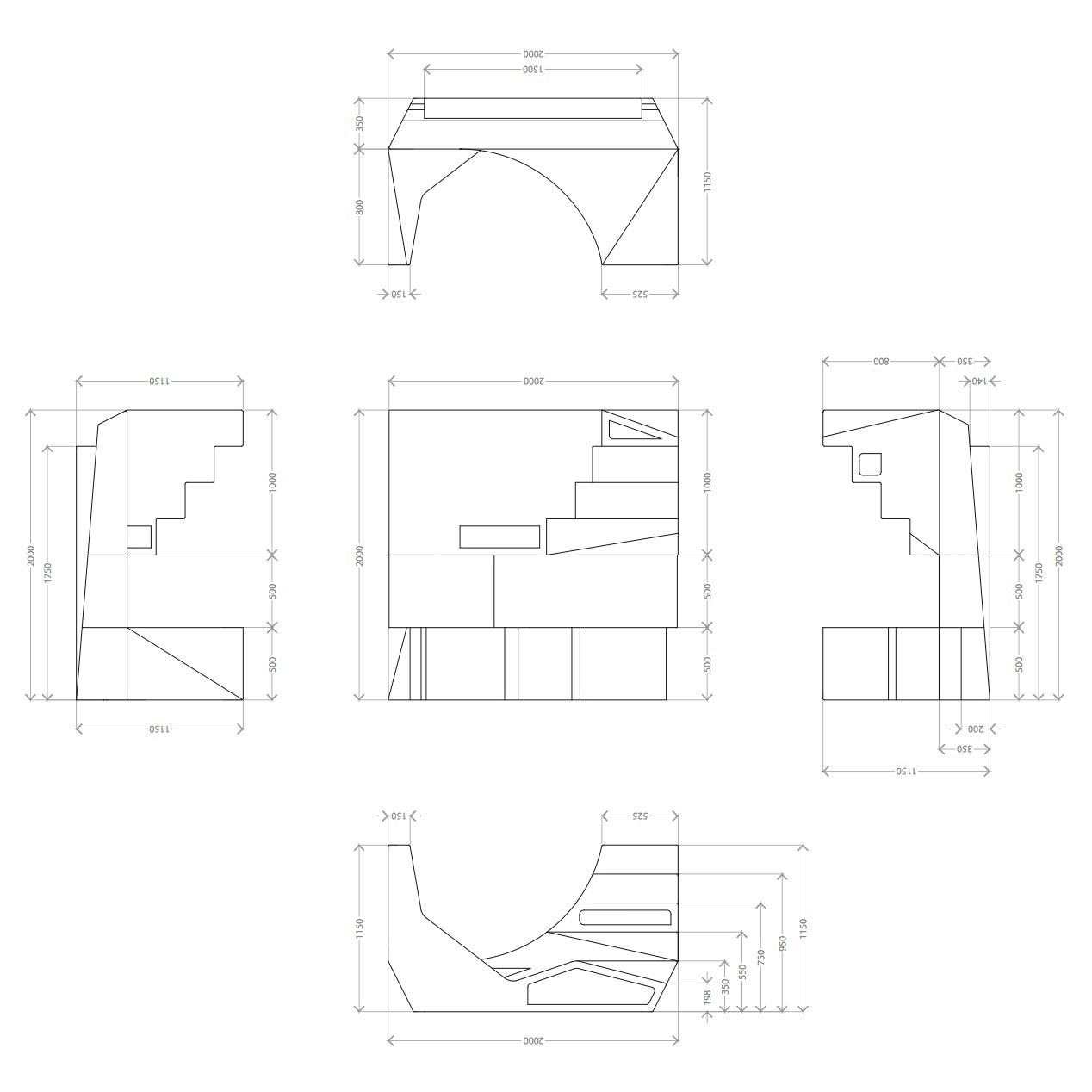
The object has been thought as a scalable modular urban furniture, able to grow in size & program by adding more functions to it.


© Amey Kandalgaonkar


© Amey Kandalgaonkar


This scalable functionality, added to the high performance of its materiality, makes it highly versatile to be displayed in different public colliding spaces, from riverfronts to squares, from pedestrian streets to hotel lobbies or shopping malls, etc…
The intention of making it look as a homogeneous and continuous object, as well as suitable for both, interior & exterior spaces, has led us to fabricate it in a solid-continuous surface, therefore the chosen material was Dupont Corian Solid Surface, due to its high performance and outstanding aesthetics.


© Amey Kandalgaonkar


©100architects


Project Credits
 
Project name: The Social Unit
Design: 100architects
Design team: Pang Xin, Marcial Jesus, Javier Gonzalez
Production: Dupond (Shanghai)
Location: West Bund, Shanghai, China
Area: 4 m2 (2 x 2 m.)
Completion: March 2016
Photographer: Amey Kandalgaonkar


SELFIE WALL

The Selfie Wall
Lisbon | Portugal
 
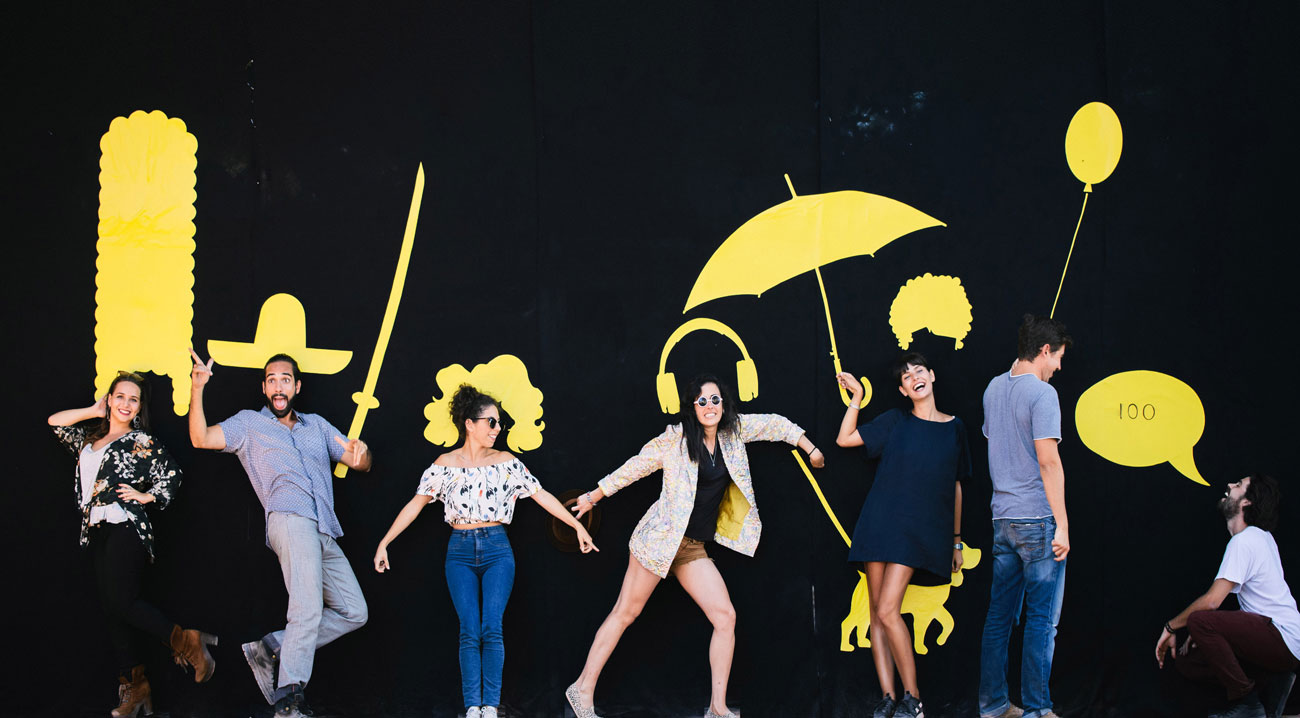
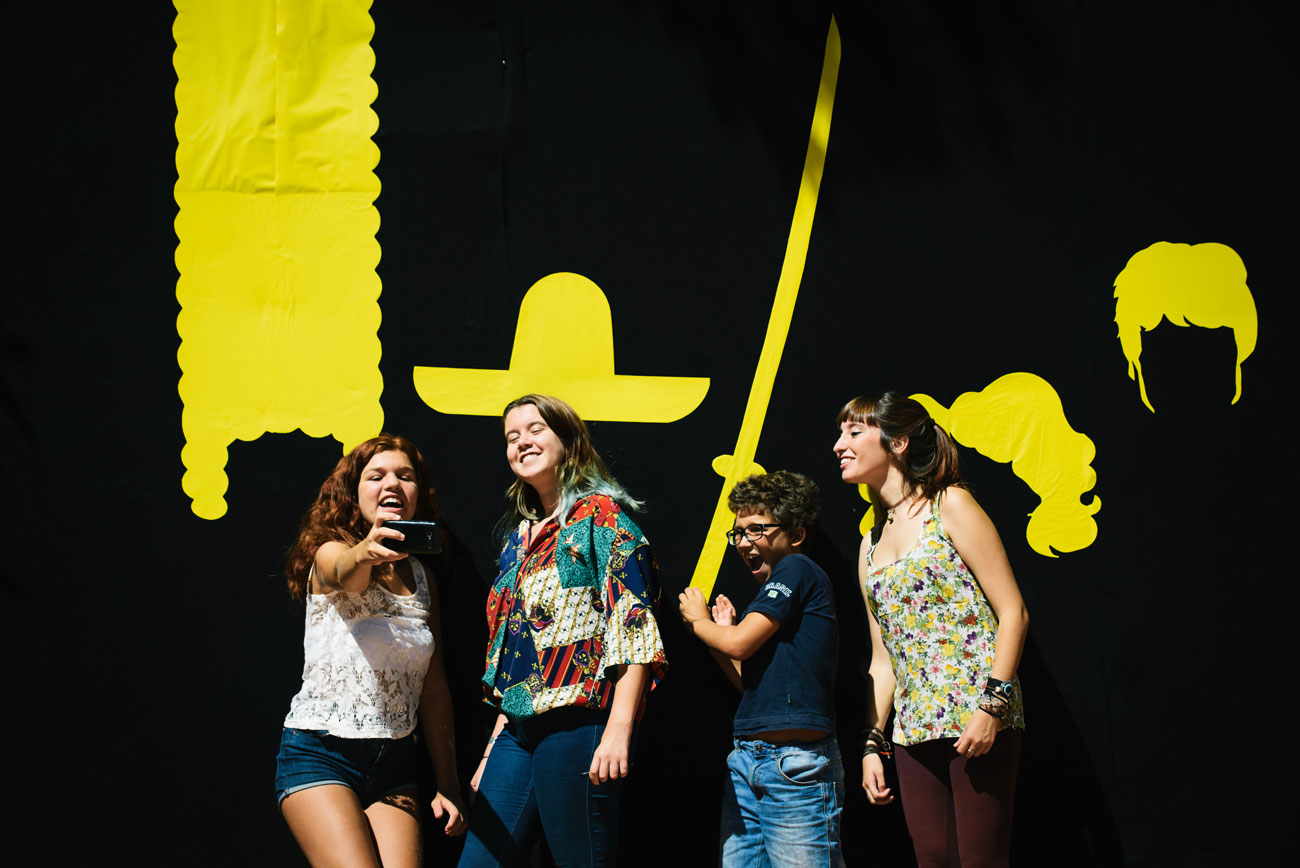
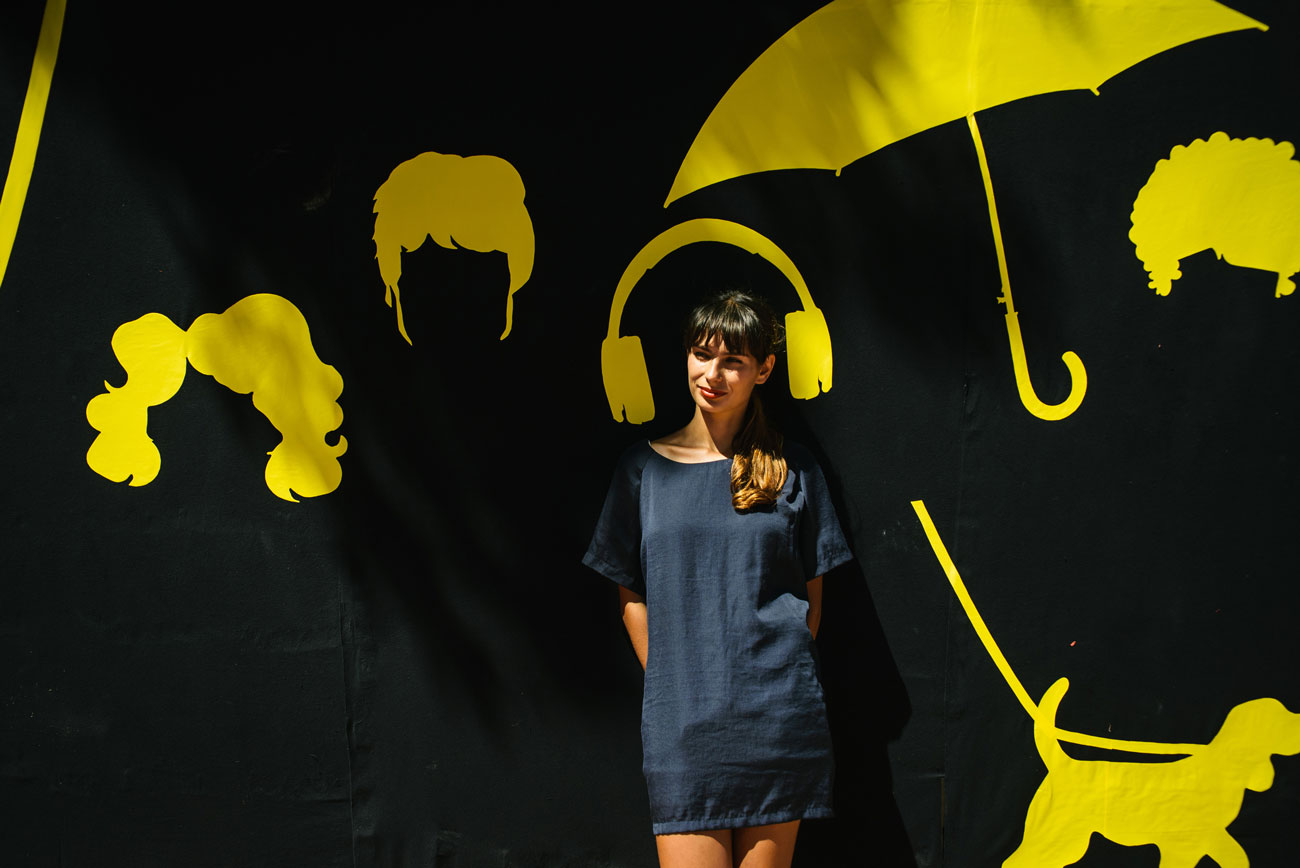
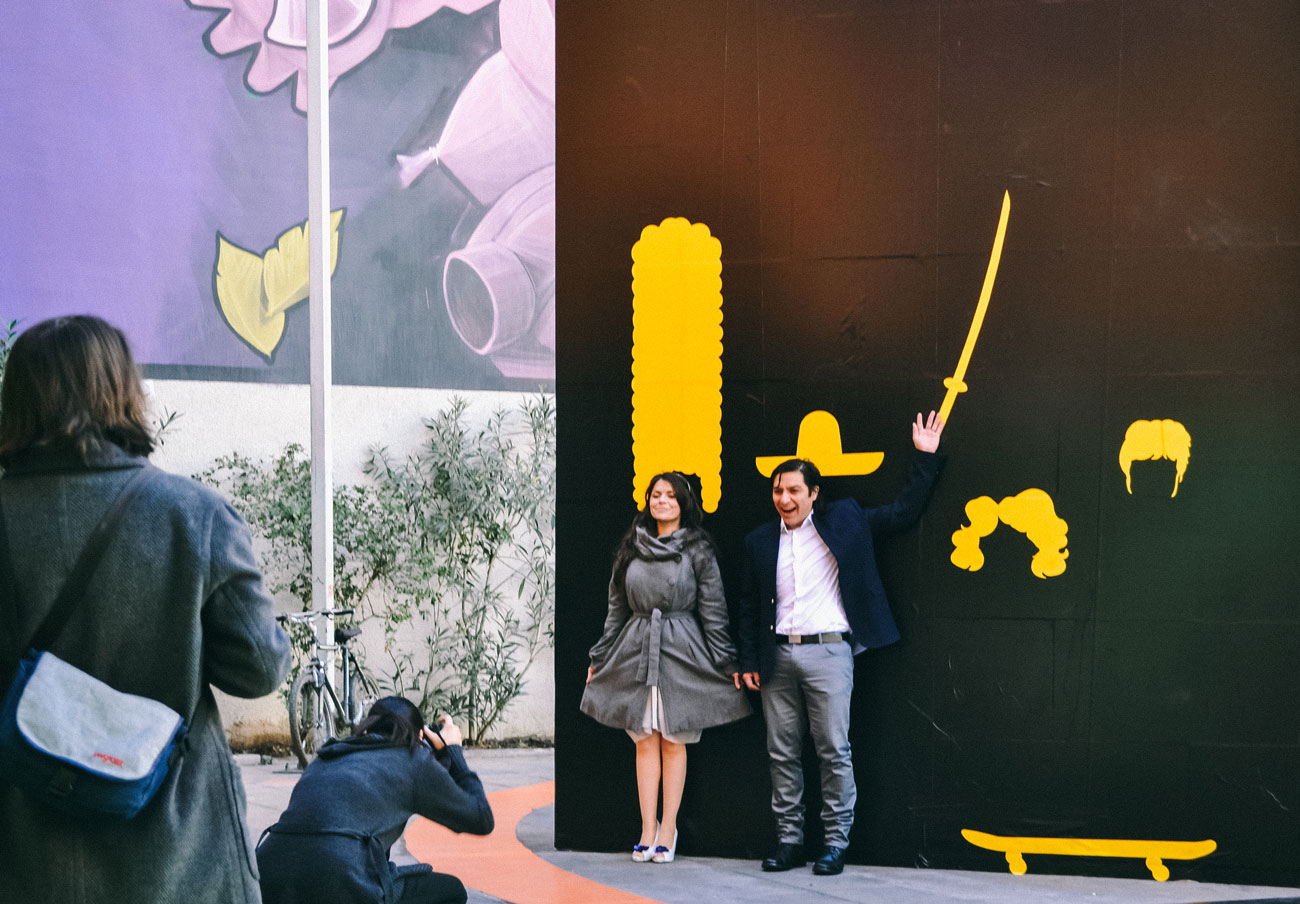
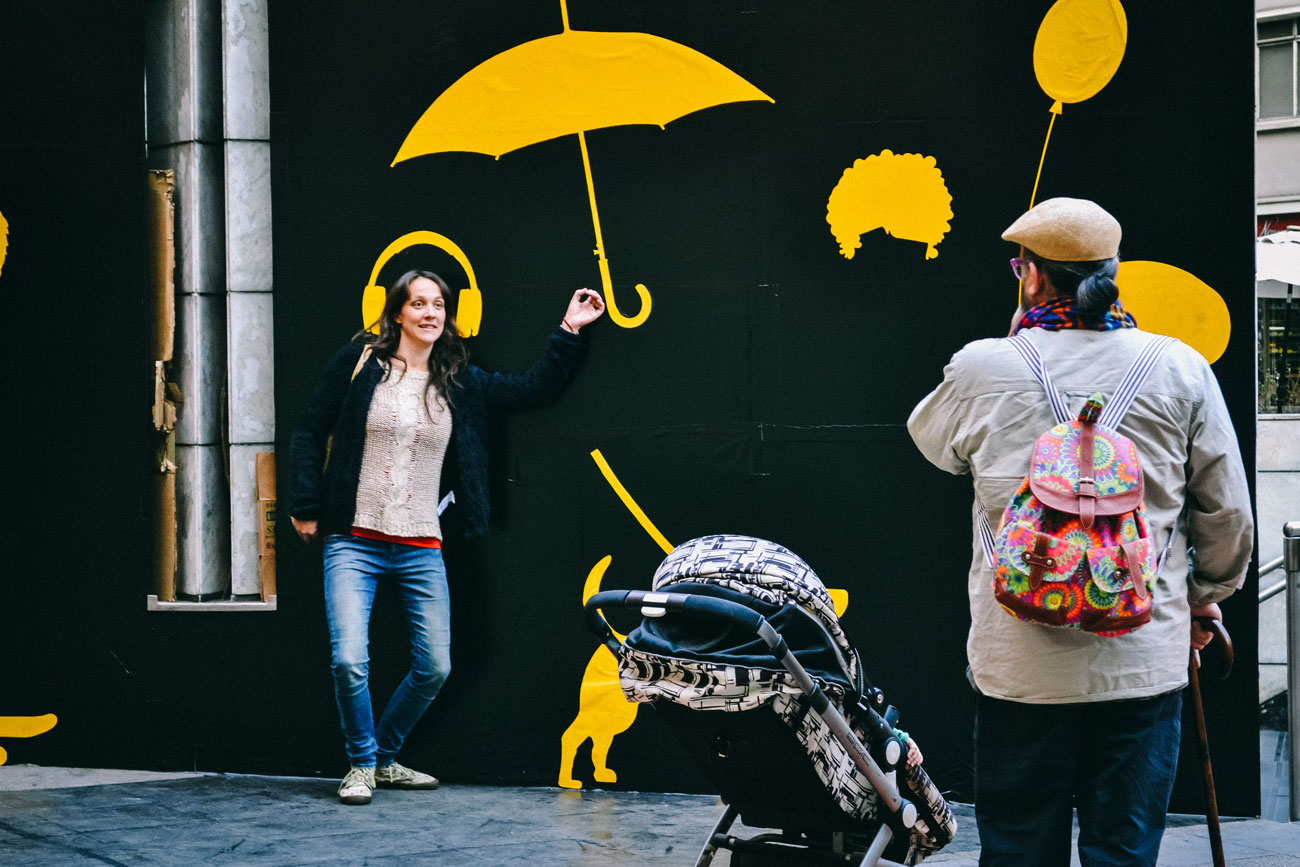
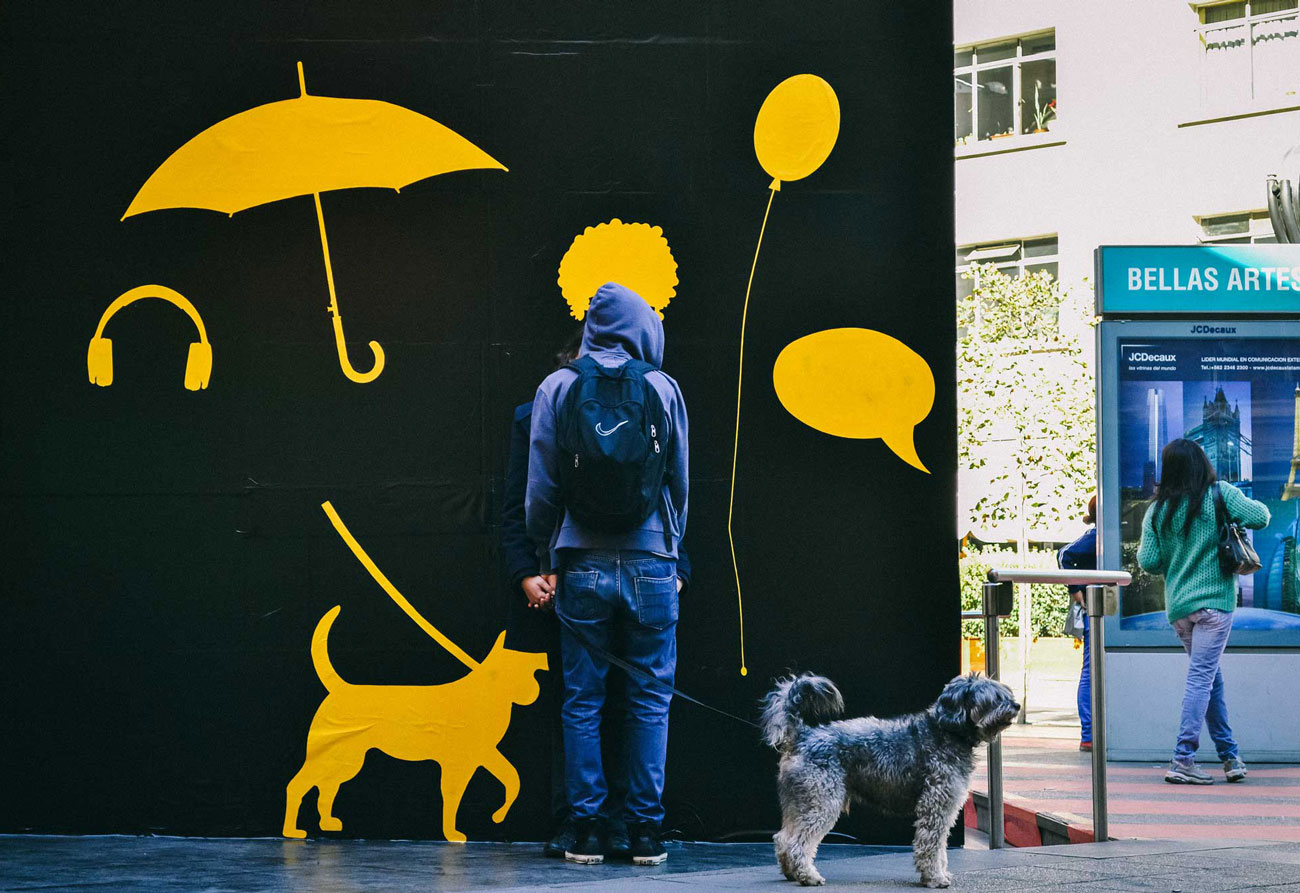
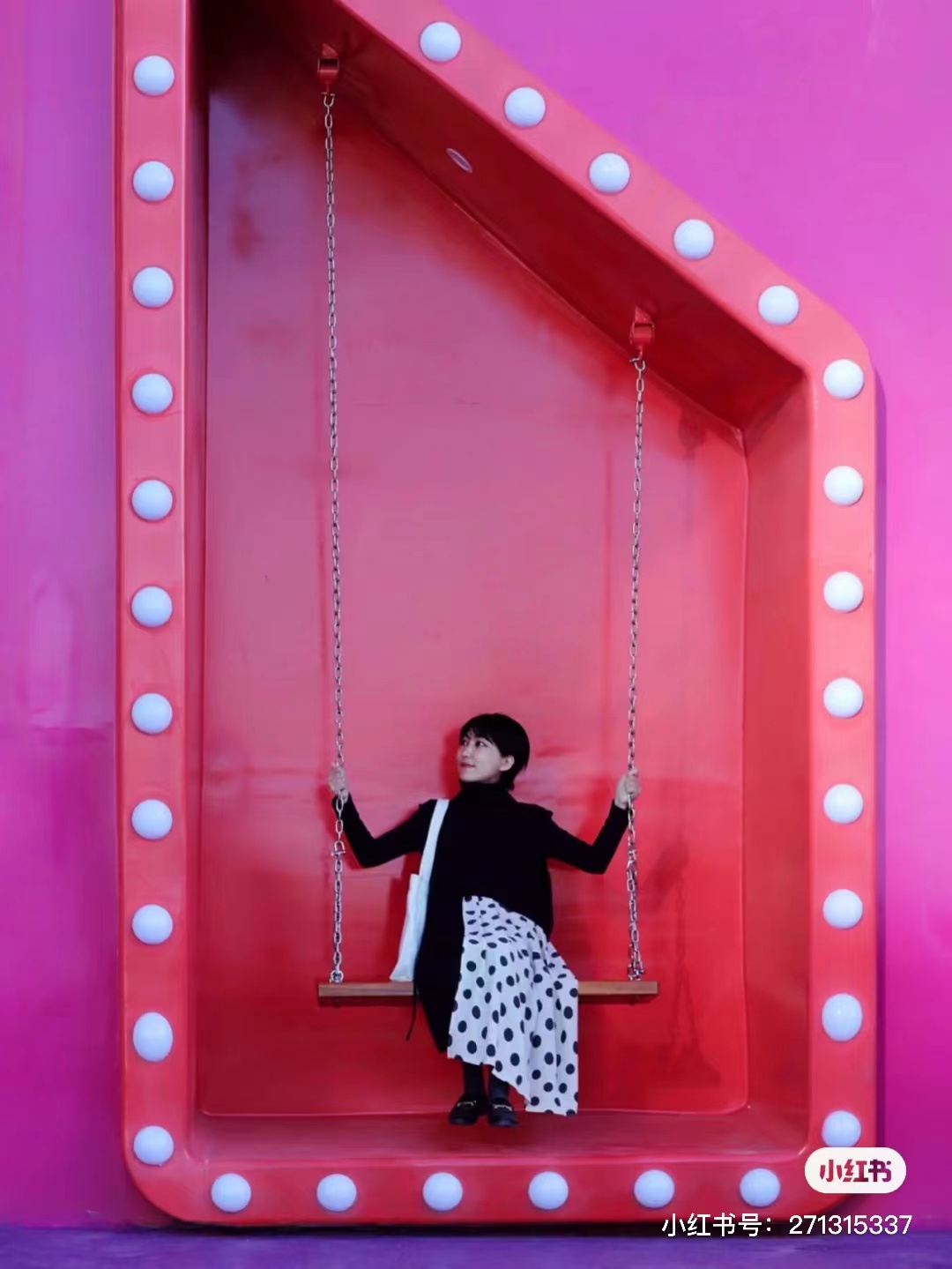
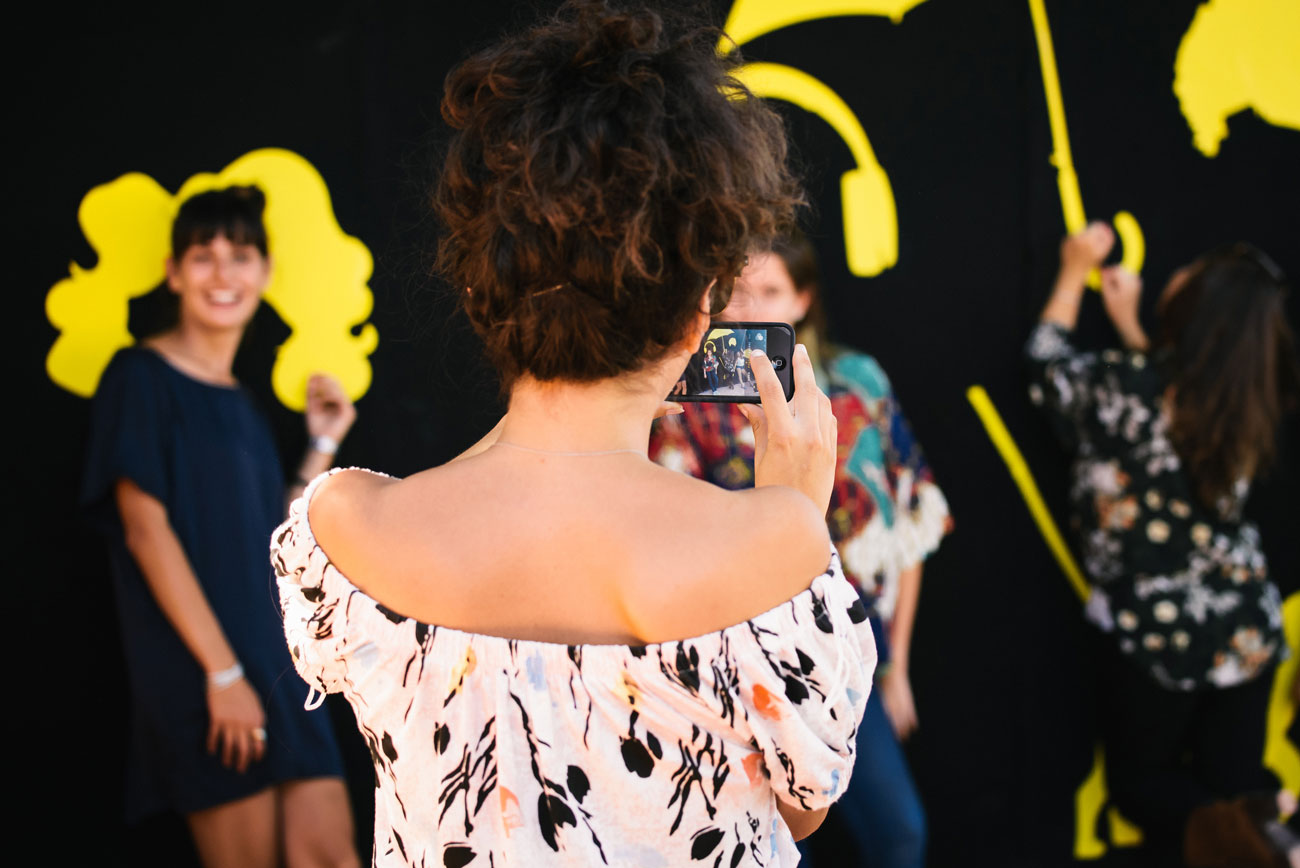
The Selfie Wall is a vertical “painted scape” in which there are a great variety of silhouette and funny drawings proposing and suggesting different positions for interactions and photography.
 
It is a 2d configuration that only by painting and drawing shapes it adds a new function to an existing wall.
It is a colorful, playful and very suitable for placemaking for renewing urban contexts.


© Subtilography


Selfie Wall official movie | 100A Chanel


© Subtilography


This project it is one of the first that we have done, It was developed in our shanghai studio yet executed and build in Lisbon Portugal for a private event in 2014. It is only a prototype since it was there only for a few days amusing people in the event.
 
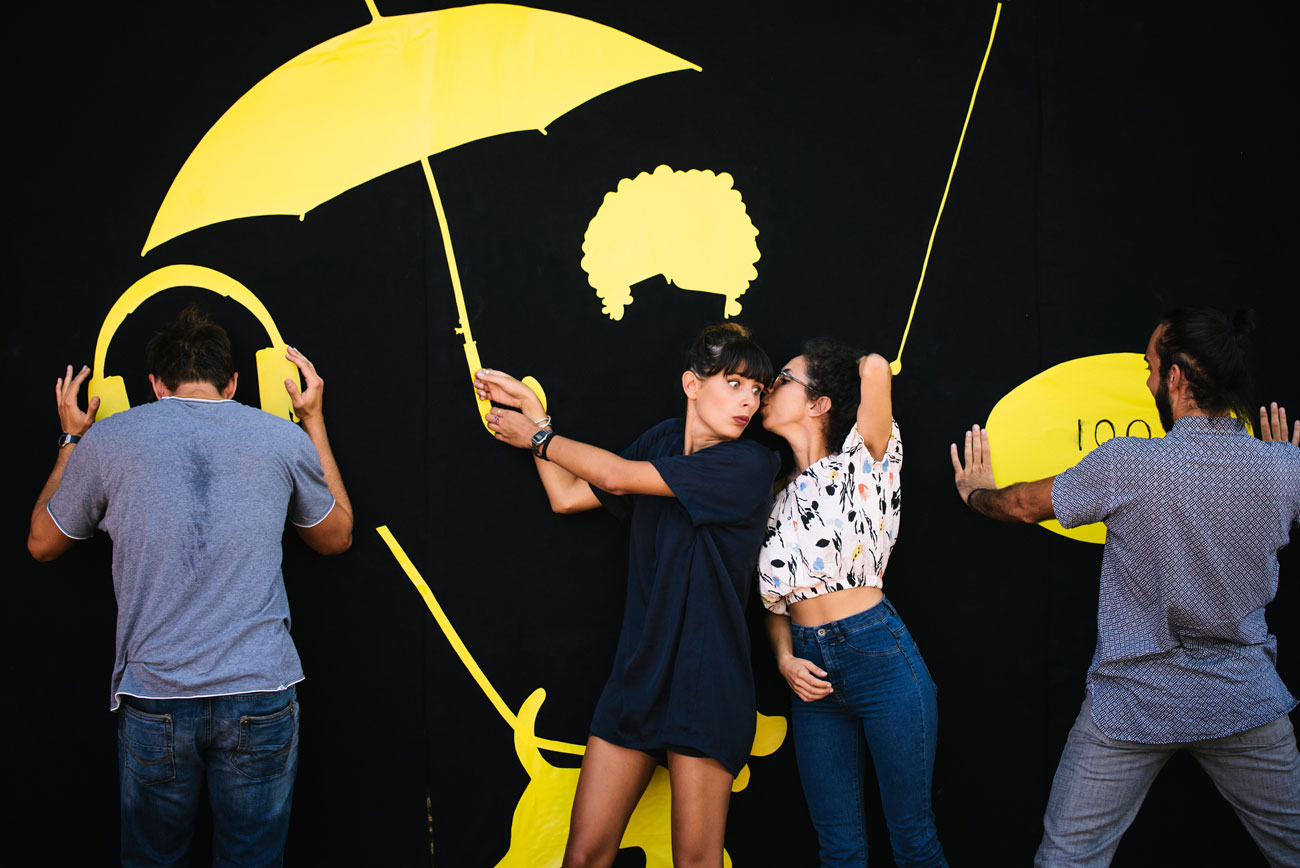
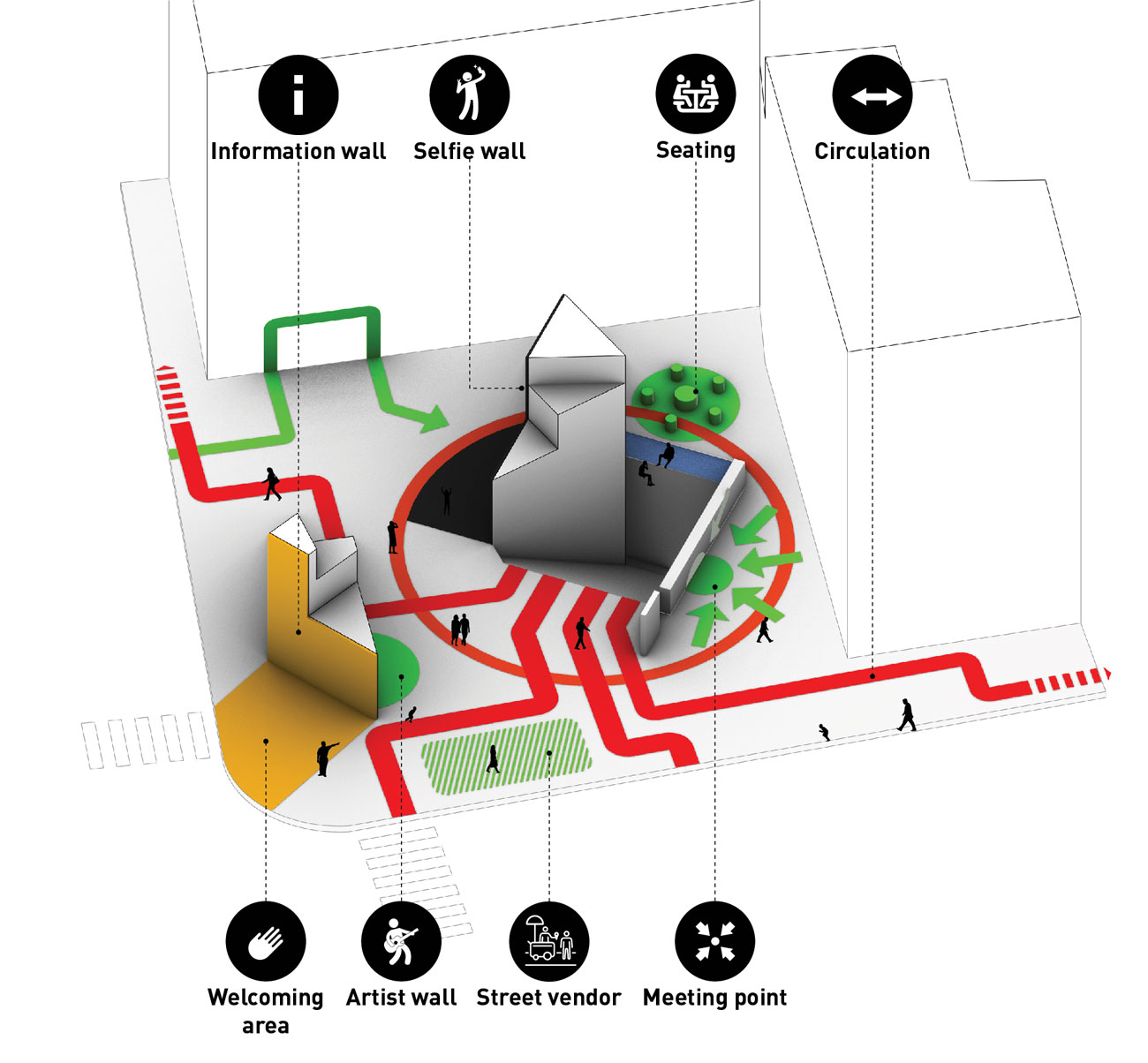
Among the proposed functions there are an artist spot, a meeting point, directional arrows, hairstyles silhouettes for selfies and many more funny shape that suggest interactions with the wall and also among the visitors.
 
This project provides opportunities of constant transition between the virtual and the material world.


© Subtilography


© Subtilography


© Subtilography


It is especially interesting how projects like this one create a considerable impact in the social media since it invites the user to take pictures and upload them with a particular hashtag. It became a shortly yet significant landmark of the virtual space.
 
The project can have a permanent or an ephemeral spirit. It is a colorful, playful and renewed image that invites to experience the space from an unexplored perspective.


© Subtilography


© Subtilography


© Subtilography


© Subtilography


© Subtilography


© Subtilography


Credits
 
PROJECT NAME: Selfie Wall
DESIGN: 100 Architects (Shanghai)
DESIGN TEAM: Marcial Jesús, Madalena Sales
CLIENT: Undisclosed
STATUS: Built
LOCATION: Lisbon, Portugal
COMPLETION: 2014


GRASS DOT

Grass Dot
Shanghai | China
 
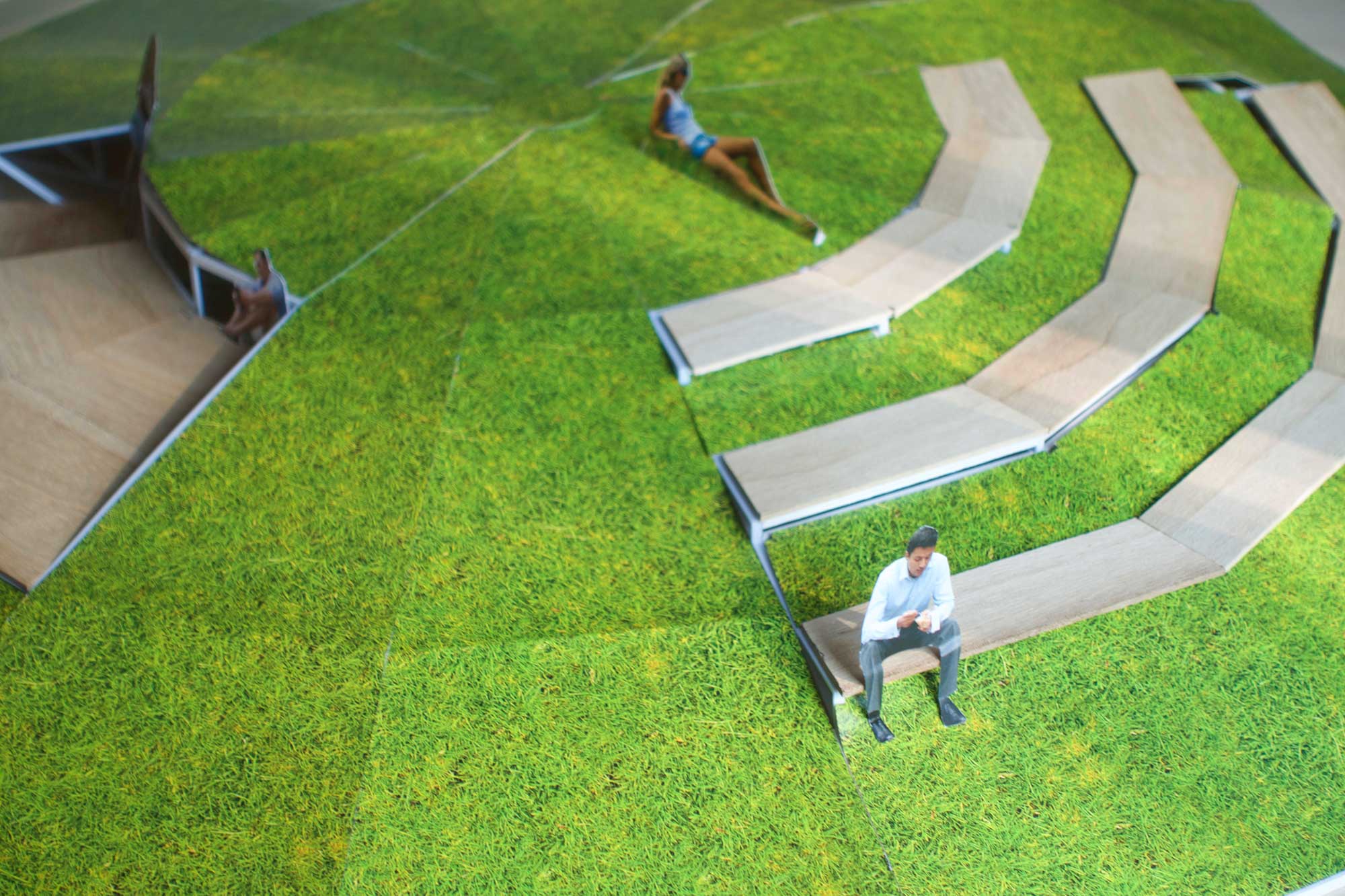
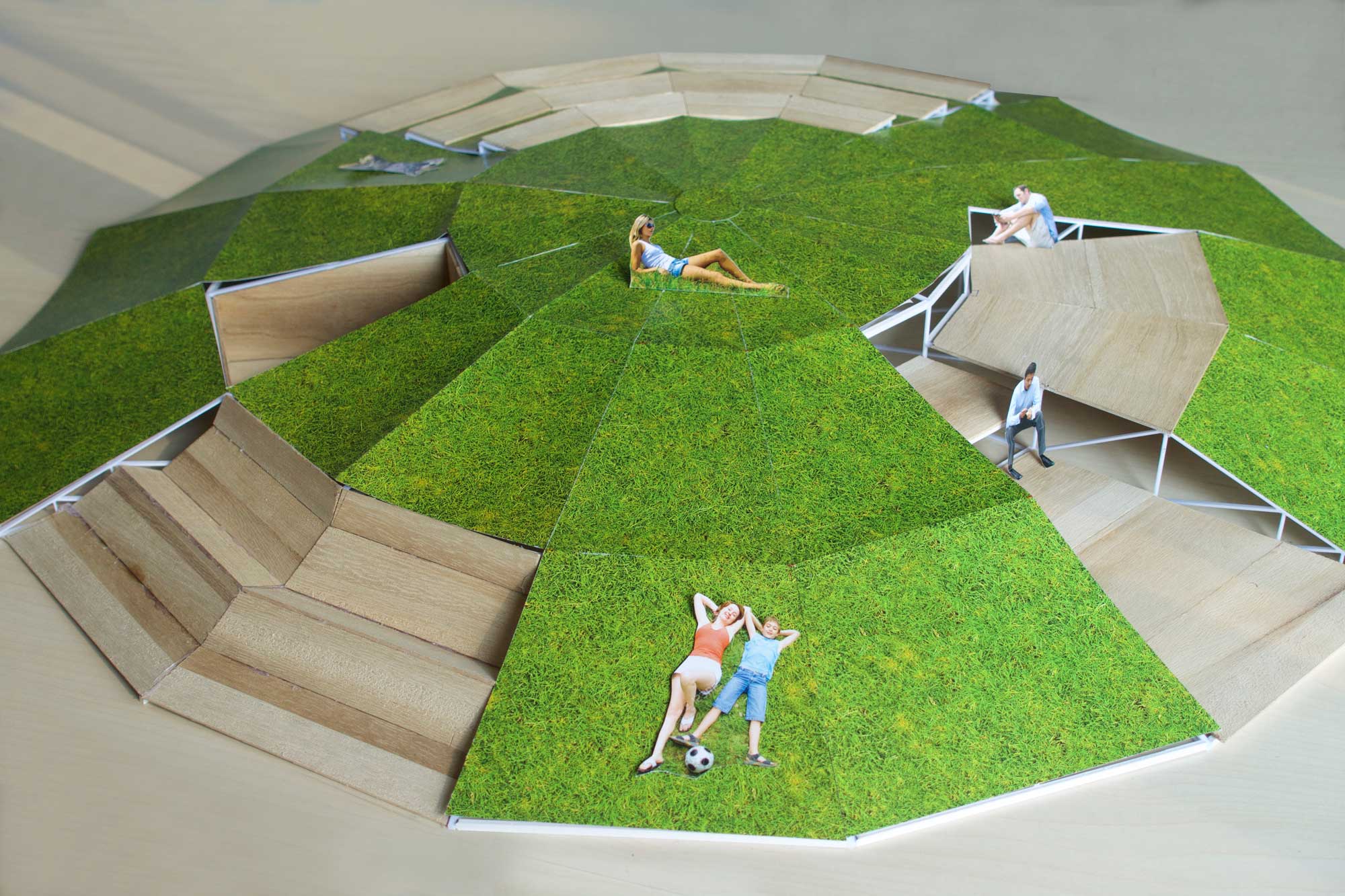
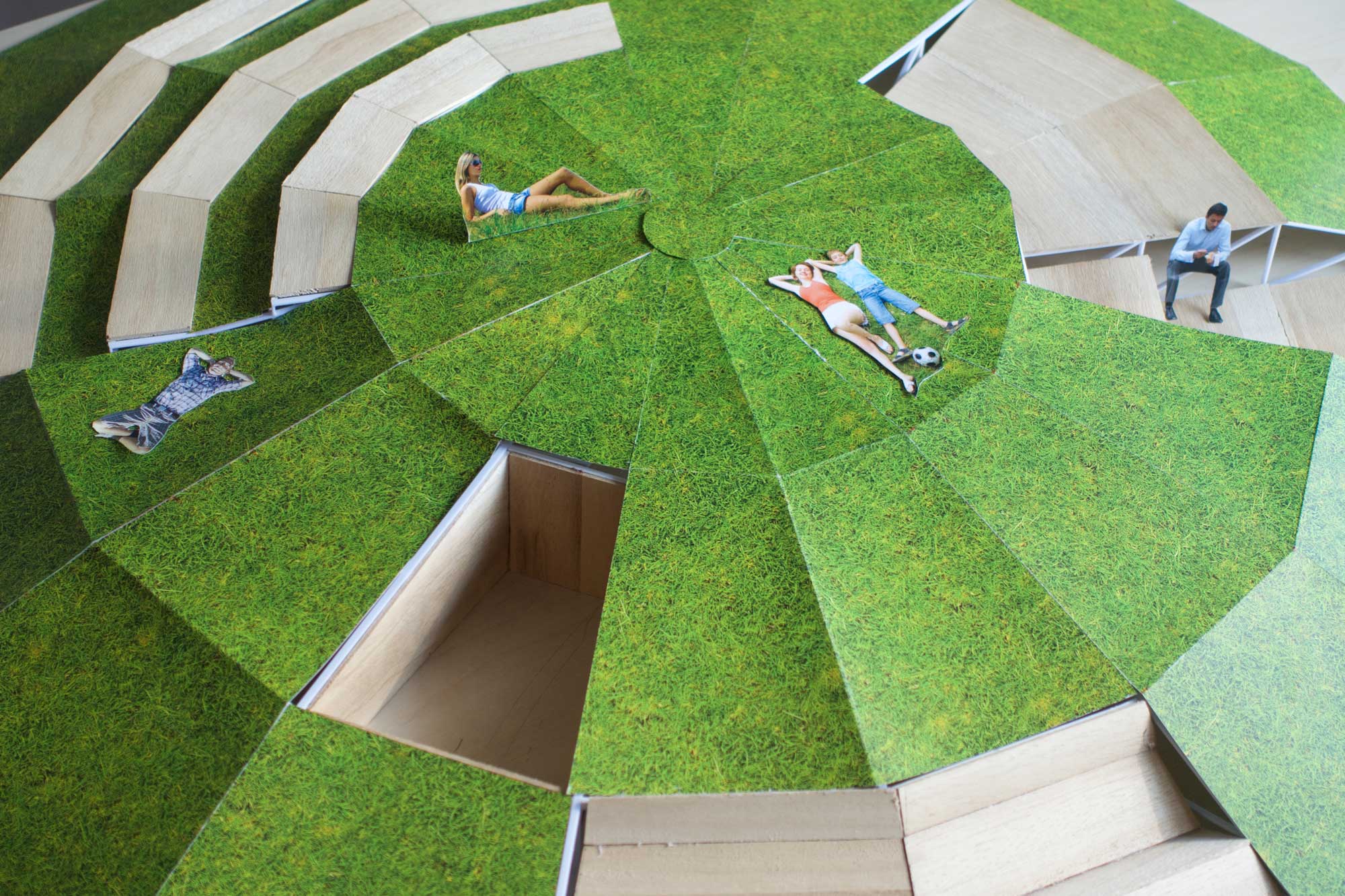
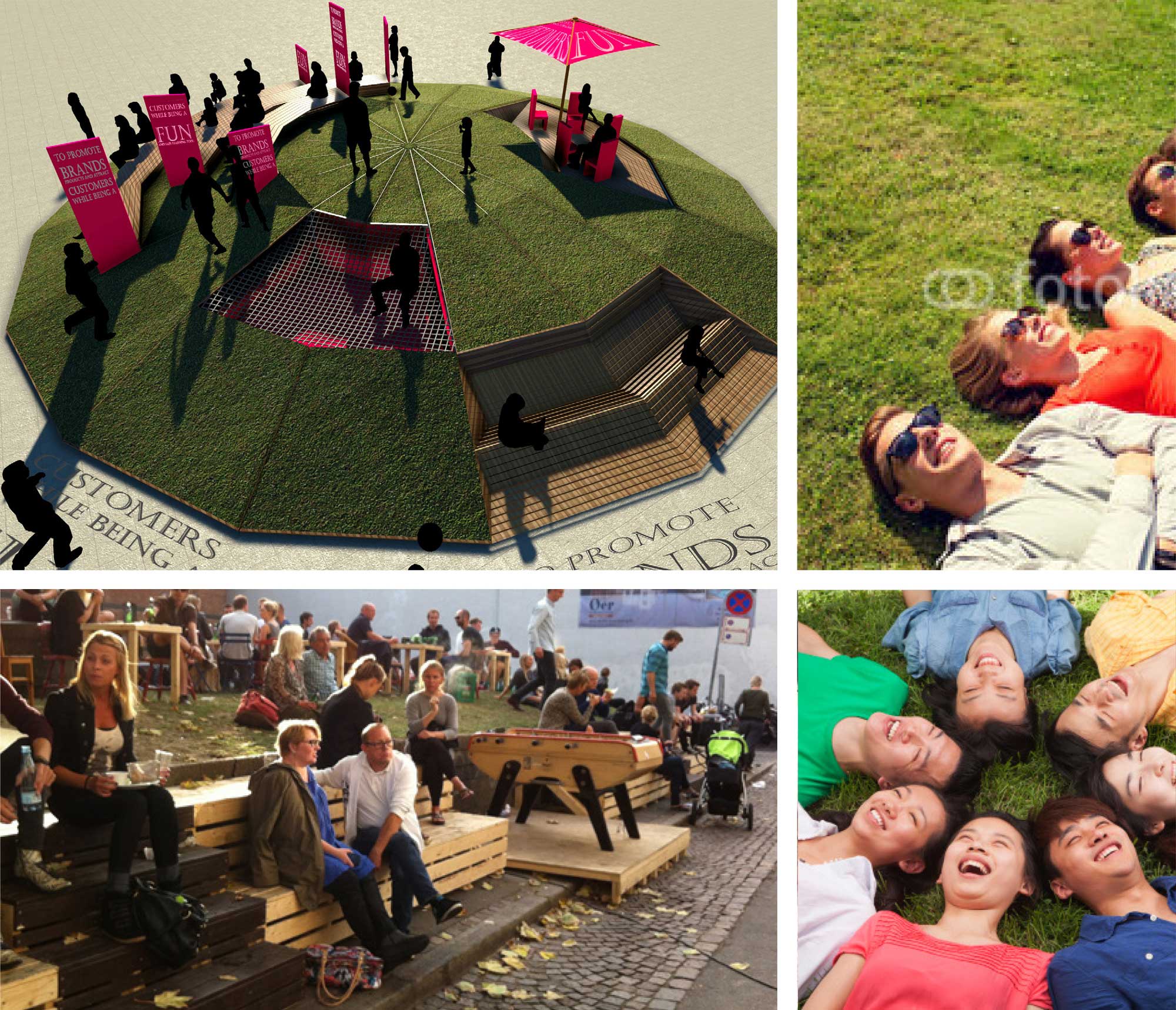
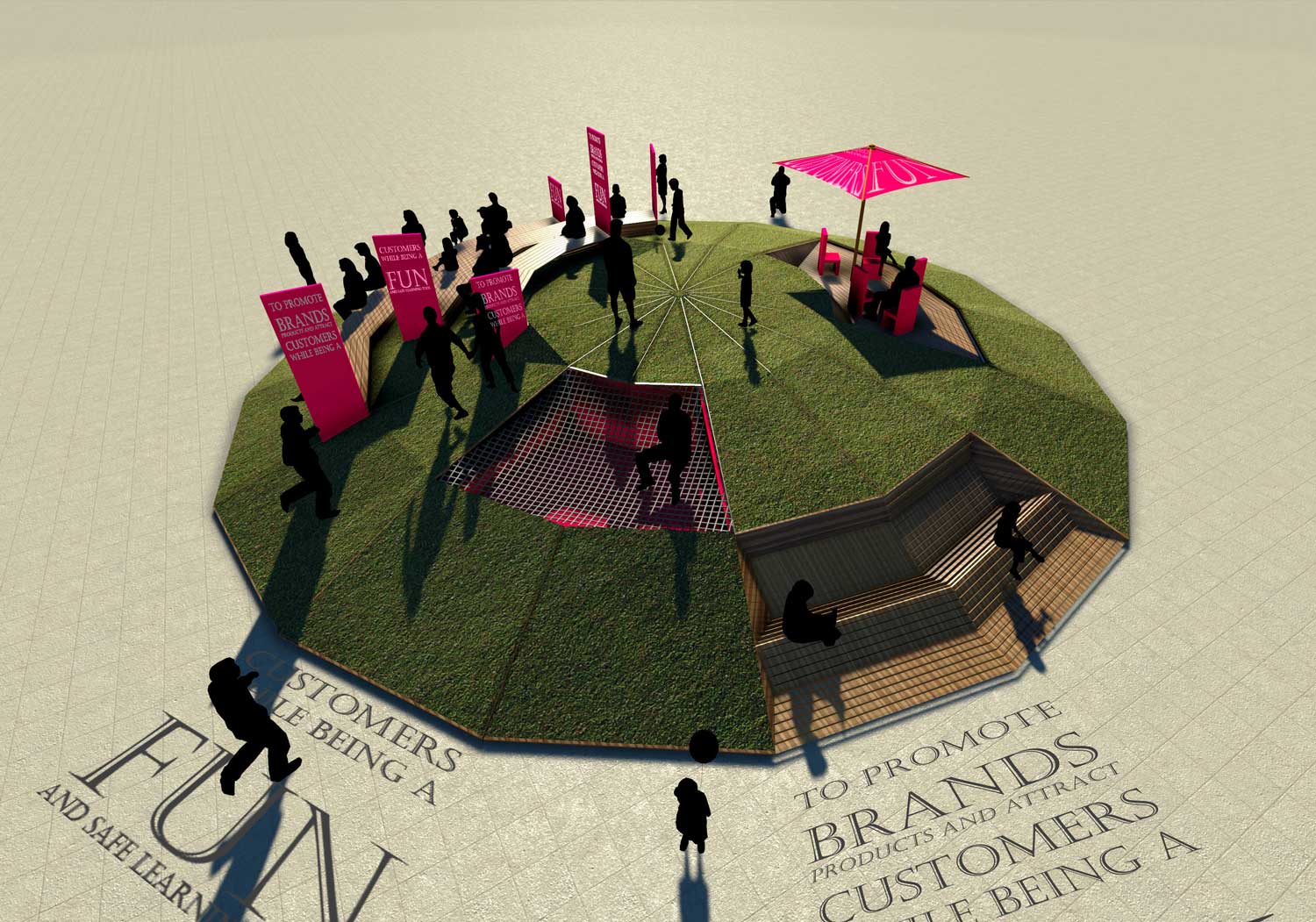
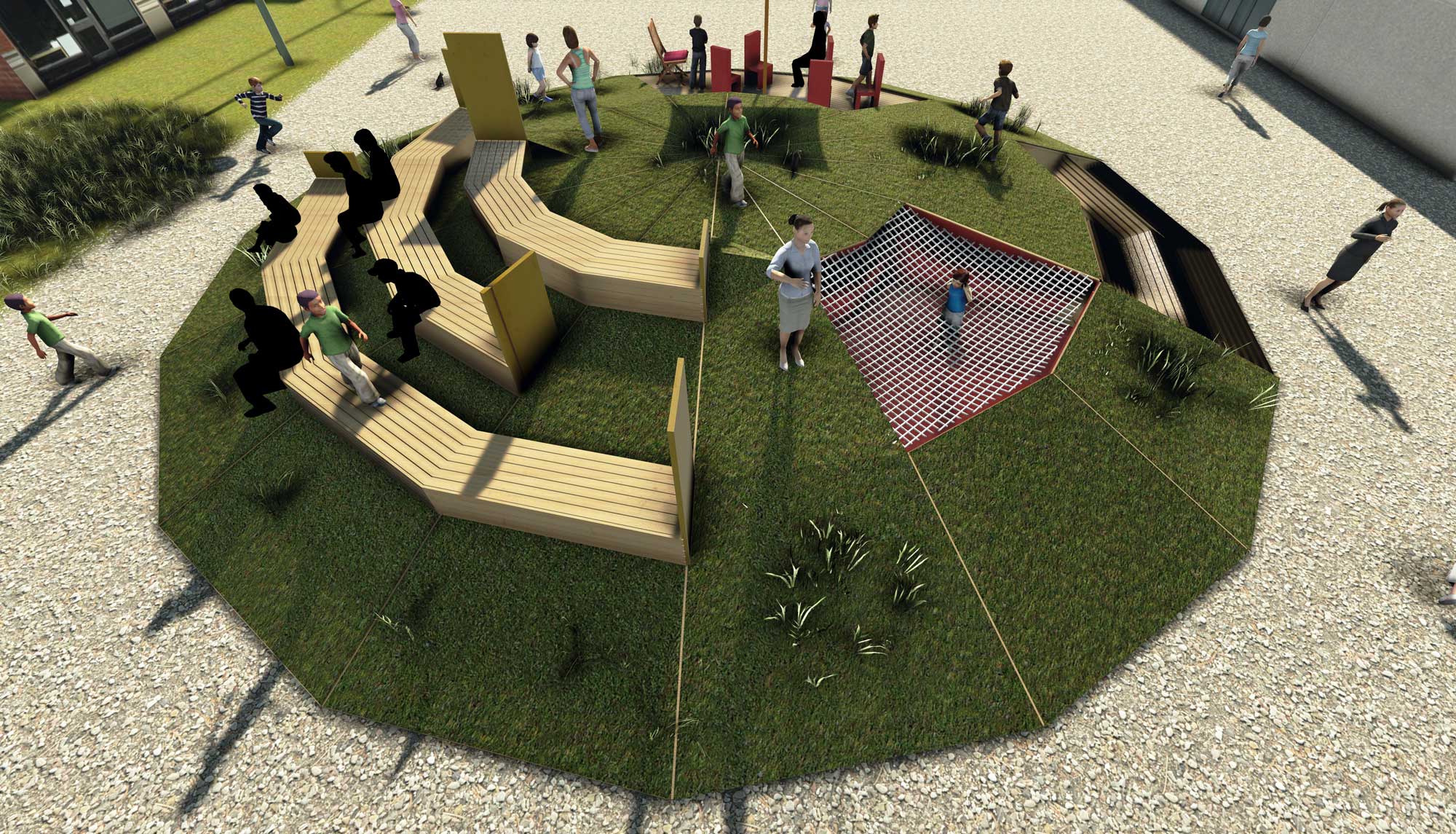
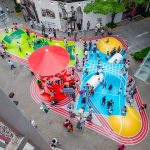
The grass dot is a walkable spherical dome covered by synthetic grass lawn becoming a great green surface to walk, rest and enjoy. It is an object plaza that host different leisure functions on top.
 
It is an interactive, multipurpose installation, which attracts curious onlookers and encourages engagement from adults and children alike. The objective is to introduce the concept of instant project by generating surprise with the unexpected landing of this green island. Among many possible uses, the installation can be a mainstay for product launches and or brand promotion through a creative medium.


©100architects


©100architects


The ultimate objective of this piece of street architecture is to catalyse human interactions, and importantly, activate the place in which is located attracting users and clients.
 
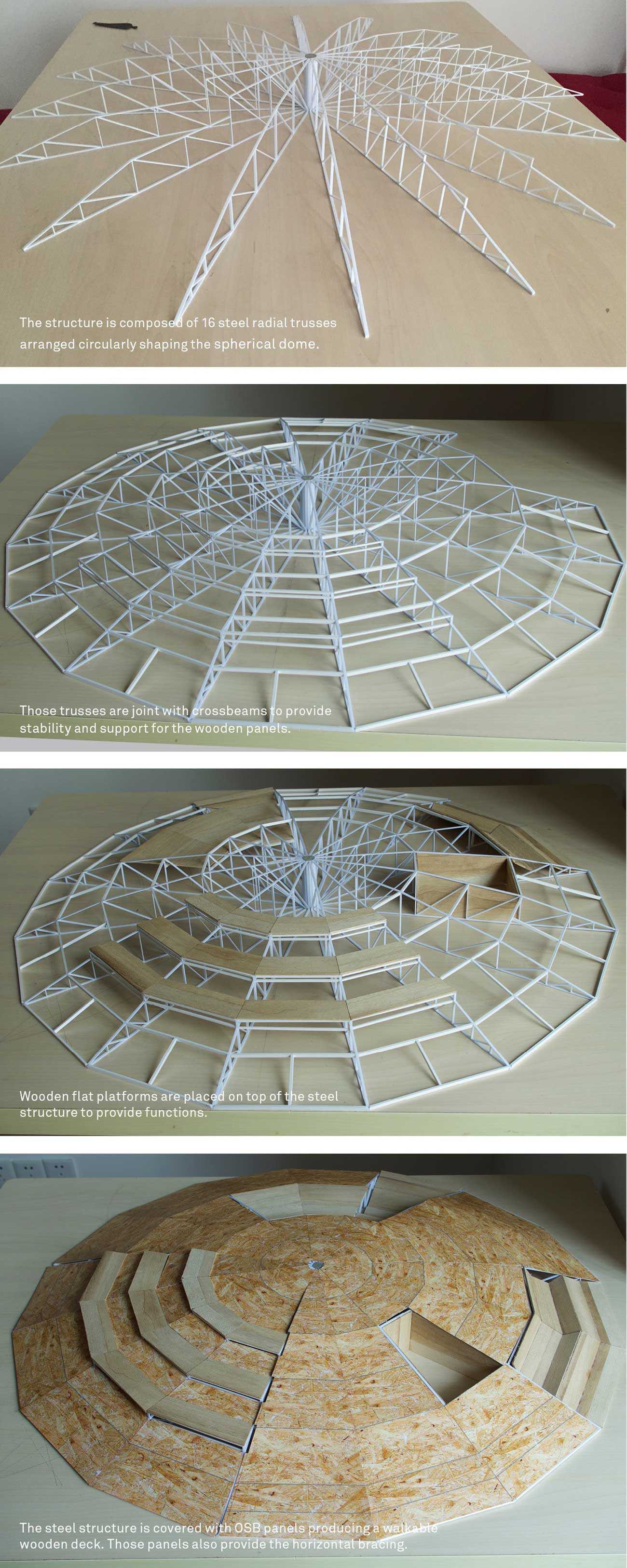
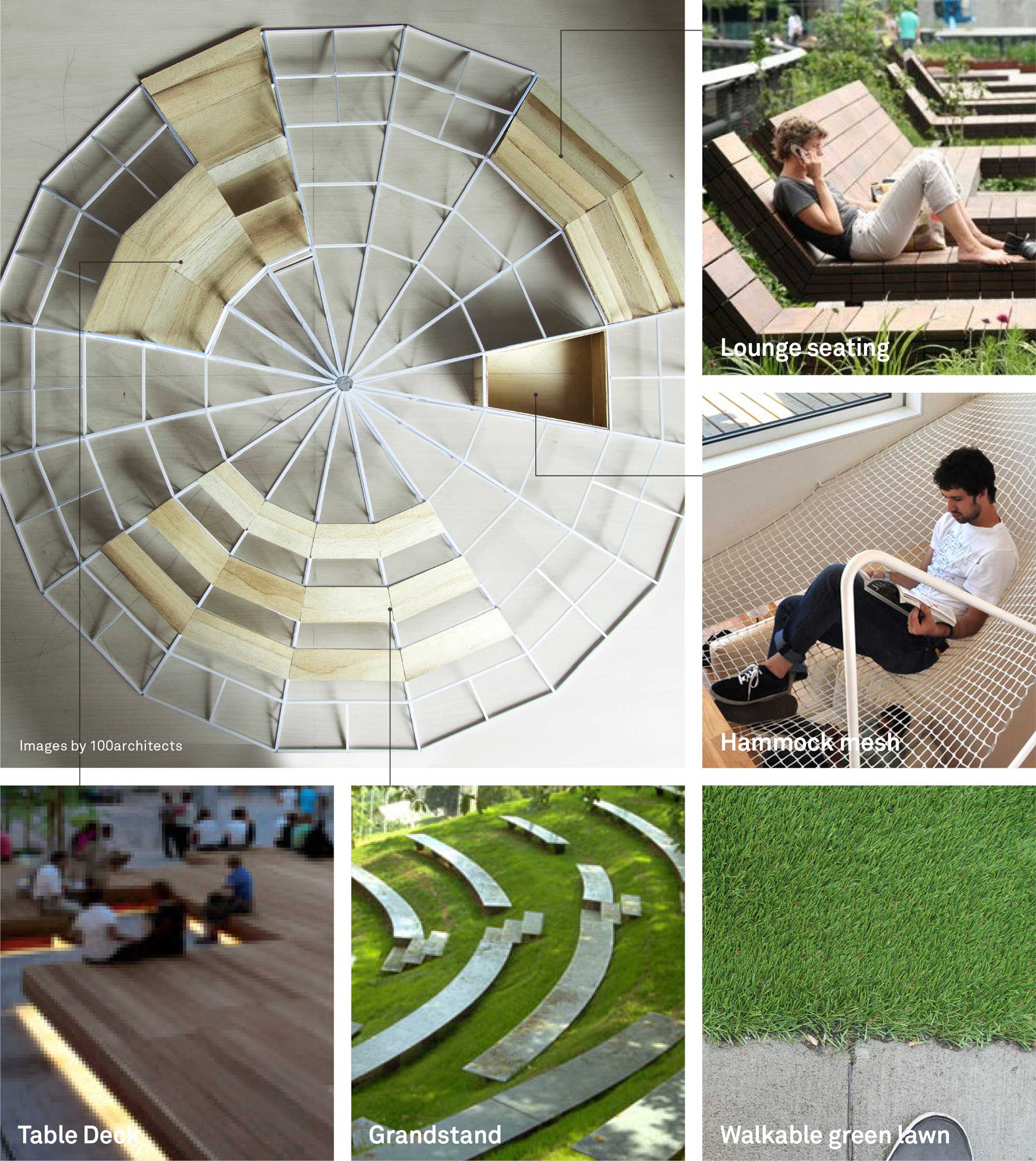
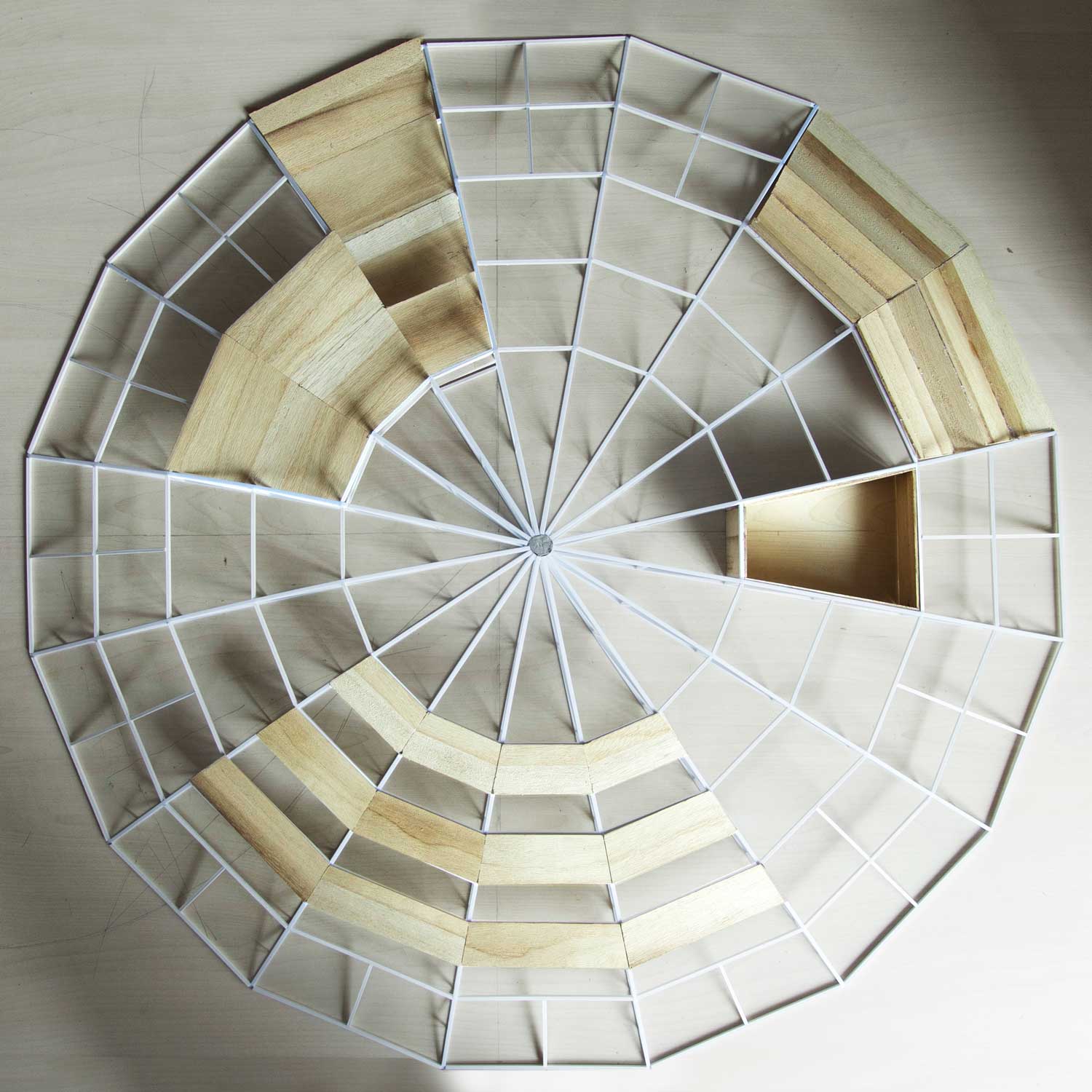
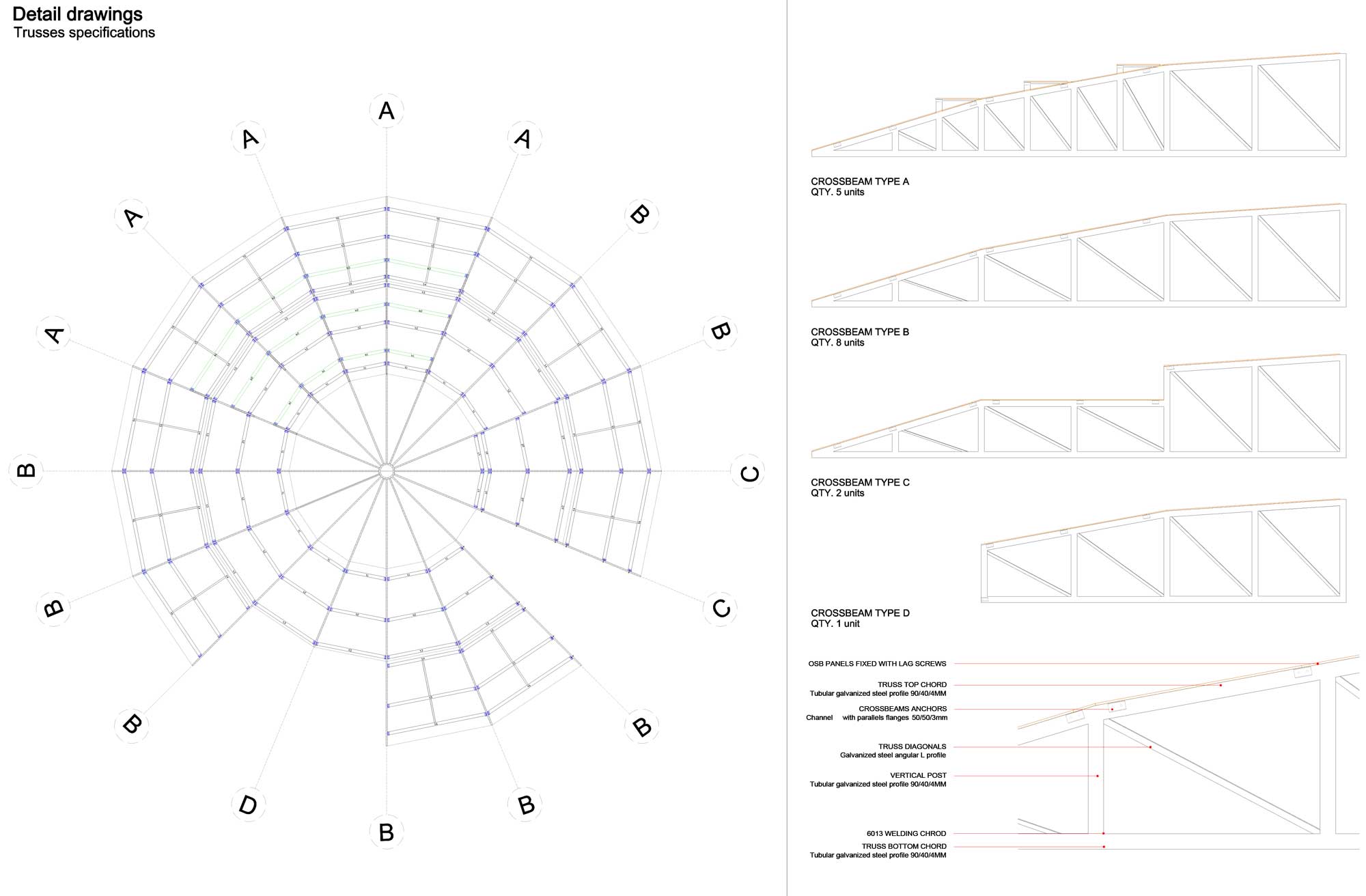
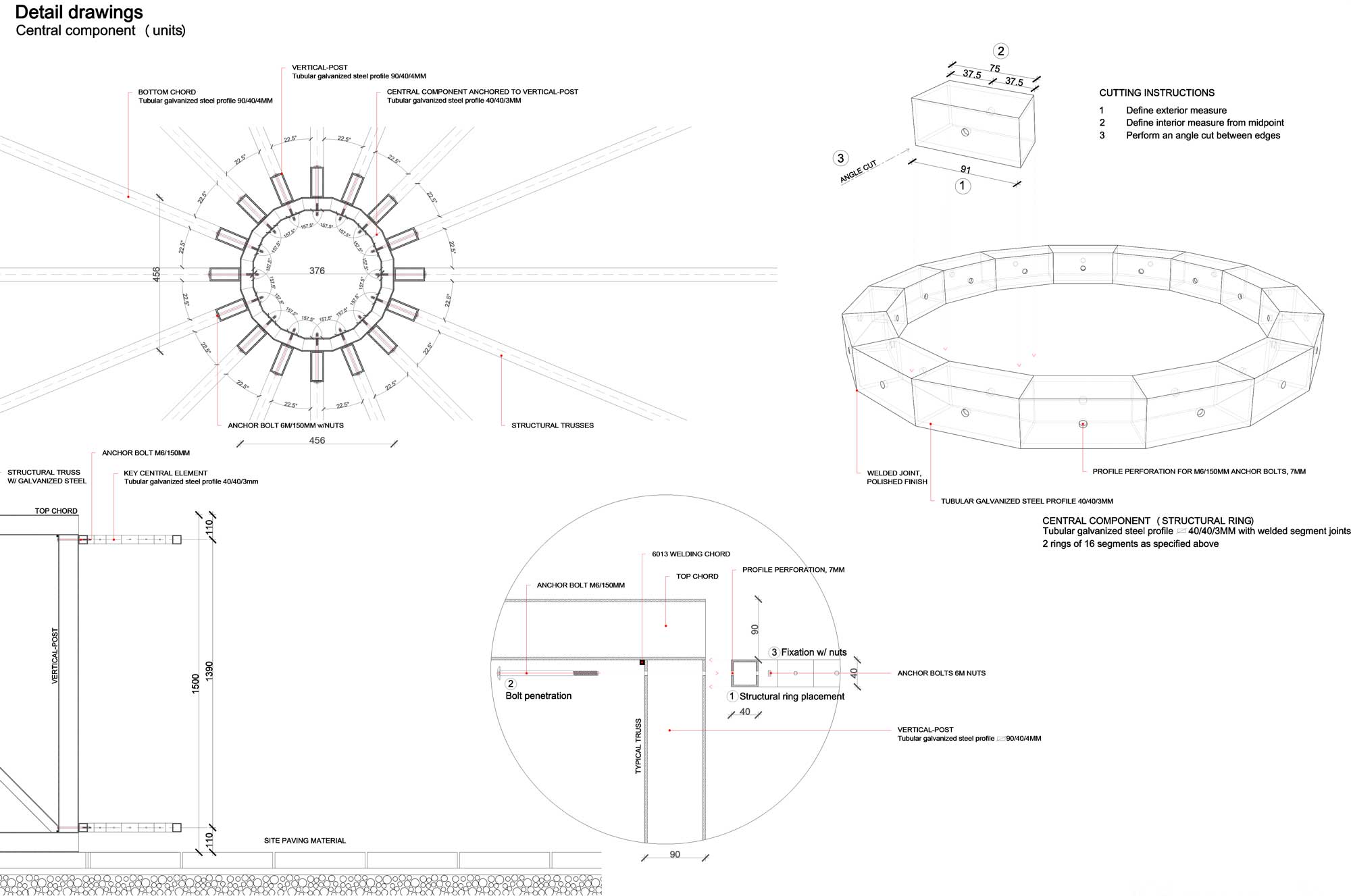
The structure is composed of 16 steel radial trusses arranged circularly shaping the spherical dome. Those trusses are attached to crossbeams to provide stability and support for the cover. This steel structure is covered with OSB wooden panels producing a walkable wooden deck, providing the horizontal bracing.
Additionally, The spherical dome is all covered by synthetic grass lawn becoming a great green surface to walk, rest and enjoy.


©100architects


©100architects


©100architects


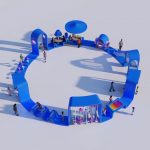
The Grass Dot contains 5 functions:
A walkable green lawn to laydown or walk (112m2), A table deck with a table and parasol (20m2), a bleacher and grandstand for seating (44m2), A lounge seating area (14m2), and a hammock mesh to lay down(10m2).
 
The object outline is a circumference of 7,8 meters radio, that occupies an area of 198m2, and it requires a free, flat and uncovered space of minimum 16×16 meters. The optimal location would be close to a public pedestrian circulation flow in the outdoor public space.
 
Finally, The Grassdot is a prototype of urban intervention that its main purpose is providing of a platform to rest, however could be used to promote brands, products and attract customers while being a fun and safe resting platform.


©100architects


©100architects


©100architects


©100architects


©100architects


©100architects


RED ROUGE

Red Rouge
 
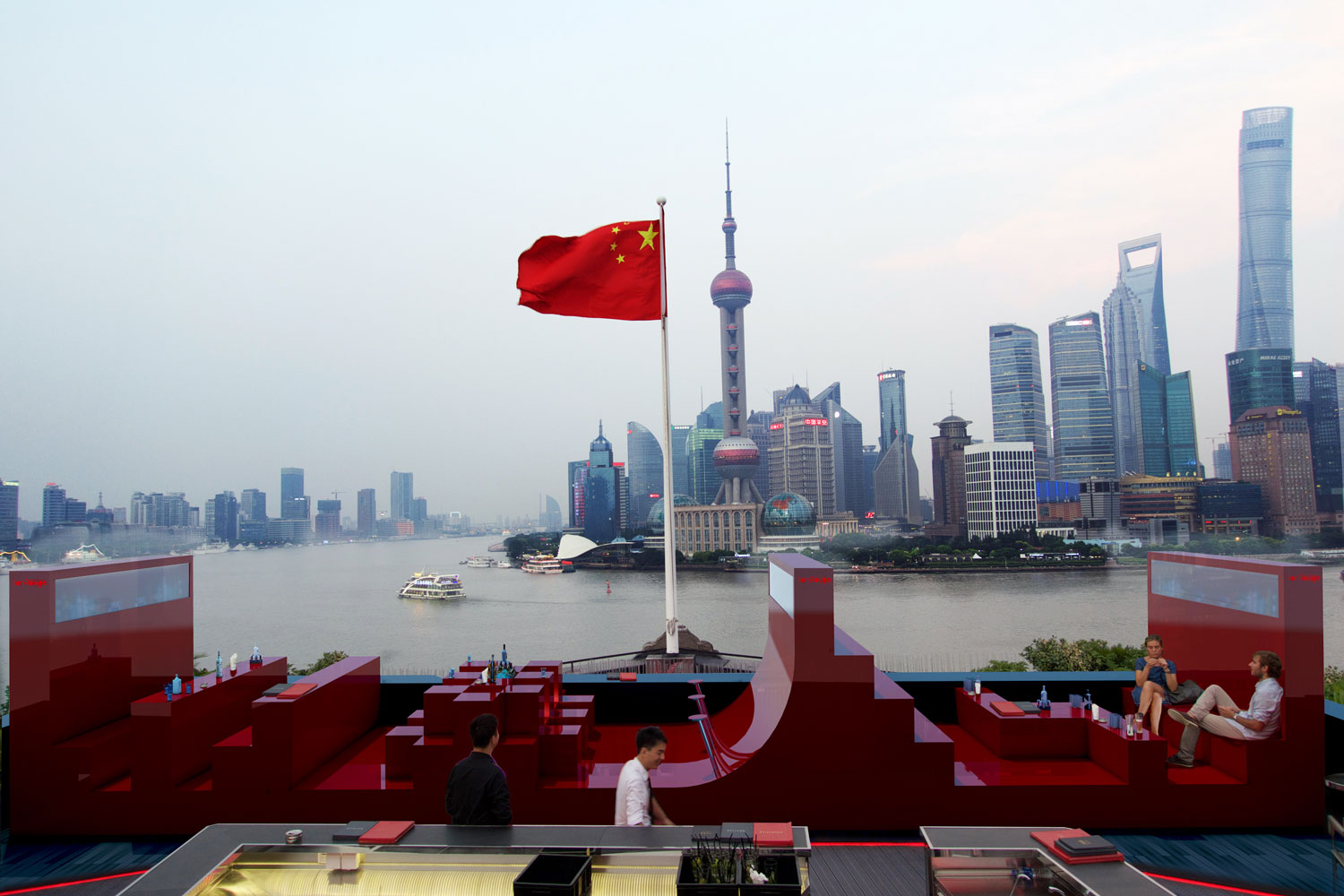
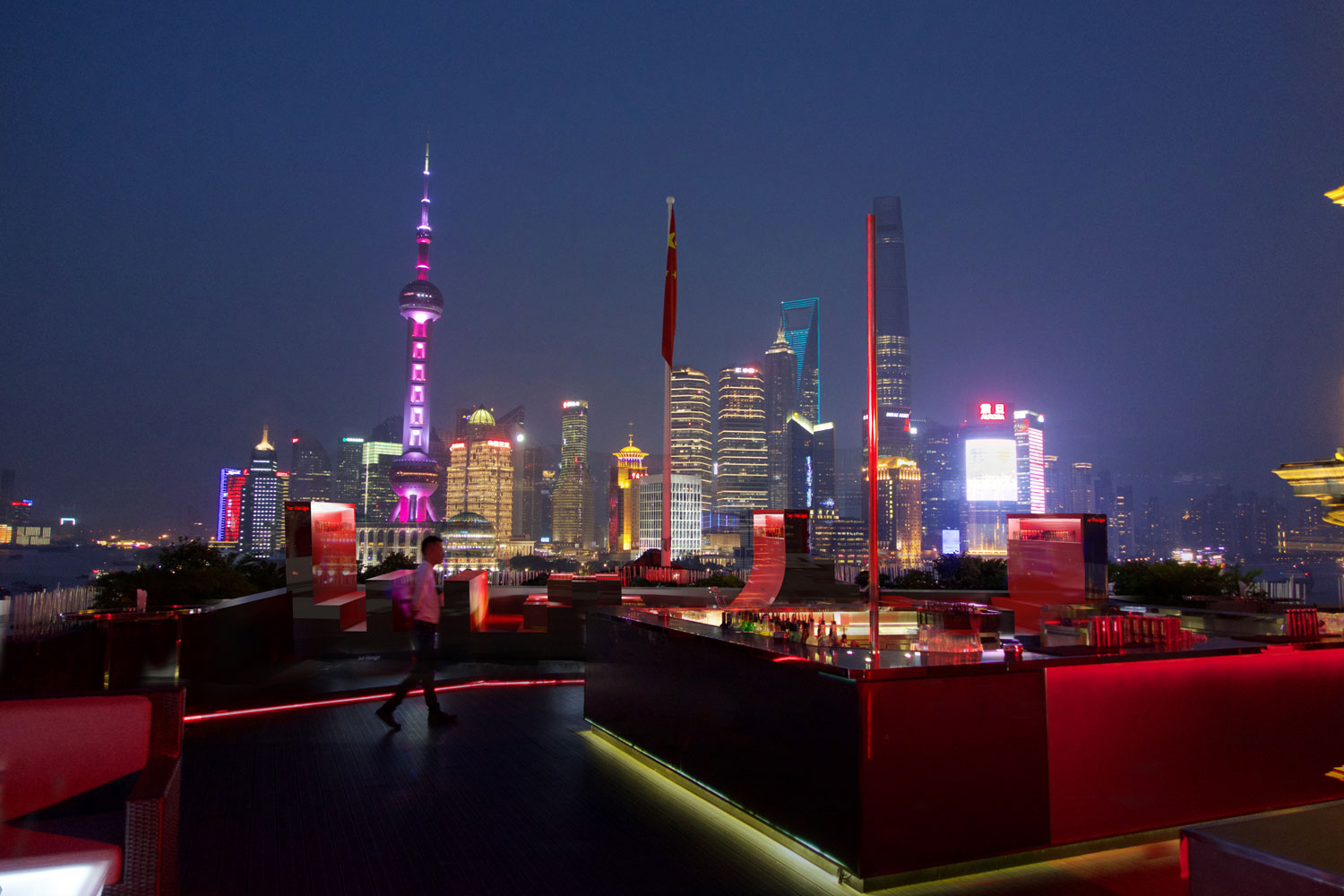
The proposal for Bar Rouge aims to reimagine Shanghai’s iconic skyline by capitalizing on the club’s most distinguishing feature—the breathtaking views of Pudong, Shanghai’s renowned skyline. Situated on the privileged balcony, Bar Rouge’s terrace offers patrons the opportunity to savor well-crafted cocktails while relishing the mesmerizing vistas of the new Pudong area, making it an exceptional attraction in itself.


© 100architects


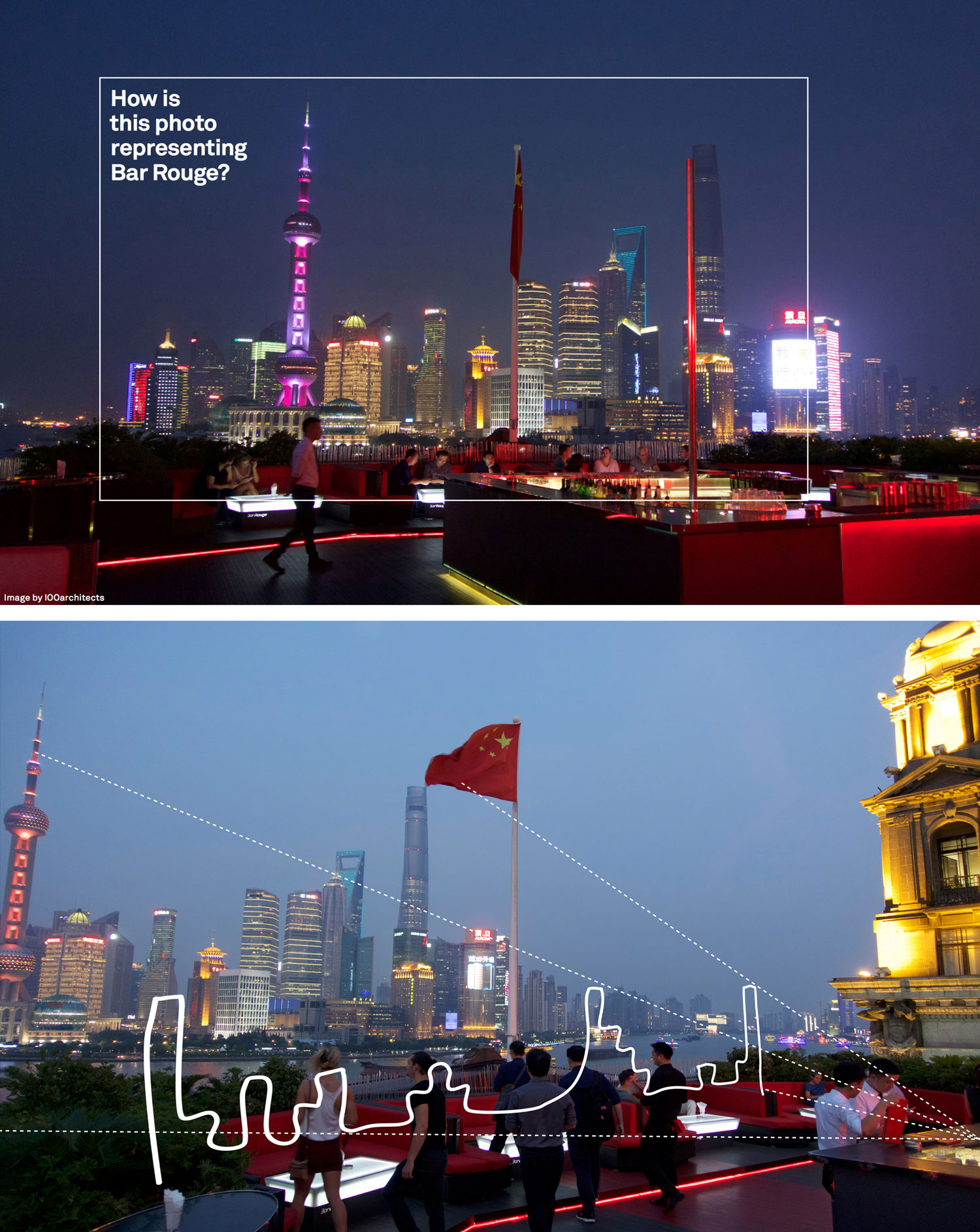
With a clear focus on maximizing the visual impact of the outdoor area while minimizing disruption to the bar’s regular operations, the key concepts guiding the design process are “skyline,” “terrace,” “visual impact,” and “business activity.” This project is presented to VOL Group, a prominent player in the Shanghai food and beverage industry.


© 100architects


At 100architects, we firmly believe that social dynamics and public interactions extend beyond conventional public spaces to what we refer to as “semi-public spaces.” These spaces, though privately owned, possess a strong public character, facilitating gatherings and interactions similar to those found in true public areas. Bar Rouge, located atop the Bund 18—a landmark building in Shanghai housing art galleries, upscale brands, and fine restaurants—serves as a prime example of such a semi-public space, attracting a diverse array of social interactions.


© 100architects


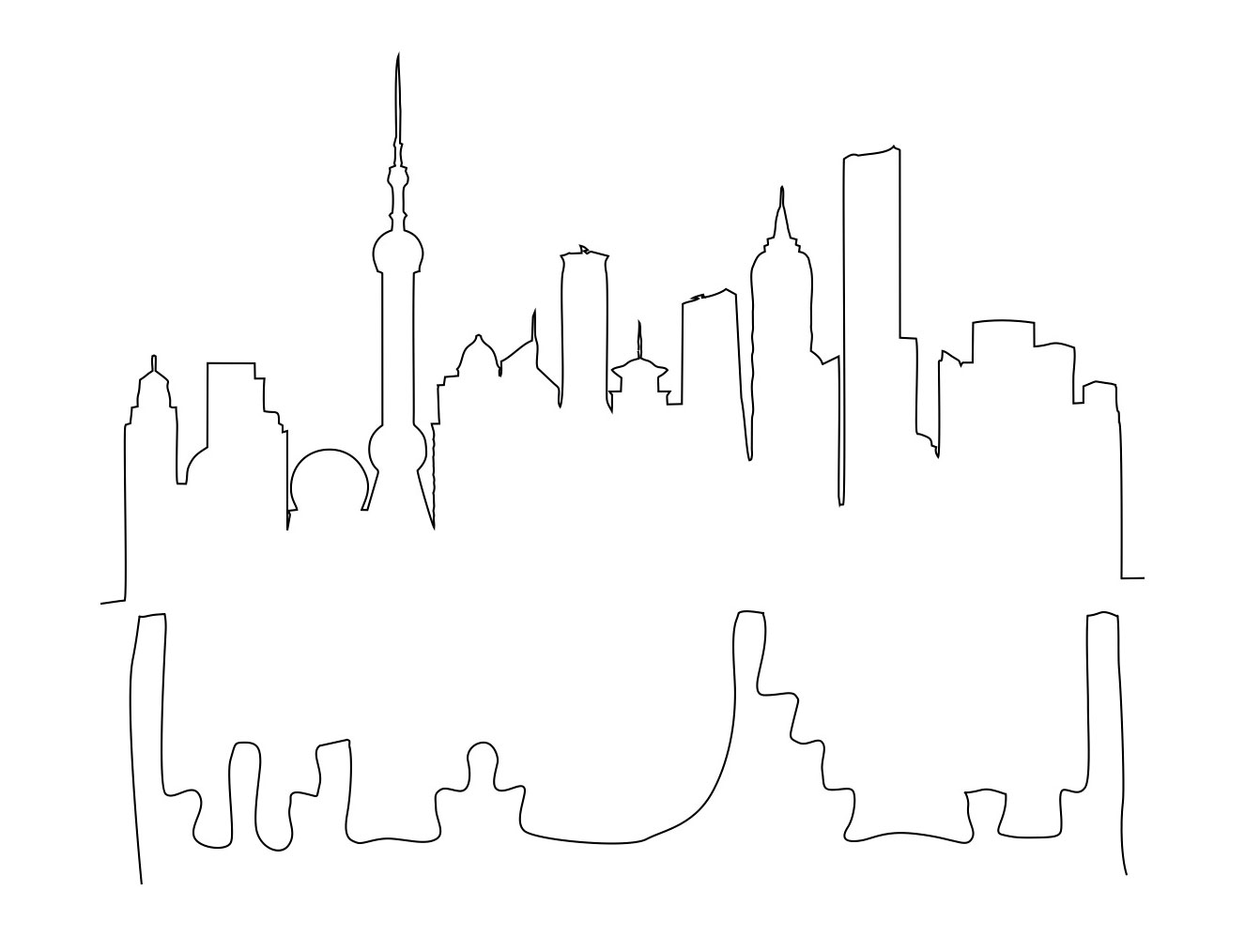
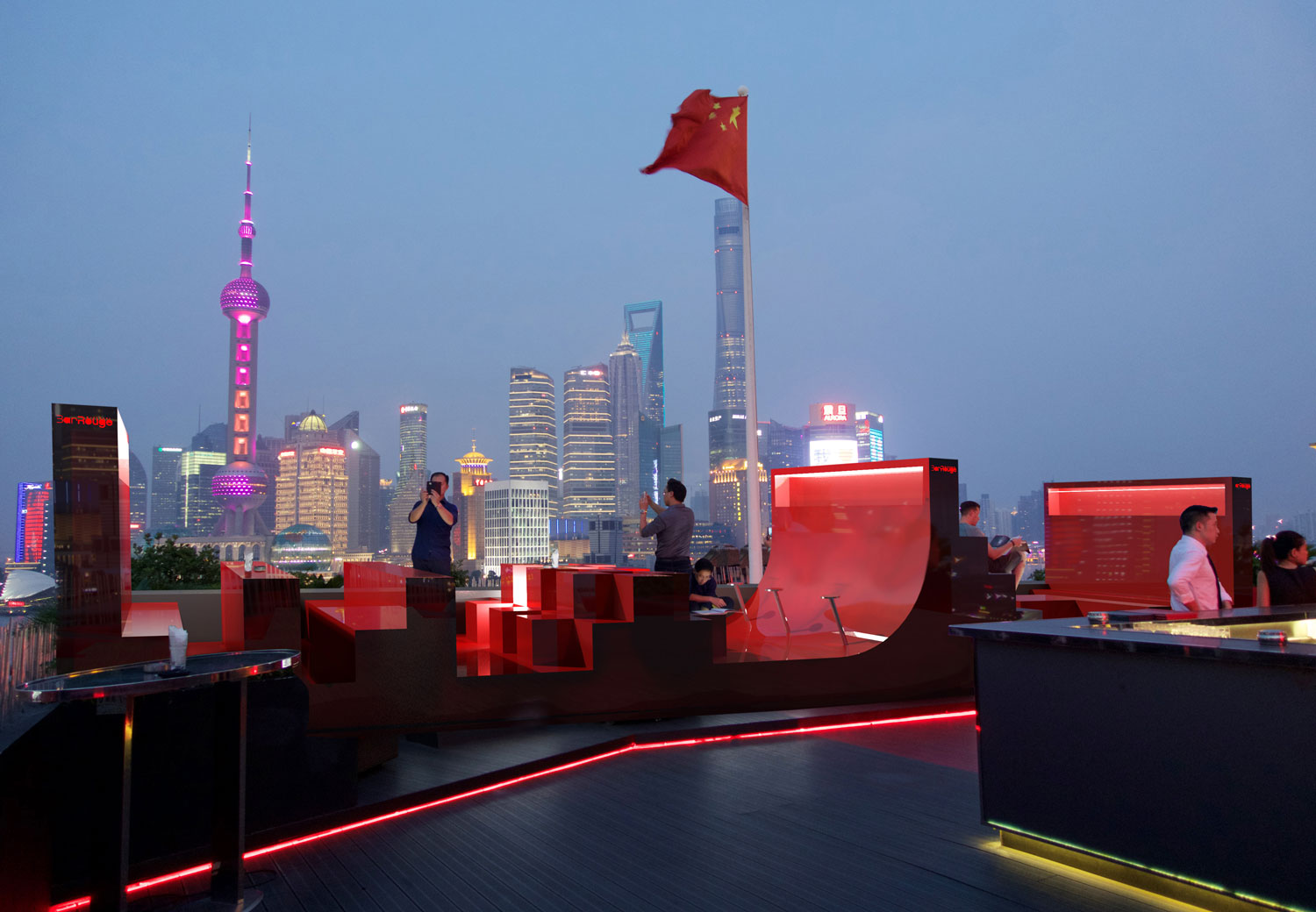
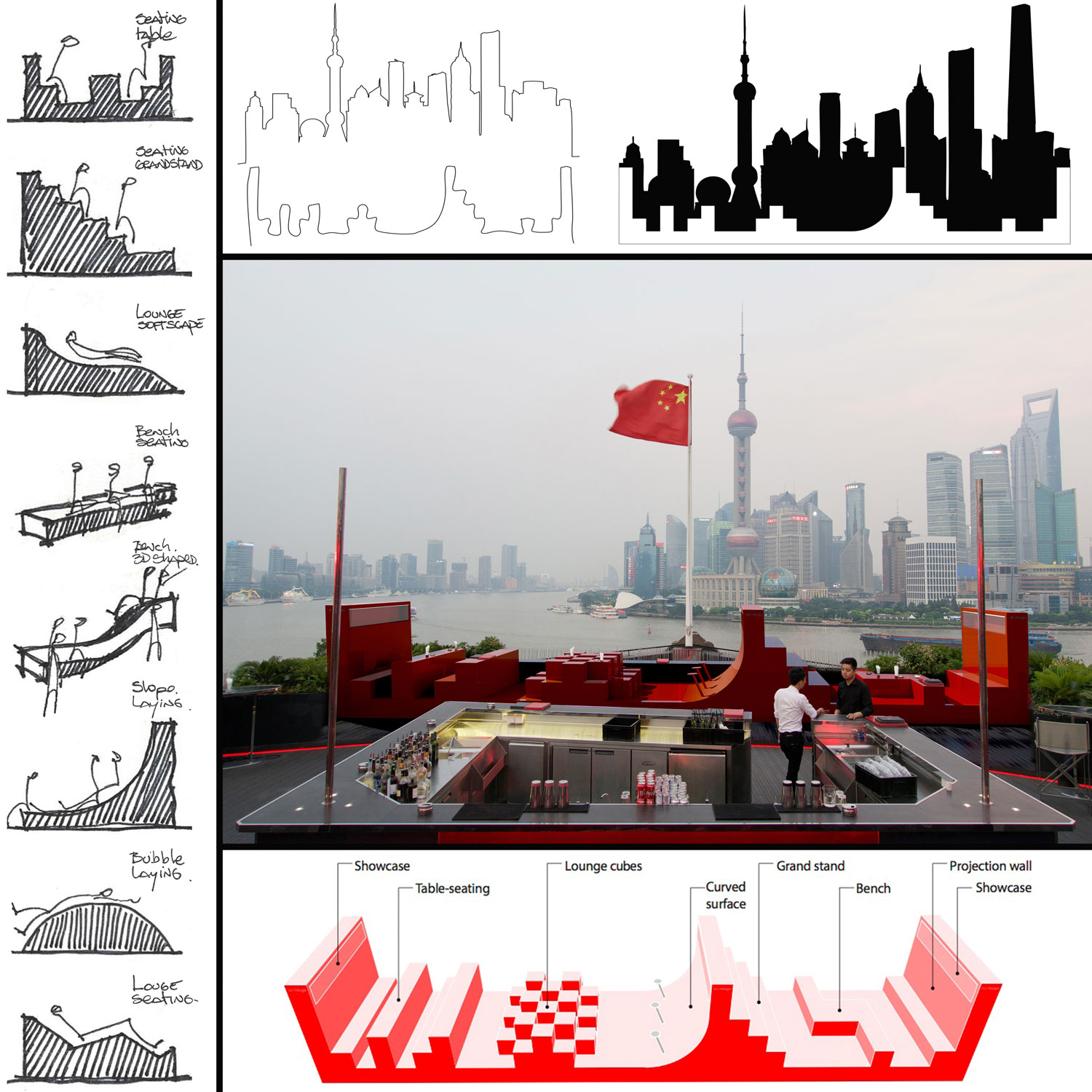
To align with the keywords and concepts, we introduce the concept of “RED ROUGE,” a new VIP Lounge area strategically positioned on the terrace’s edge. Replacing the existing lounge sofas, RED ROUGE competes visually with the iconic skyline, creating a new architectural object in the shape of the skyline itself. This innovative addition attracts clients, infuses fresh dynamics, and serves as a signature backdrop for the most photographed view at Bar Rouge.


© 100architects


© 100architects


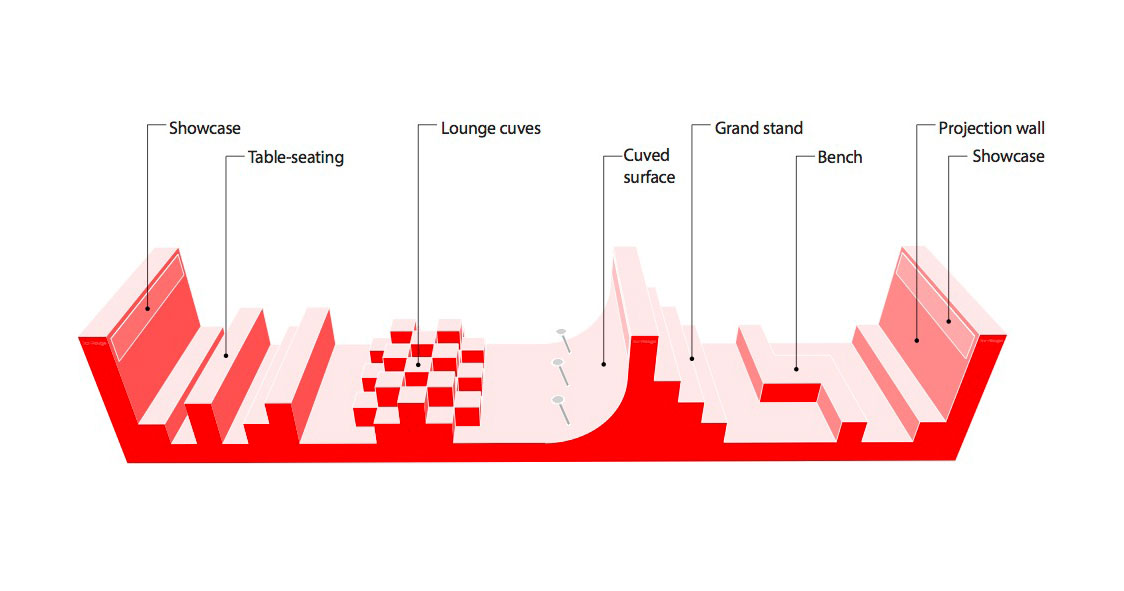
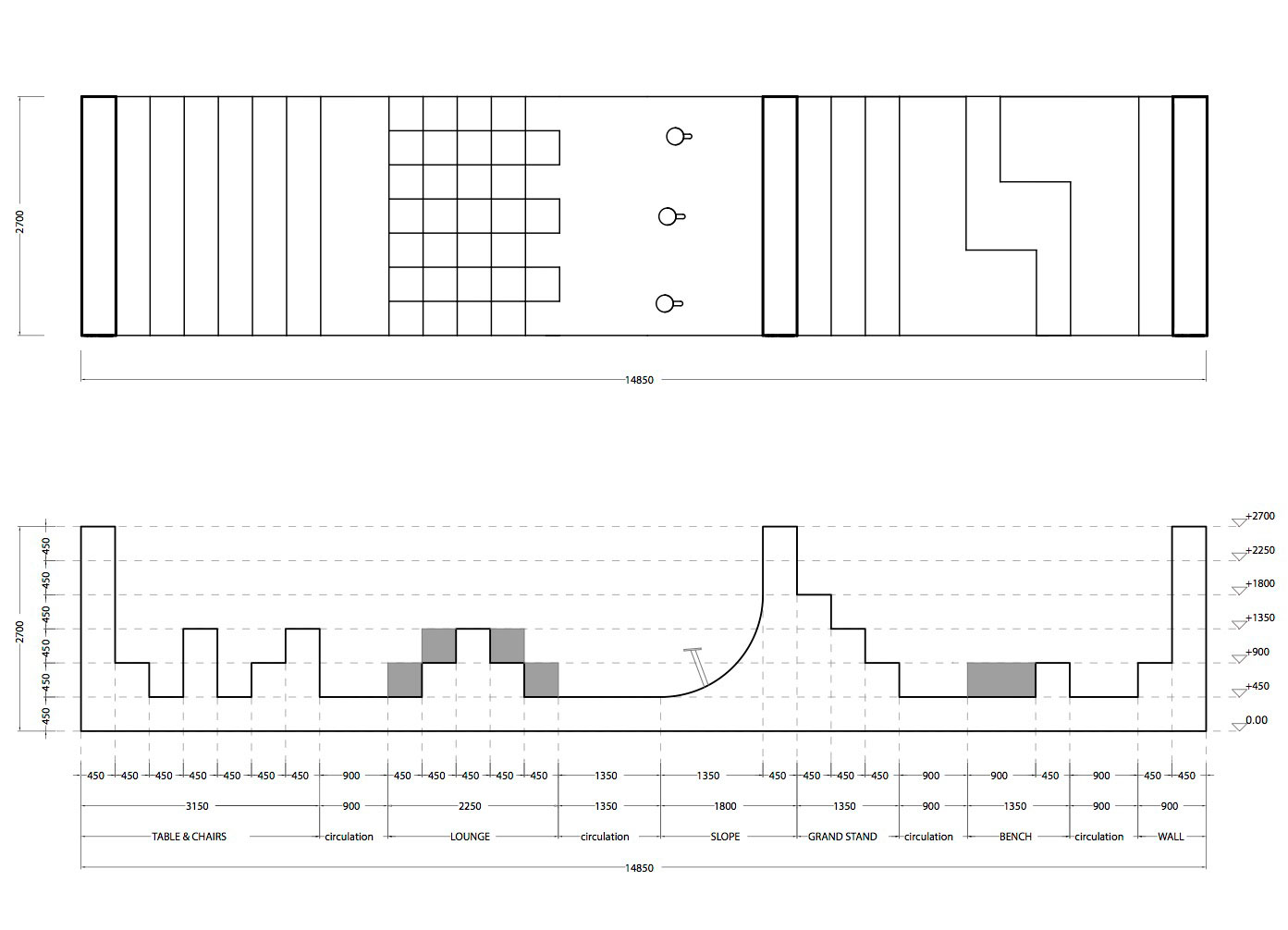
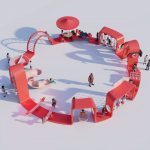
The objective of RED ROUGE is to entirely transform the space without disrupting regular business operations, while elevating revenue through a contemporary and metropolitan VIP experience. This multi-functional object features five distinct shapes, each catering to a unique way of inhabiting the VIP area:
 
1_Table-seating area: Hosting groups for table-drinks activities, accommodating up to 6 to 8 people, with an embedded drink showcase on the wall.
2_Lounge cubes: Informal seating for 6 to 7 people, with ample standing space around them.
3_The grandstand: A curved space introducing an interesting area and encouraging curiosity, with benches capable of hosting 3 people on one side and a three-level grandstand accommodating 9 people on the other side.
4_The bench: Simple seating for up to 6 people.
5_Projection wall: Serving as a platform for images and movies, also providing seating for 3 people.


© 100architects


The uniqueness of these shapes not only captivates the eye but also invites different forms of interaction, enhancing the VIP experience at Bar Rouge. To augment the visual aesthetic impact, we have chosen to construct the object entirely using Corian Solid Surface—a high-performance and aesthetically pleasing material, popular among architects and designers.
 
Staying true to Bar Rouge’s corporate color, red, our installation, Red Rouge, naturally adopts this vibrant hue. The decision to maintain a consistent red color throughout the entire VIP area reinforces its image and visual impact on the terrace, creating a striking and unforgettable ambiance.


© 100architects


© 100architects


© 100architects


Credits
 
PROJECT NAME: Red Rouge
DESIGN: 100 Architects (Shanghai) Co., Ltd.
DESIGN TEAM: Marcial Jesús, Javier González.
STATUS: Unuilt
LOCATION: Shanghai (China)
Renders: 100architects


WALKIE-TALKIE

Walkie-Talkie
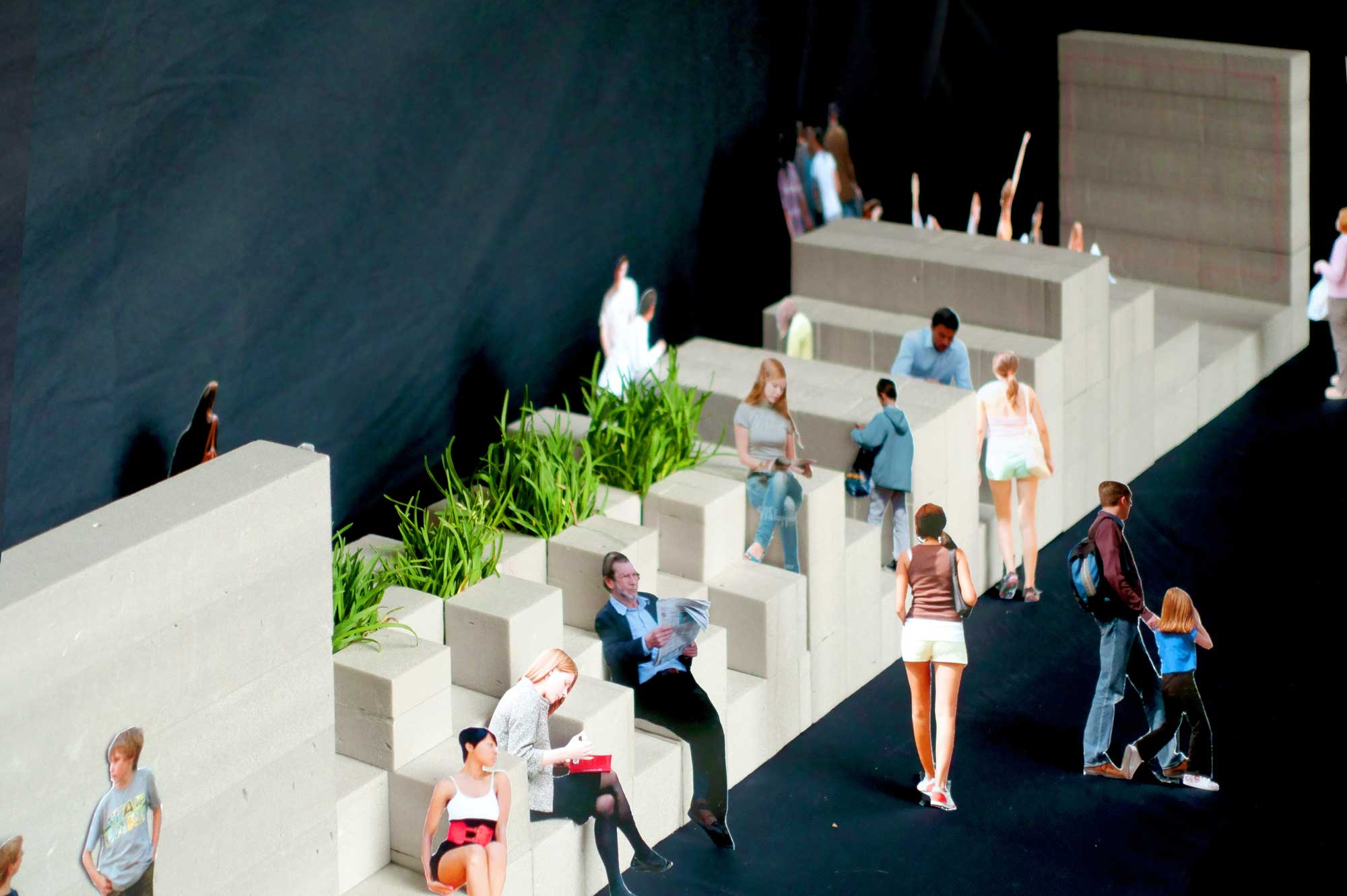
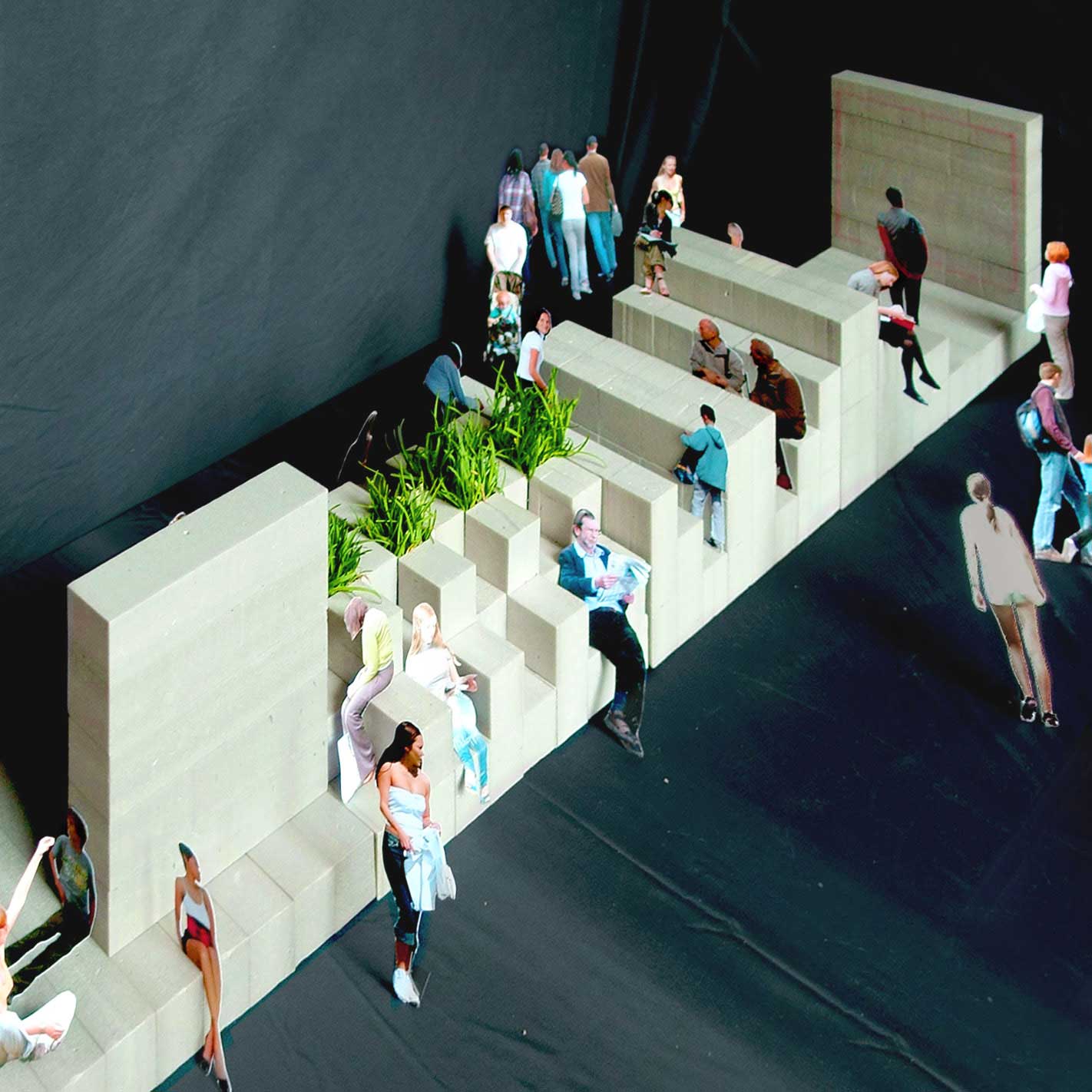
WALKIE-TALKIE is a “built” elongated plaza, in which the space is filled with mass, building soft volumes that invite for interaction.
It is a typology that we call “sidewalk plaza” since it is meant to be located alongside a pedestrian path or any pedestrian flow in public or semi public spaces.
 
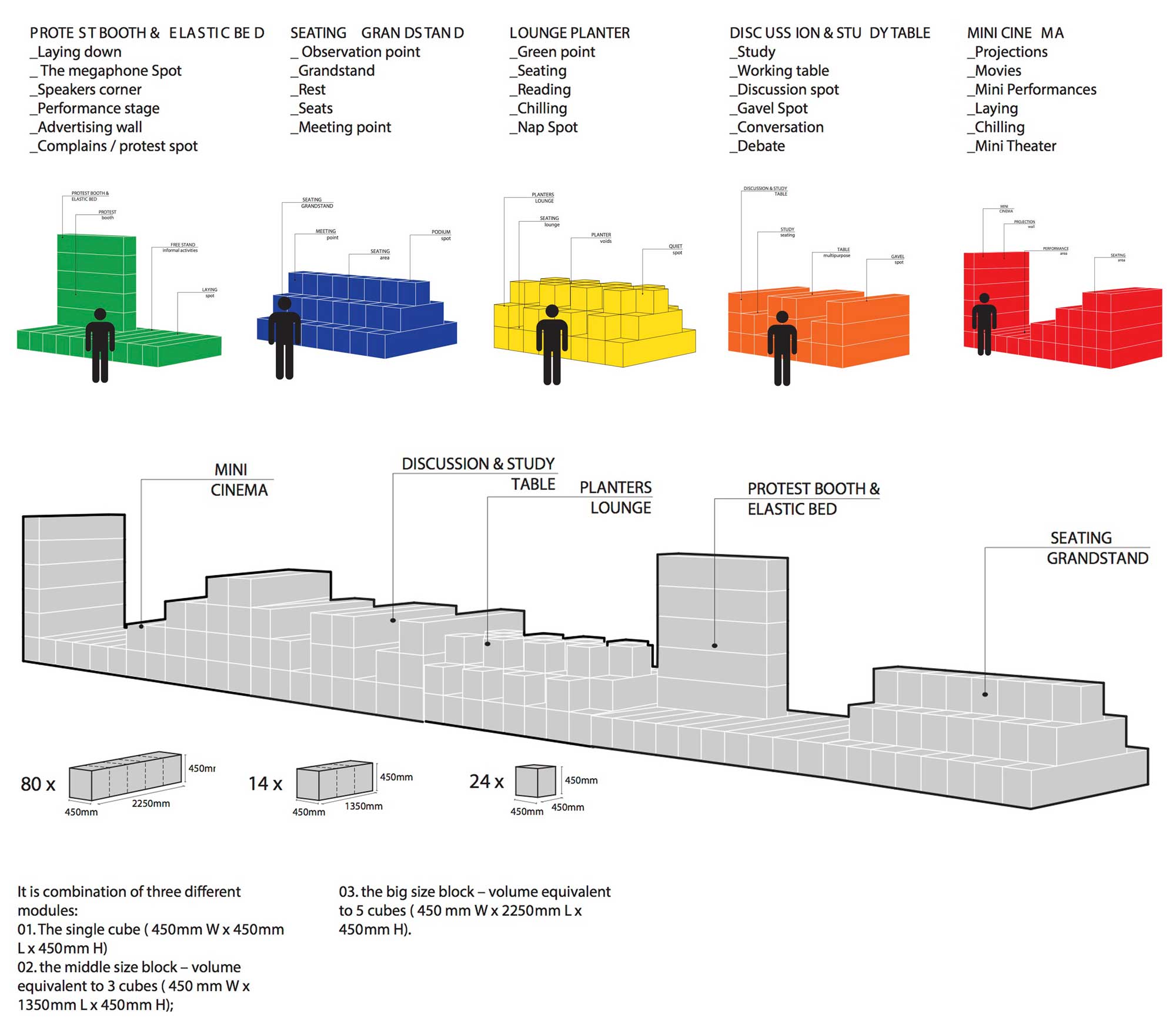
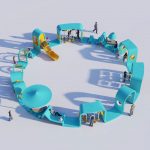
5 different components are established serving the sidewalk and the pedestrian passers-by: seating grandstand, Lounge planter, Discussion & study table, Mini cinema and Elastic bed. The 5 functions work in both ways, independently and collaboratively: they can be arranged in different modes, giving plenty of options for different sequences and configurations. This proposal is highly flexible and it provides opportunity for any eventual unpredictable change.


© 100architects


© 100architects


Module and Materiality
The proposal follows a modular system with a cube as base geometry and smallest unit. This is a due to its flexibility and ease as a mobile piece to assemble bigger objects in the public space.
 
It is combination of three different modules:
01. The single cube ( 450mm W x 450mm L x 450mm H)
02. the middle size block – volume equivalent to 3 cubes ( 450 mm W x 1350mm L x 450mm H)
03. the big size block – volume equivalent to 5 cubes ( 450 mm W x 2250mm L x 450mm H)
 
The main material used is high compression, high density polyurethane base foam, top and ends laminated with 2” of cross linked polyethylene, 2” polyester web handles and with special Velcro placement along the edges connected side-by-side, end-to-end or on top of one another.


© 100architects


© 100architects


© 100architects


Functions
The uses and activities proposed are a mini theatre for projections, a debating table for spontaneous interactions, a megaphone platform, where diverse Street artists and musicians perform freely, meeting points, grandstands for observing performances, elastic bed and a lounge area among many others. These uses naturally complement the dynamics that arise spontaneously on any elongated circulation space.
 
It can be positioned alongside of any elongated space, sidewalk or existing plaza, facilitating new forms of collective gathering and engagement with the city.
 
It is street architecture without ground that can accompany any existing space where there is a constant flow of people, and because its atomized nature, it can be easily moved, recycled, taken away and placed again and again.


© 100architects


© 100architects

HUELLAS ARTES

Huellas Artes
Santiago, Chile | Heritage day | Metro Cultura
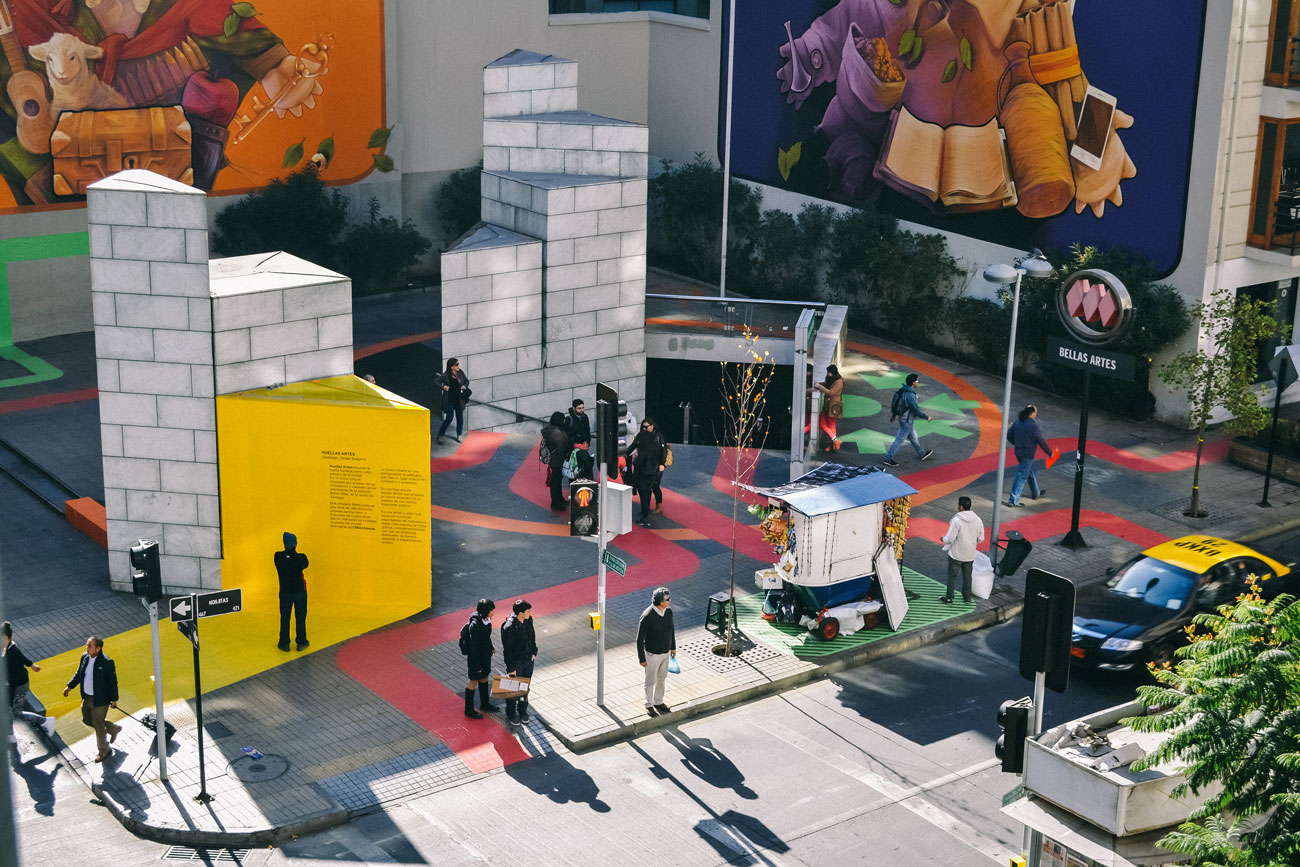
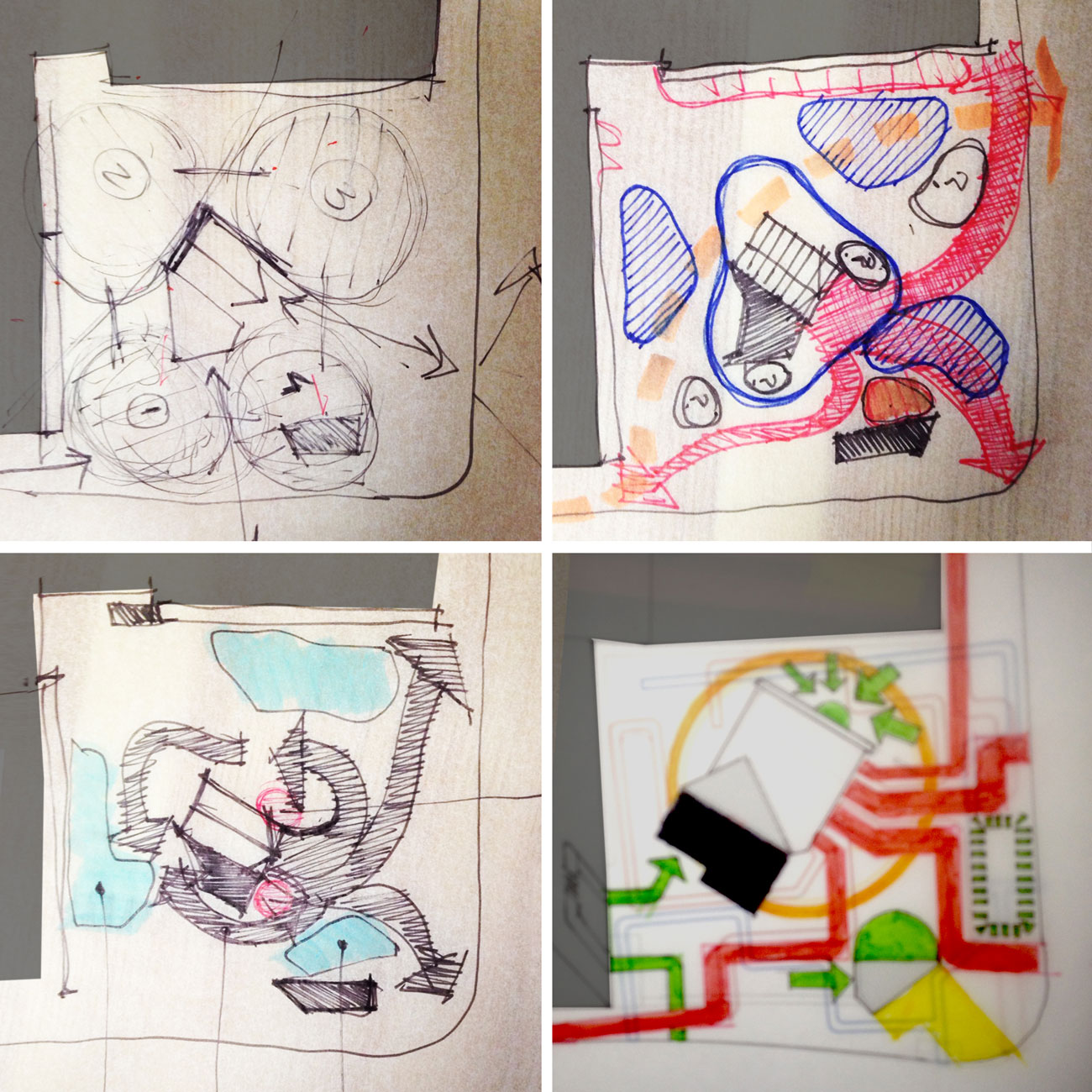
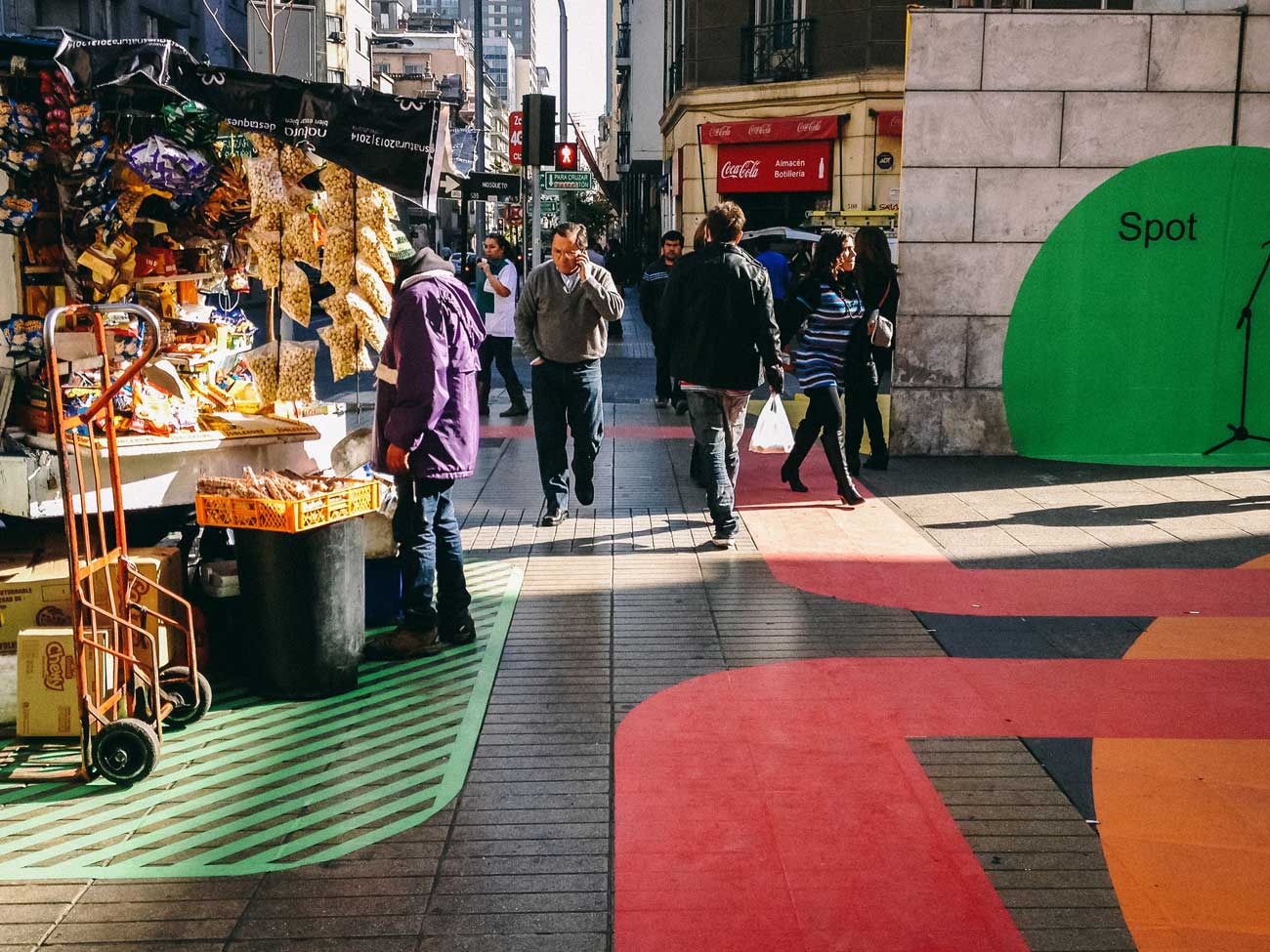
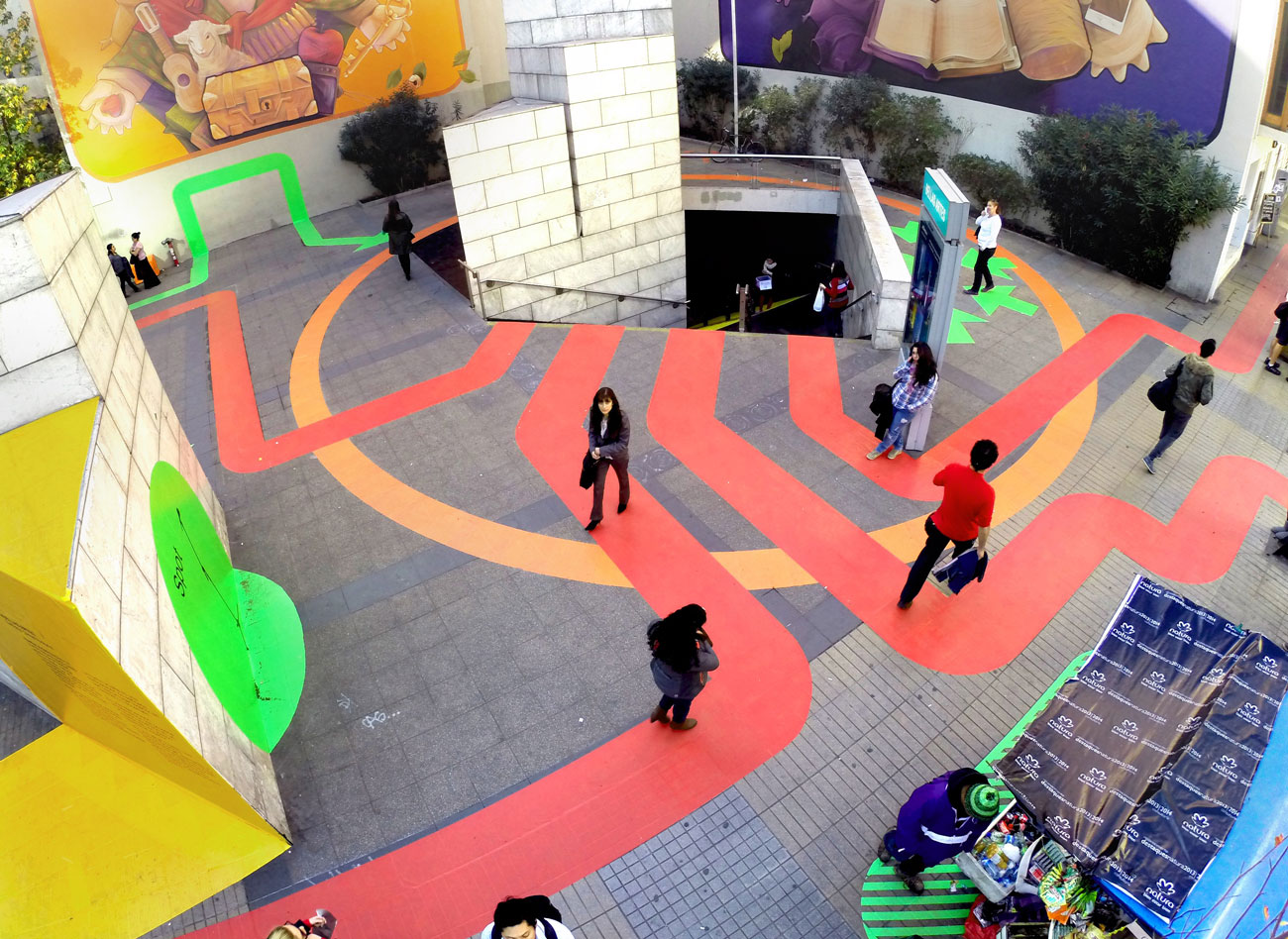
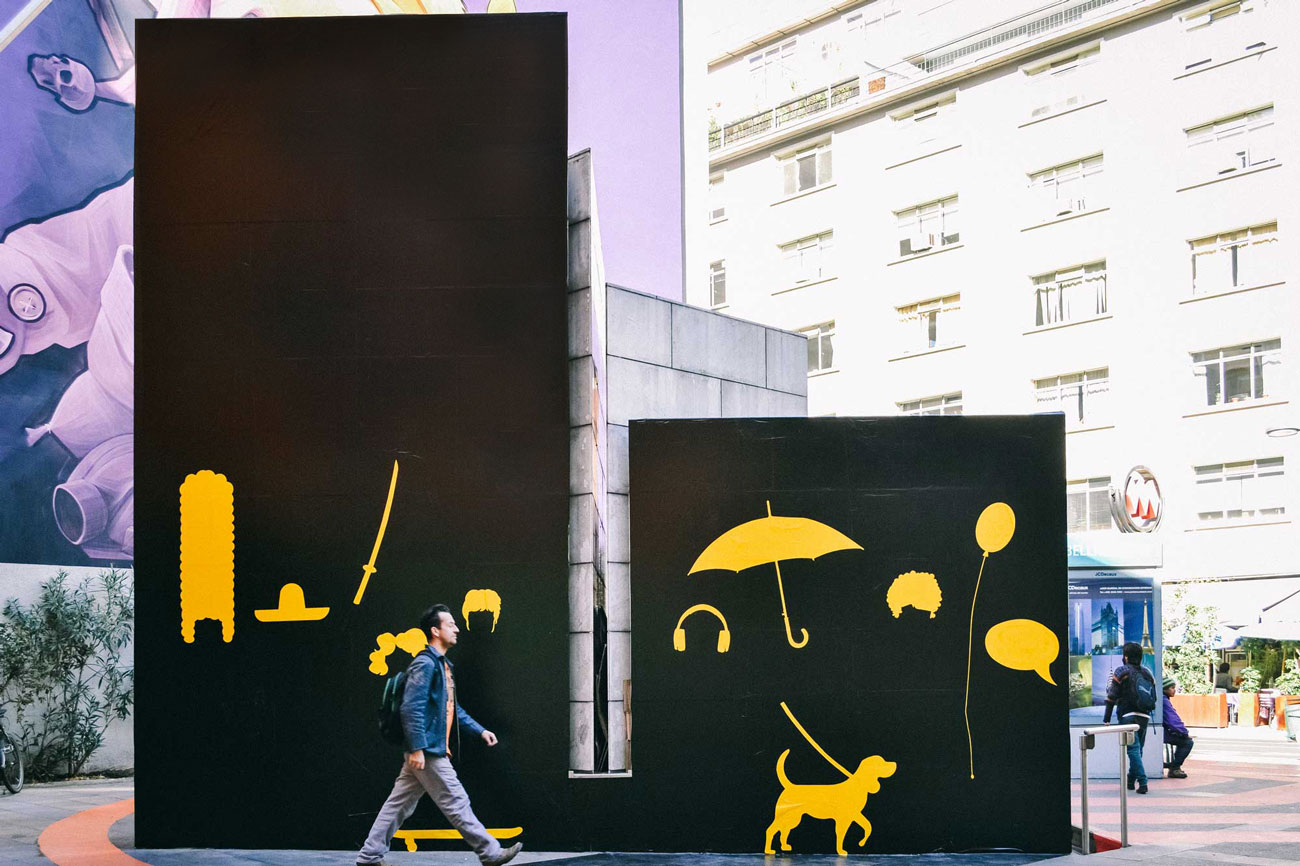
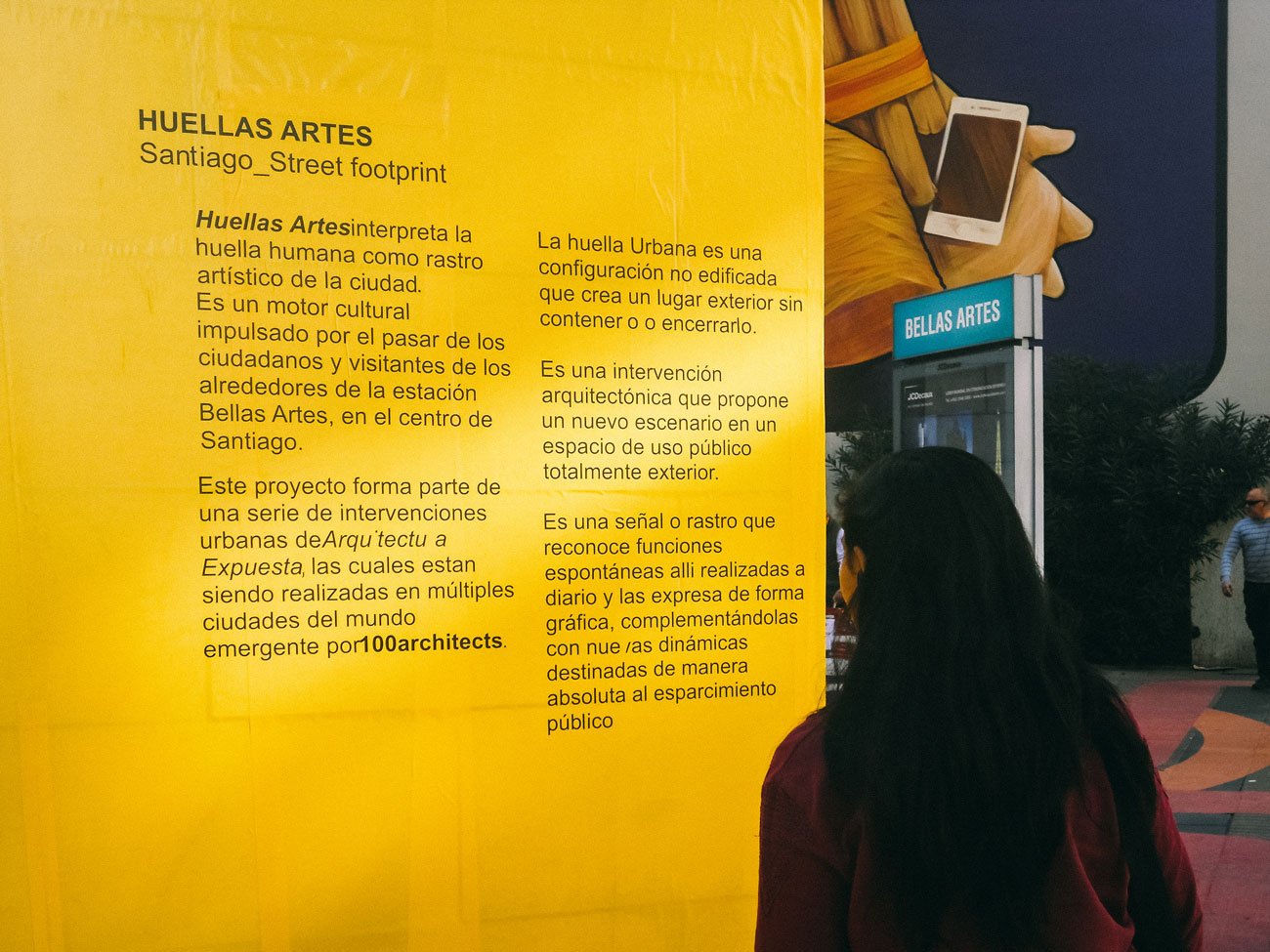
Huellas Artes was an experimental urban project initiated by three young architects with the aim of exploring experimental methods of city intervention. It focused on the innovative concept of “painted scape,” which involved transforming urban spaces exclusively through 2D interventions on surfaces, without introducing new 3D structures.
 
It was a self-managed and self-financed project with the purpose of explore experimental methods to intervene the city.


©100architects


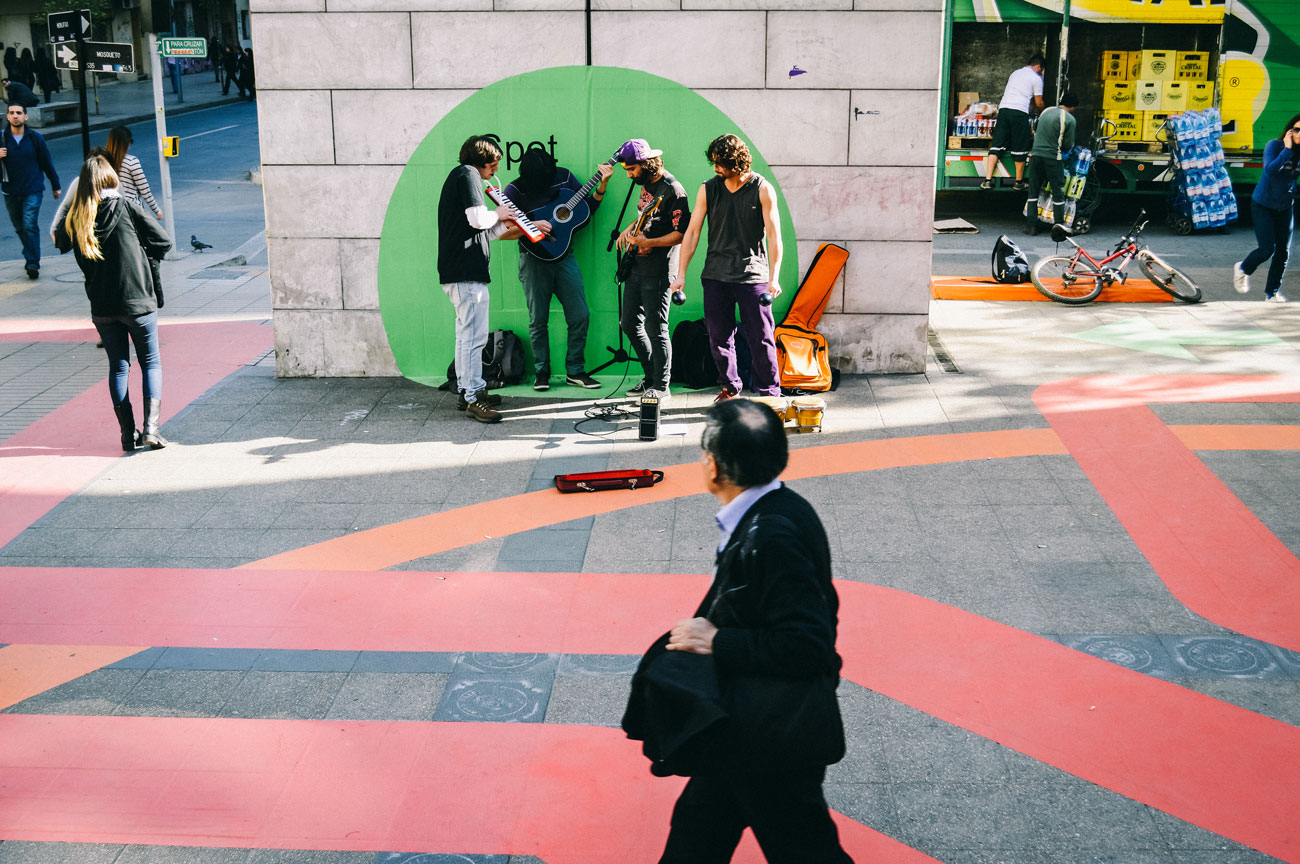
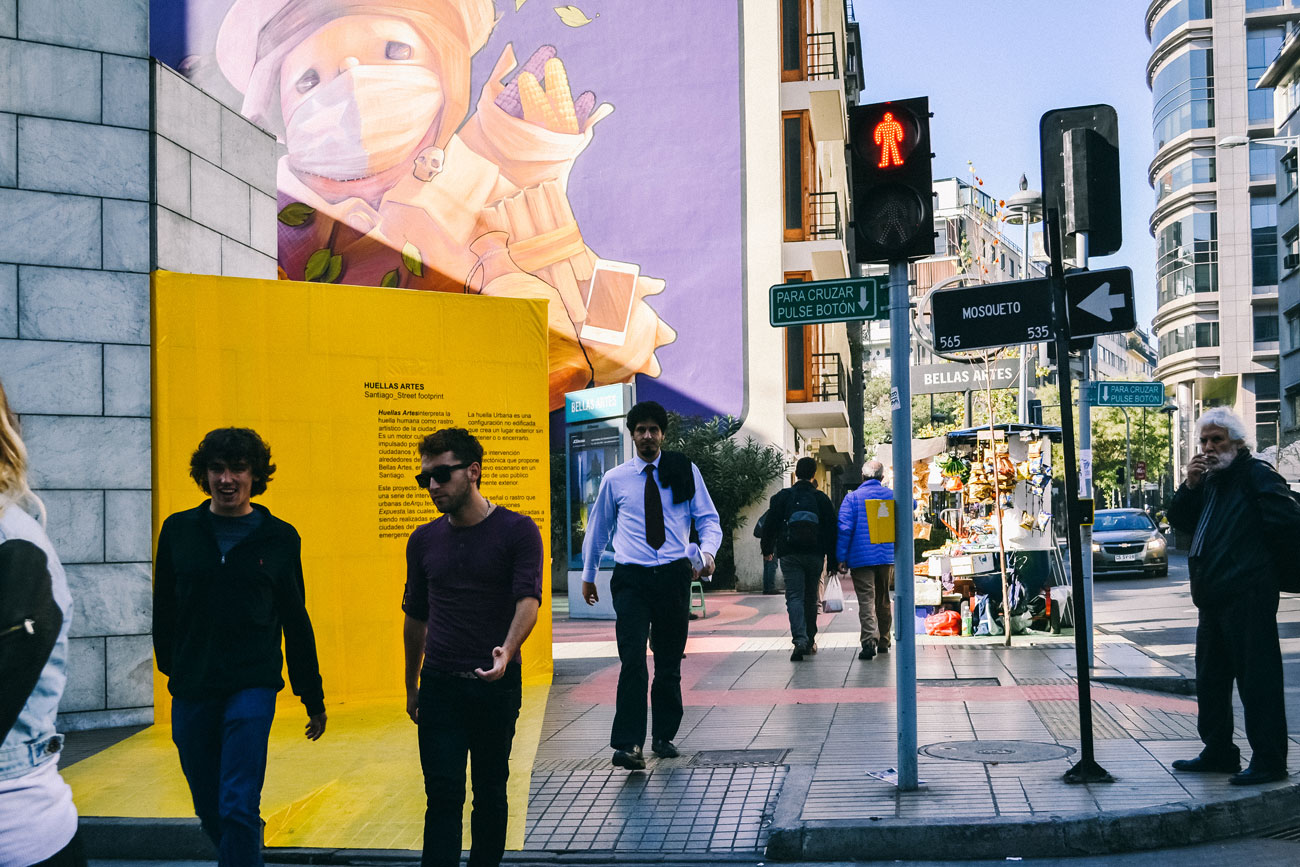
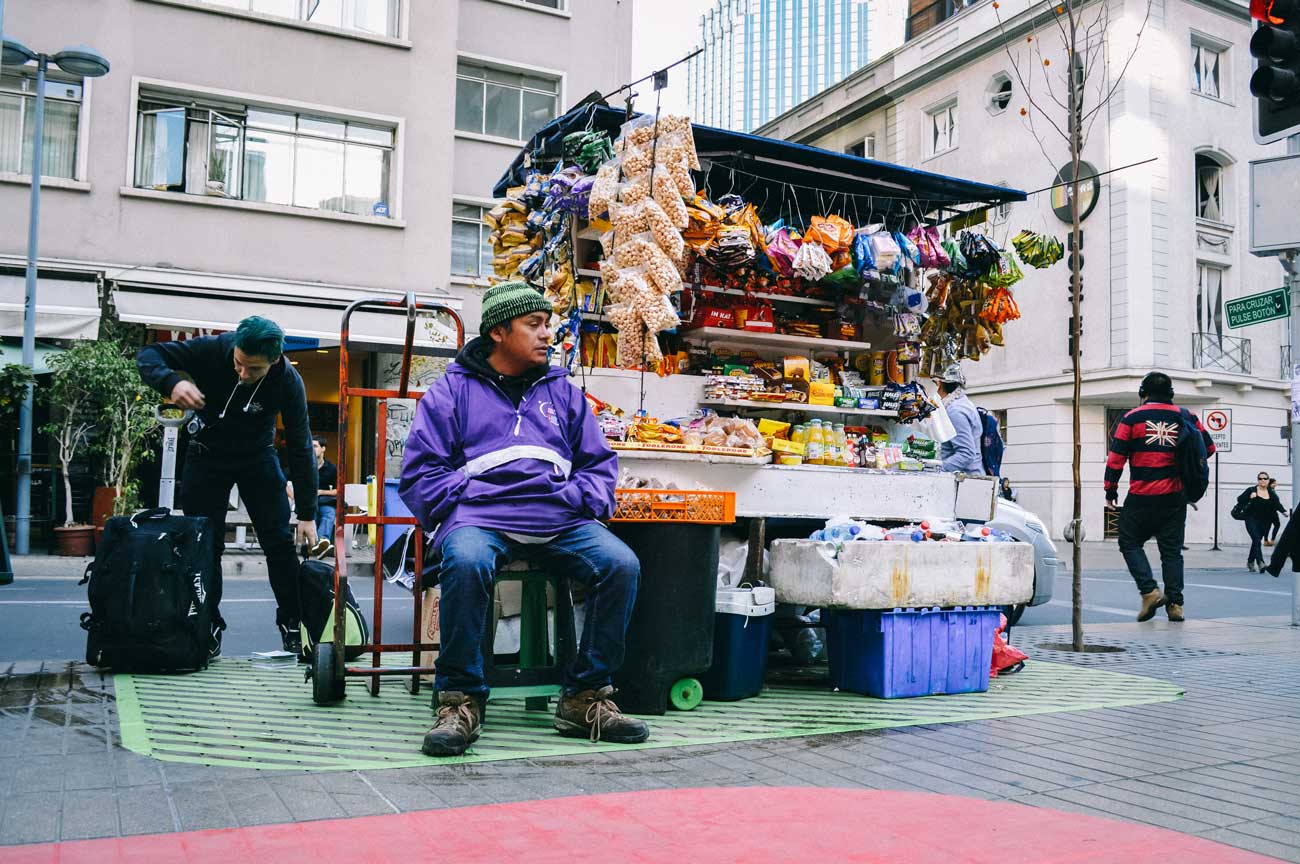
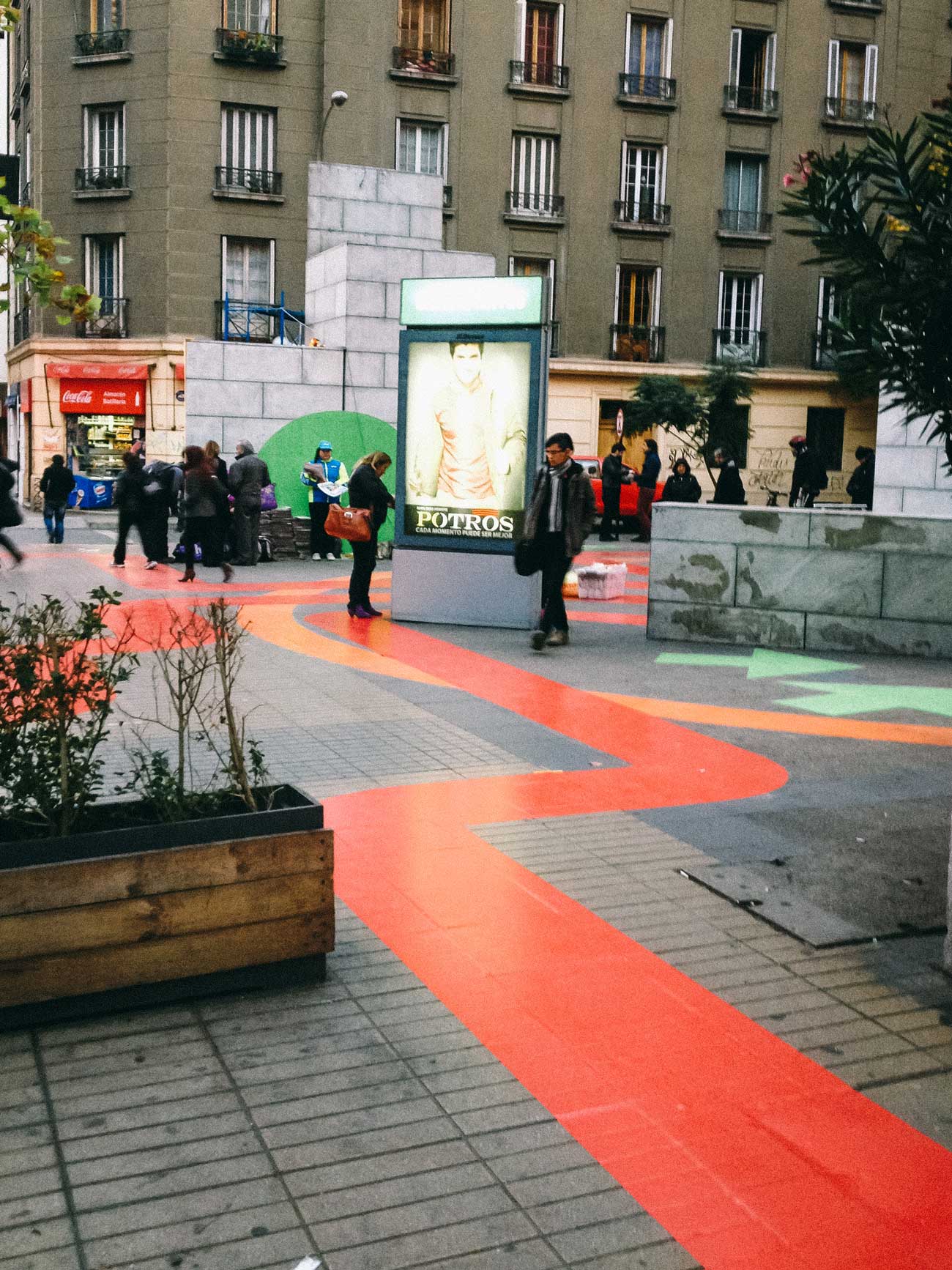
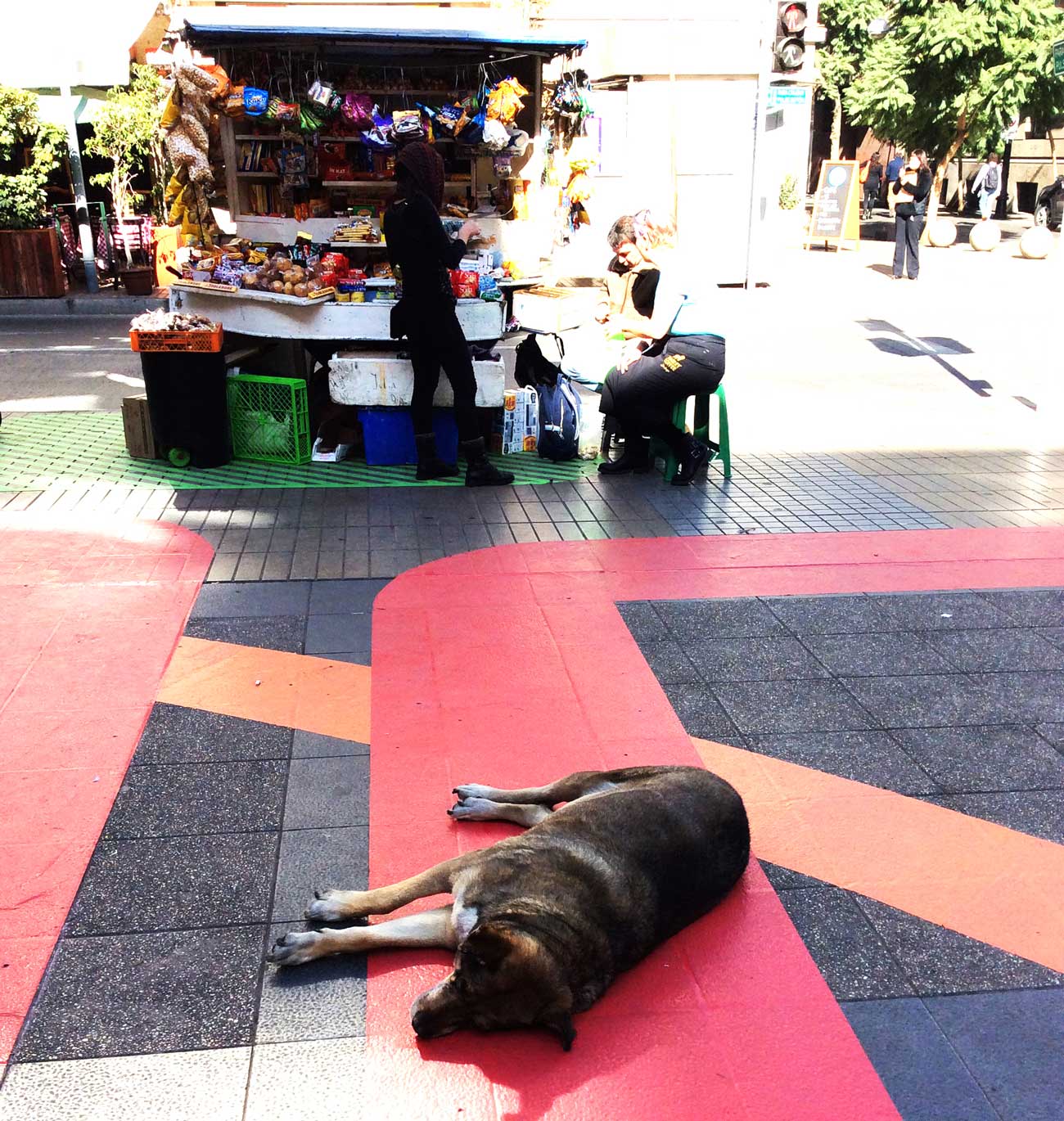
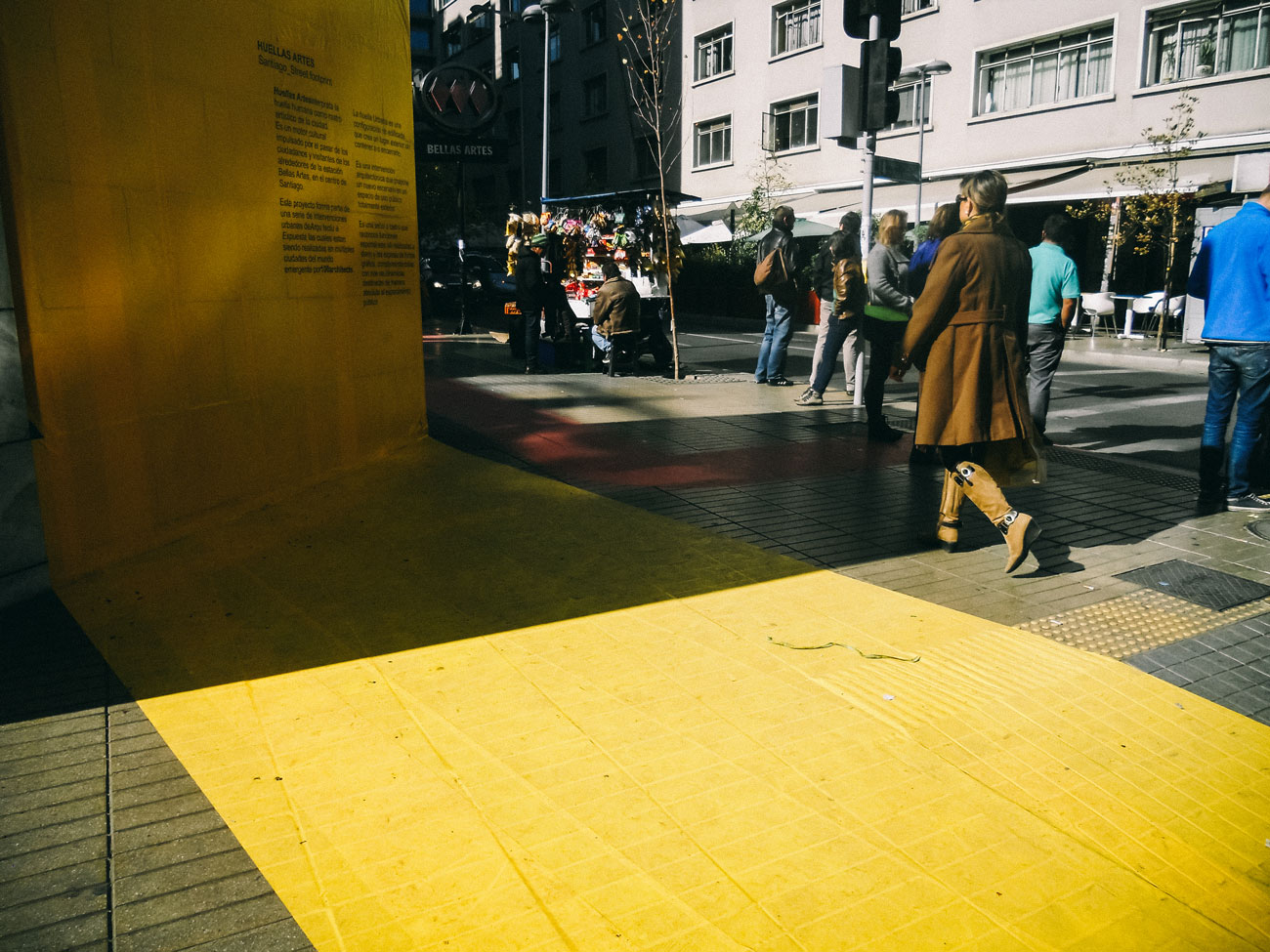
Located near the Bellas Artes metro station in downtown Santiago, Huellas Artes sought to revitalize an underutilized outdoor space situated above the station. The idea was to revitalize this site as a catalyst for activities related to the constant flow of people that the station attracts. It aimed to establish a series of functions and encourage social relationships, demonstrating the possibilities of spatial transformation through colors, words, photographs, and lines.
 
It is a 2d configuration that by coloring the existing surfaces, it creates areas, signals, suggesting functions and actions, ultimately transforming an existing space into a vibrant one by adding stimulation and functional graphics.


©100architects


Huellas Artes Official Video | 100A Channel


Using cloth tape coated with polyethylene in various colors and sizes, the architects added functional elements such as a “selfies” wall, an artist spot, a meeting point, directional arrows, seating benches, and other informal, spontaneous uses. These additions aimed to foster social interaction and spontaneous engagement, creating a vibrant and dynamic environment.


©100architects


Despite its short duration of only two weeks, Huellas Artes made a significant impact. The colorful and inventive intervention surprised and captivated passersby, prompting them to view the space in new ways and fostering interactions that enriched the urban experience.
 
Through Huellas Artes, the architects demonstrated the transformative potential of simple yet creative interventions in urban design. By challenging conventional approaches and showcasing the possibilities of reimagining existing urban spaces, the project highlighted the importance of creativity and innovation in shaping the cities of tomorrow.


©100architects


©100architects


©100architects


©100architects


©100architects


©100architects


©100architects


©100architects


©100architects


©100architects


©100architects


©100architects


©100architects


©100architects


©100architects


©100architects


CREDITS:
 
Project Name: Huellas Artes
Design: 100architects (Shanghai)
Design Team: Marcial Jesús, Pablo Juica, Madalena Sales.
Client: no client
Area: 744 m2
Completion: May 2014
Location: Santiago, Chile
Photographer: 100architects + Ines Subtil


ALIEN CRASHING

Alien Crashing
Unleash the Extraterrestrial Symphony of Color and Music
 
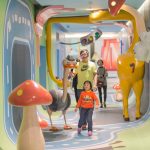
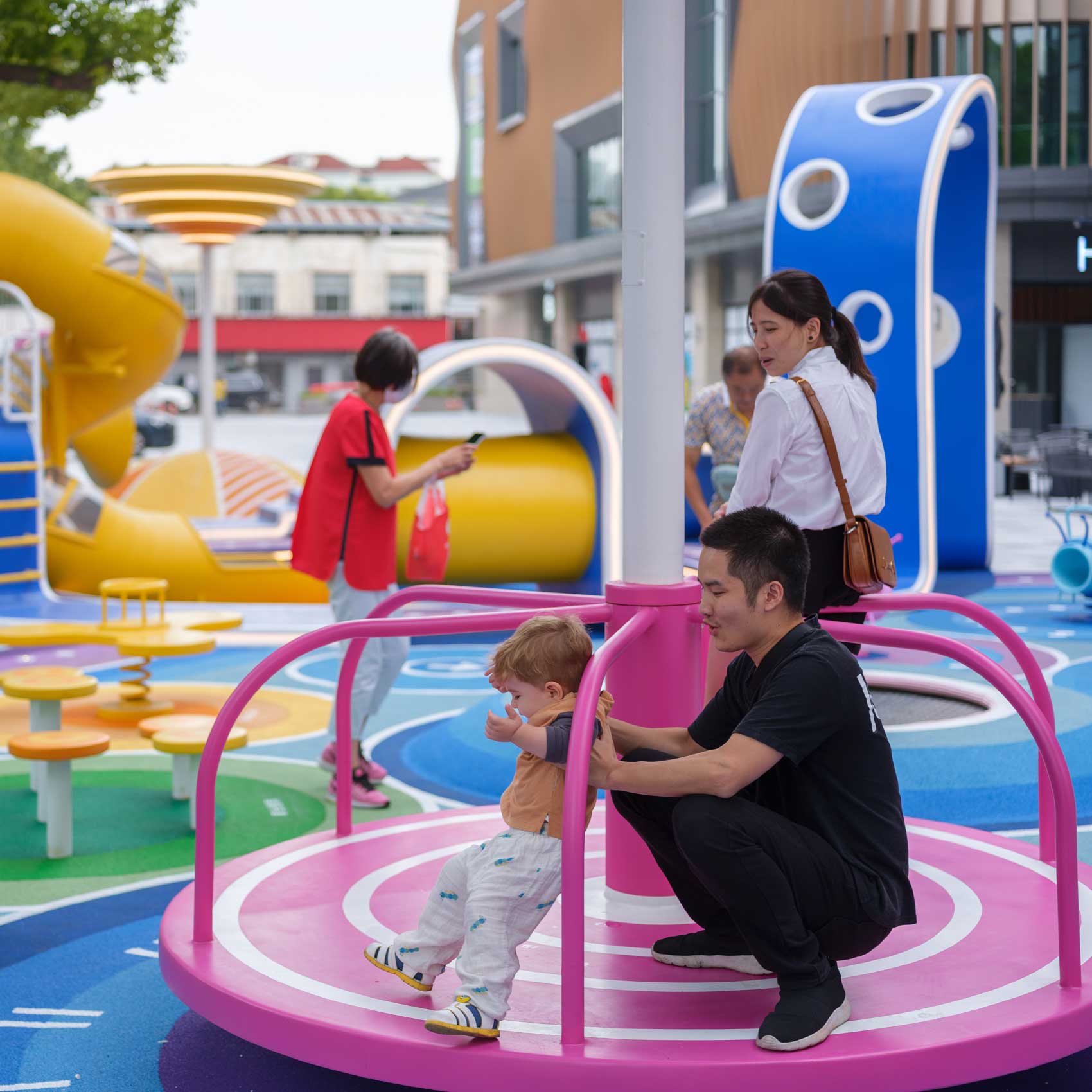
Step into a realm of fantasy and vibrant pop colors as “Alien Crashing” breathes life into a shopping center, unveiling a wondrous spectacle that defies imagination. This thrilling project was designed to invigorate the recently built commercial compound during the Summer Festival of 2017, enchanting youngsters and families with its mesmerizing installations.


© 100architects


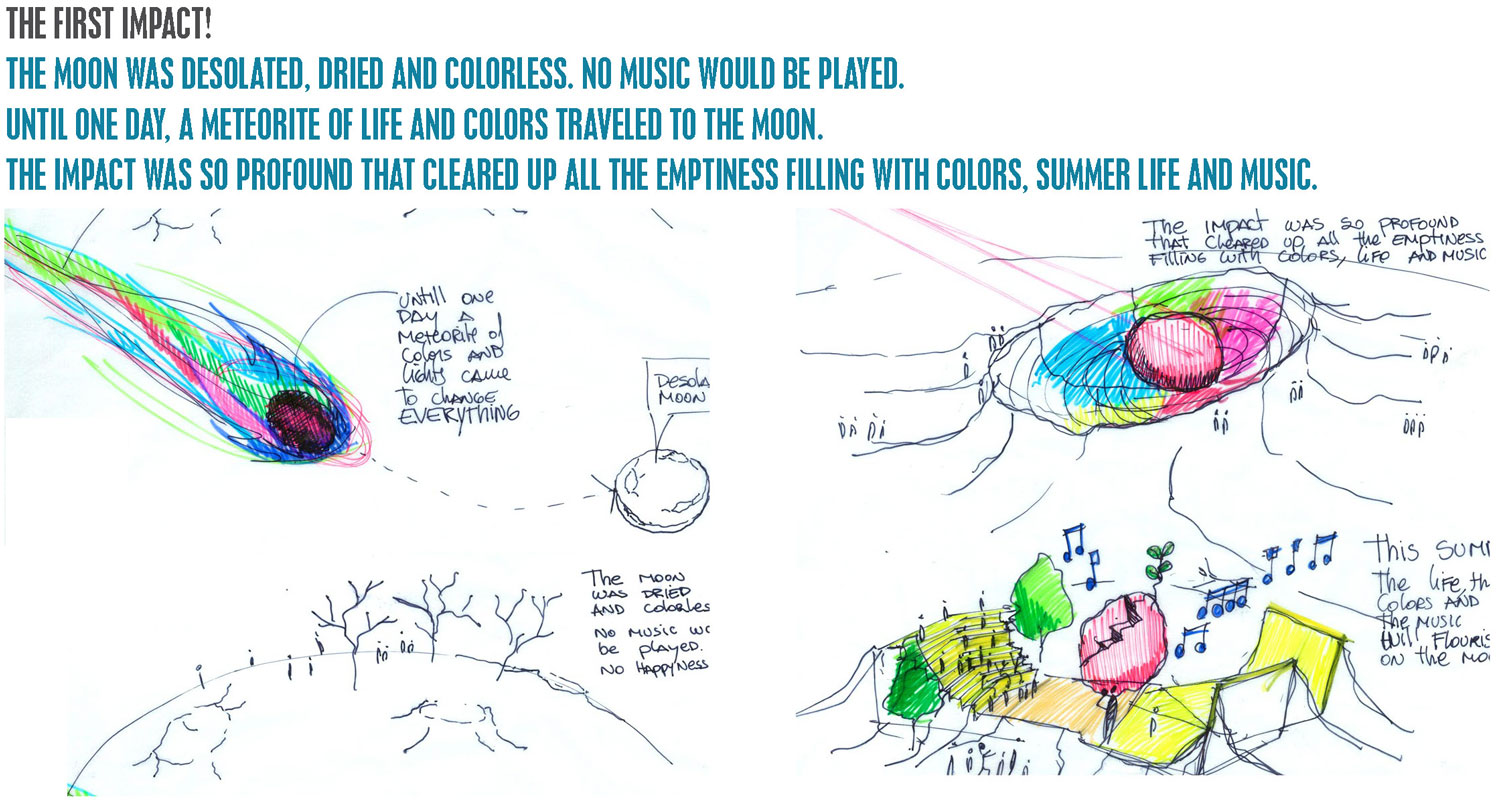
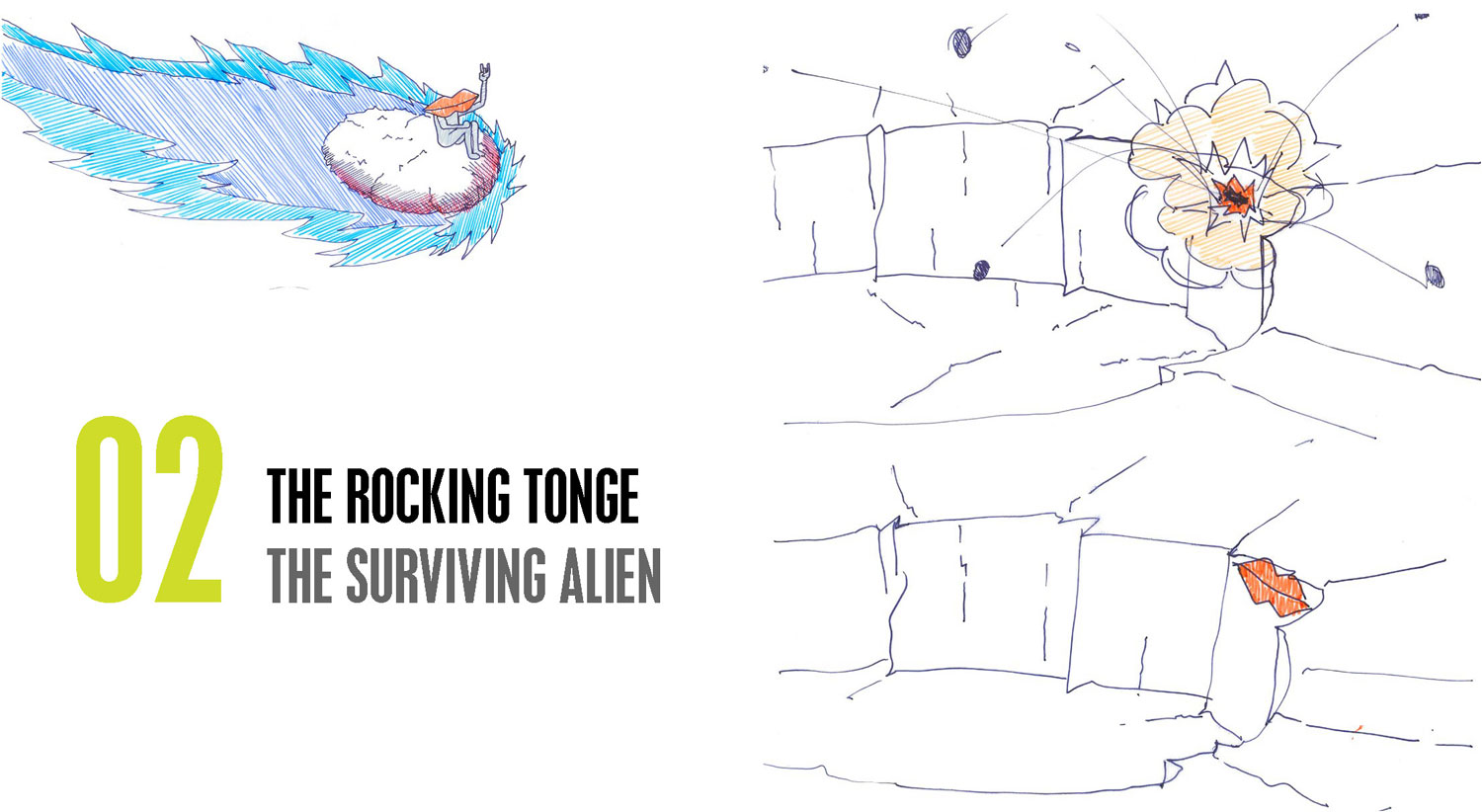
Comprising several small interventions scattered throughout the public spaces, “Alien Crashing” weaves an immersive experience through a captivating narrative. Drawing inspiration from the enigmatic name of the shopping center, we set out to reimagine an extraordinary event – an Alien crashing onto the moon millions of years ago, setting the stage for an extraordinary transformation.


© 100architects


© 100architects


© 100architects


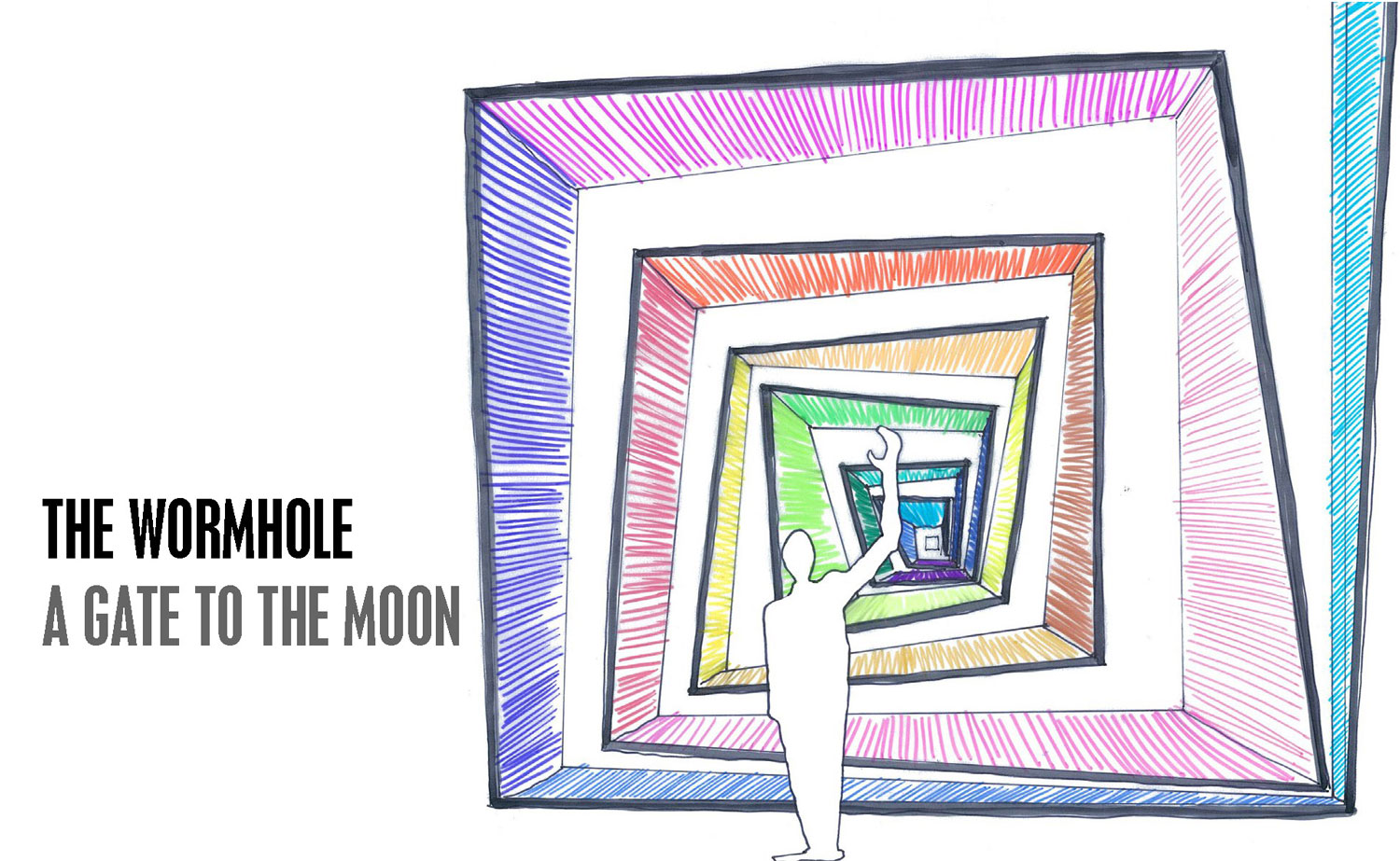
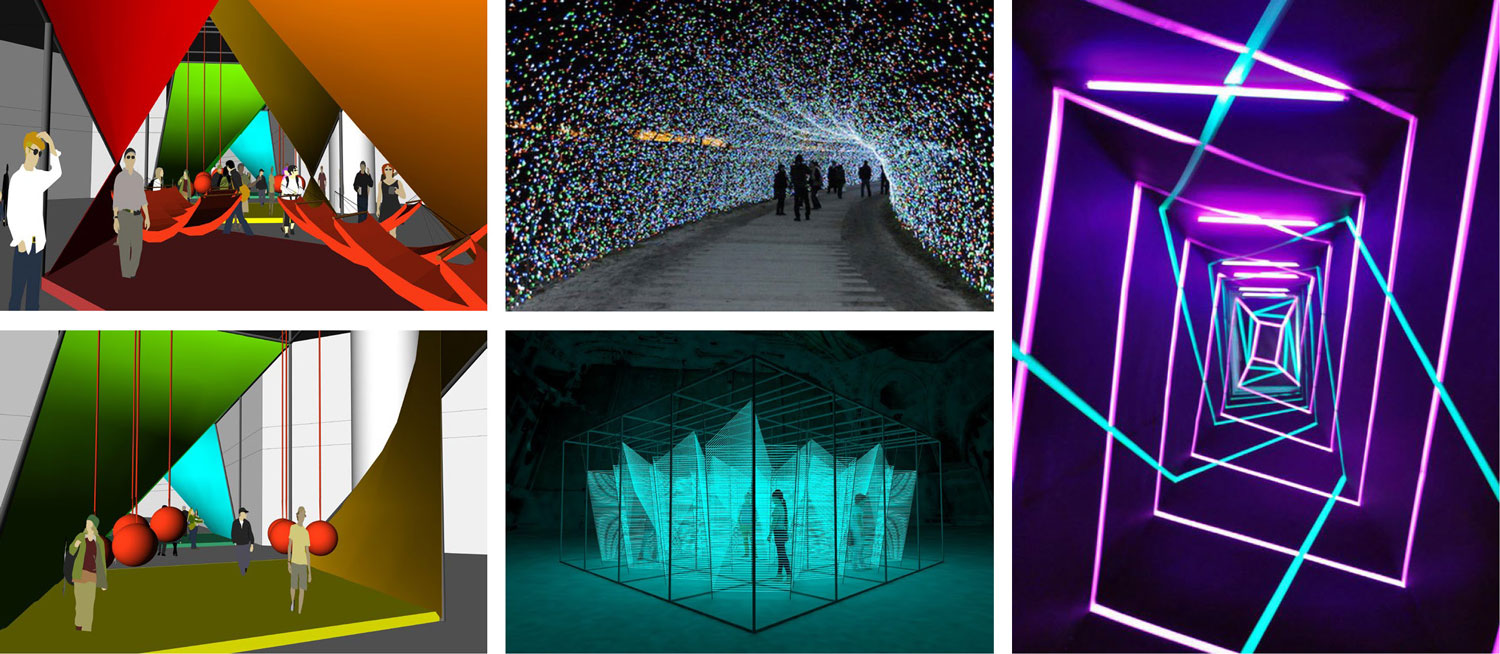
Picture “The Wormhole,” an alluring gateway at the main access of the shopping building, immersing visitors in a symphony of lights, colors, and music as they journey into the enchanting world that lies ahead.


© 100architects


© 100architects


© 100architects


© 100architects


© 100architects


© 100architects


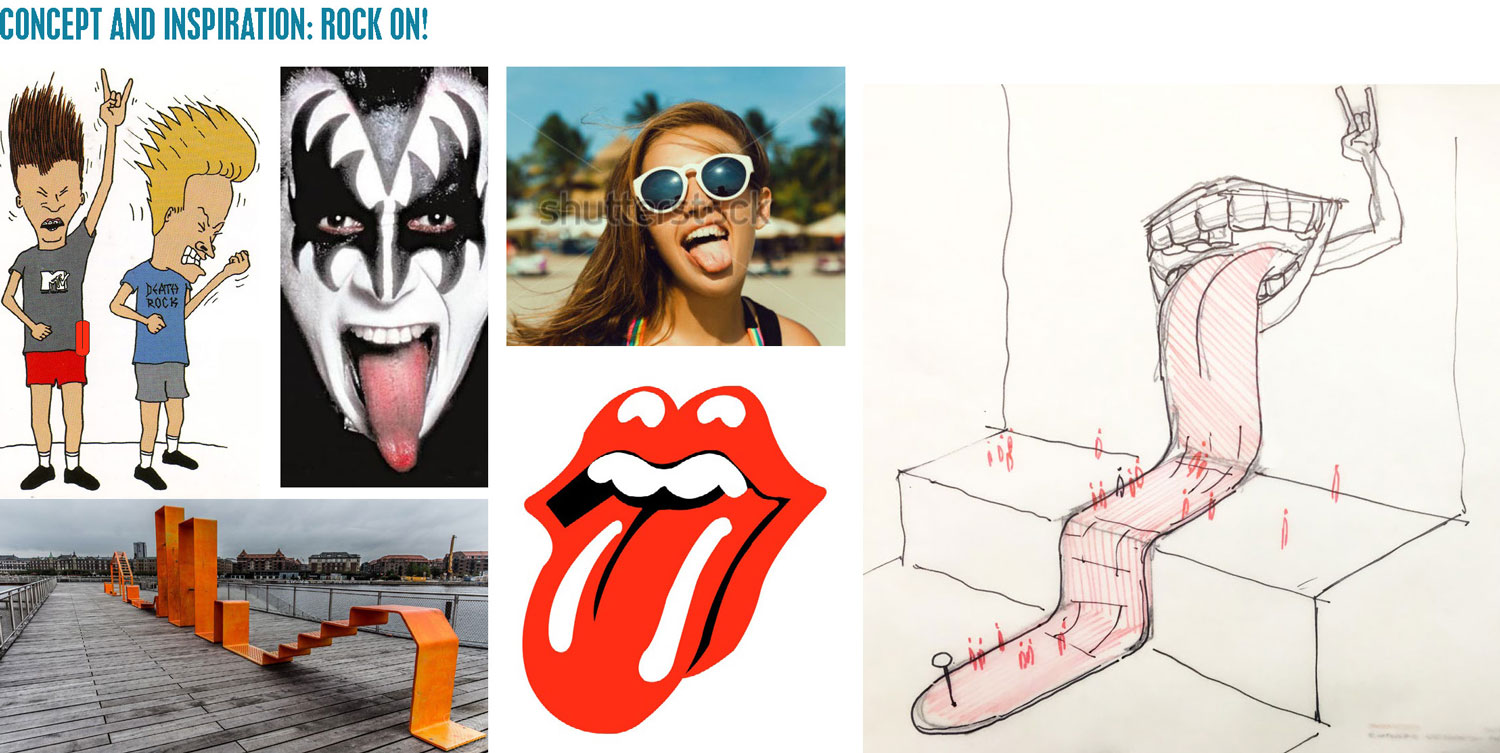
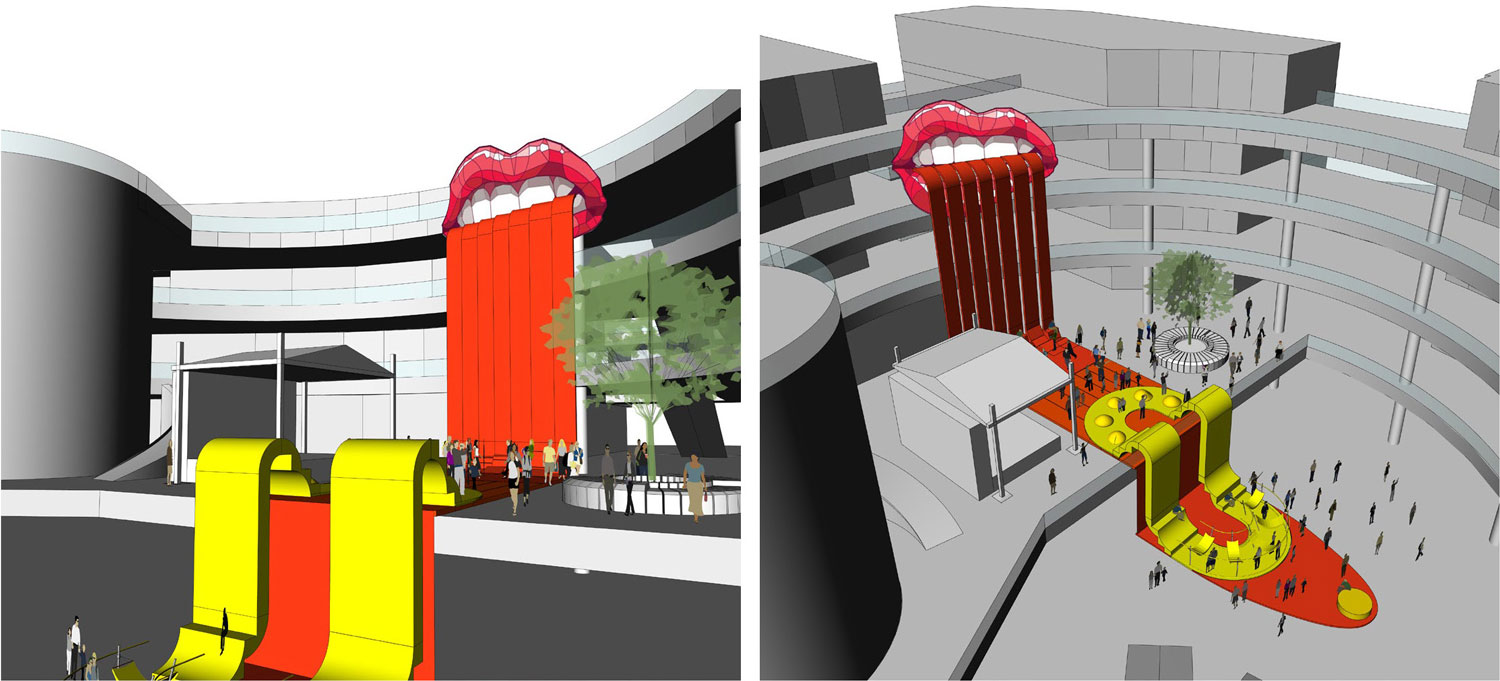
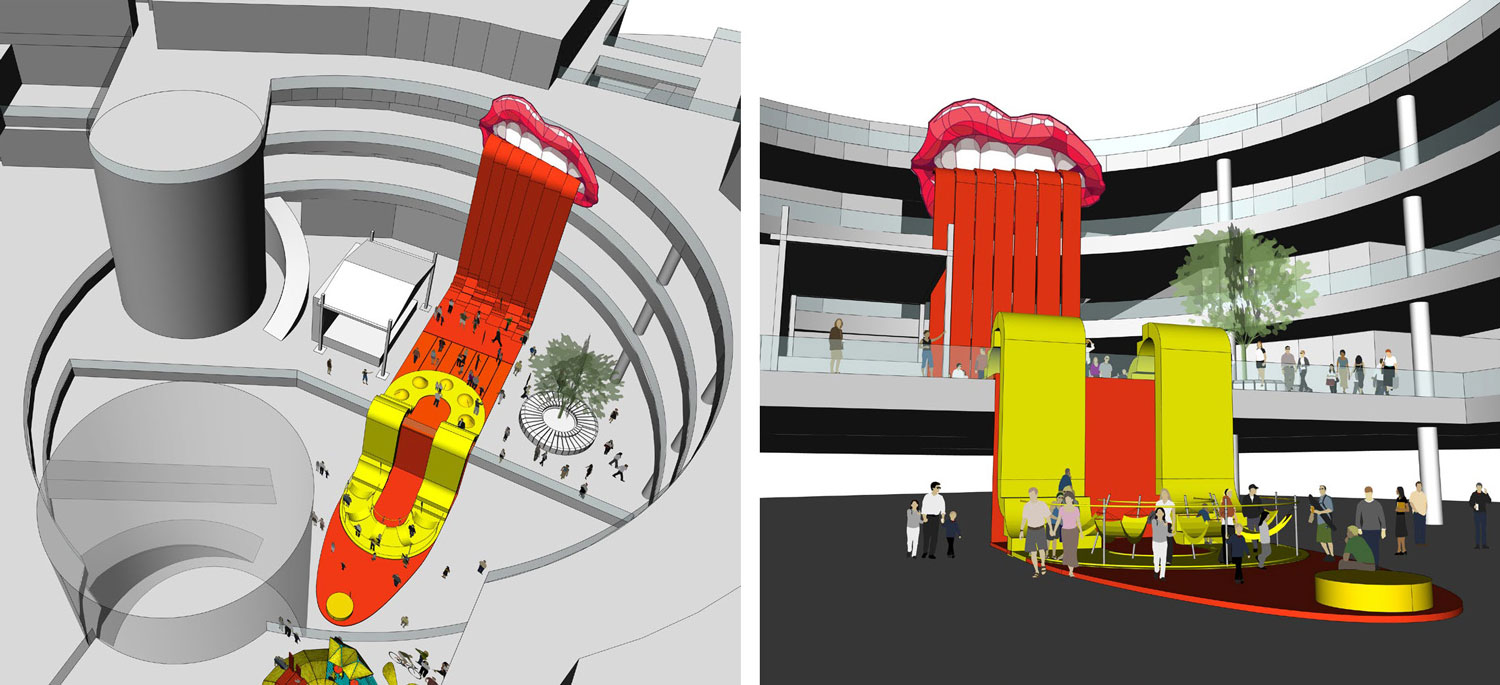
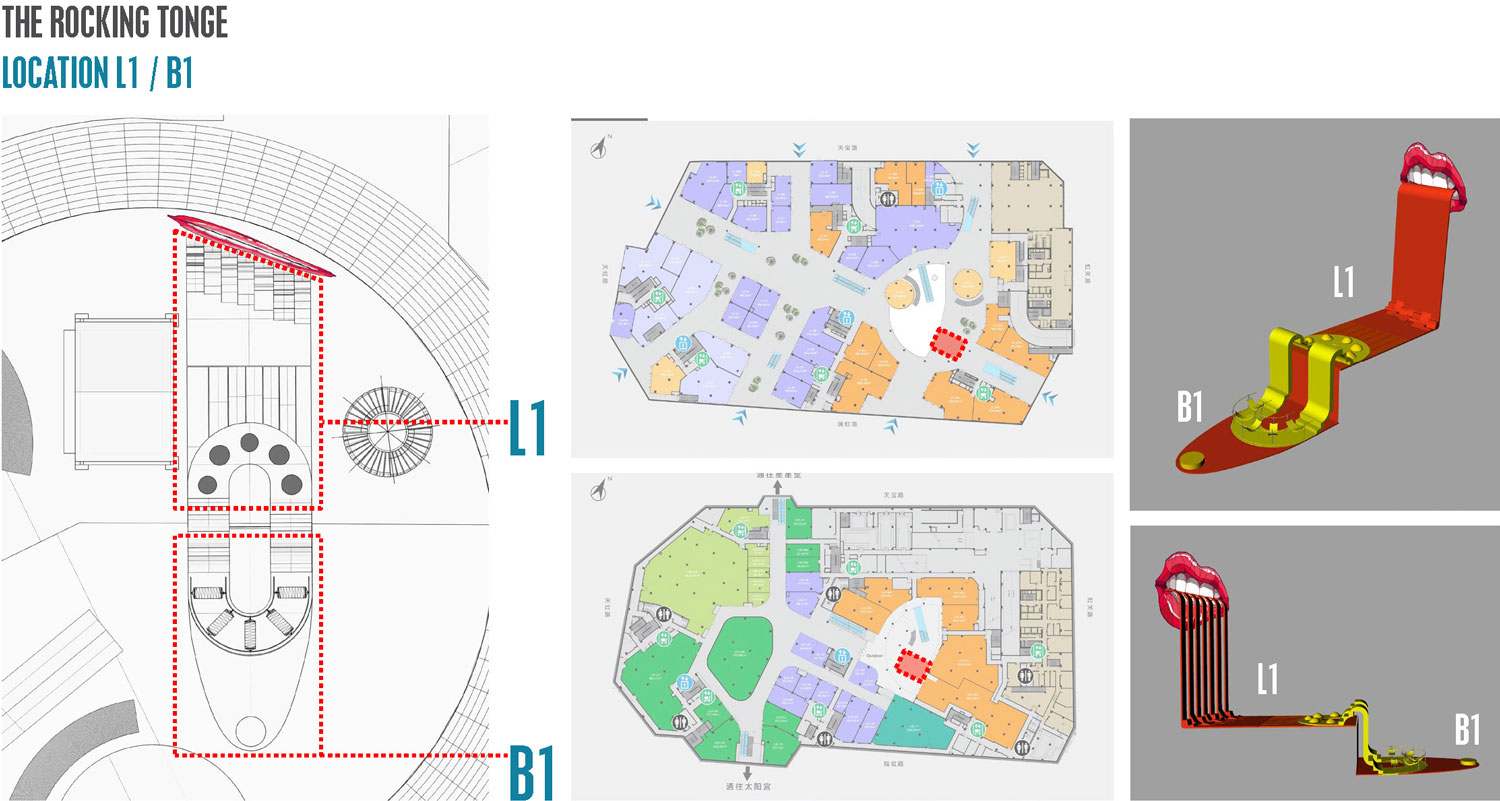
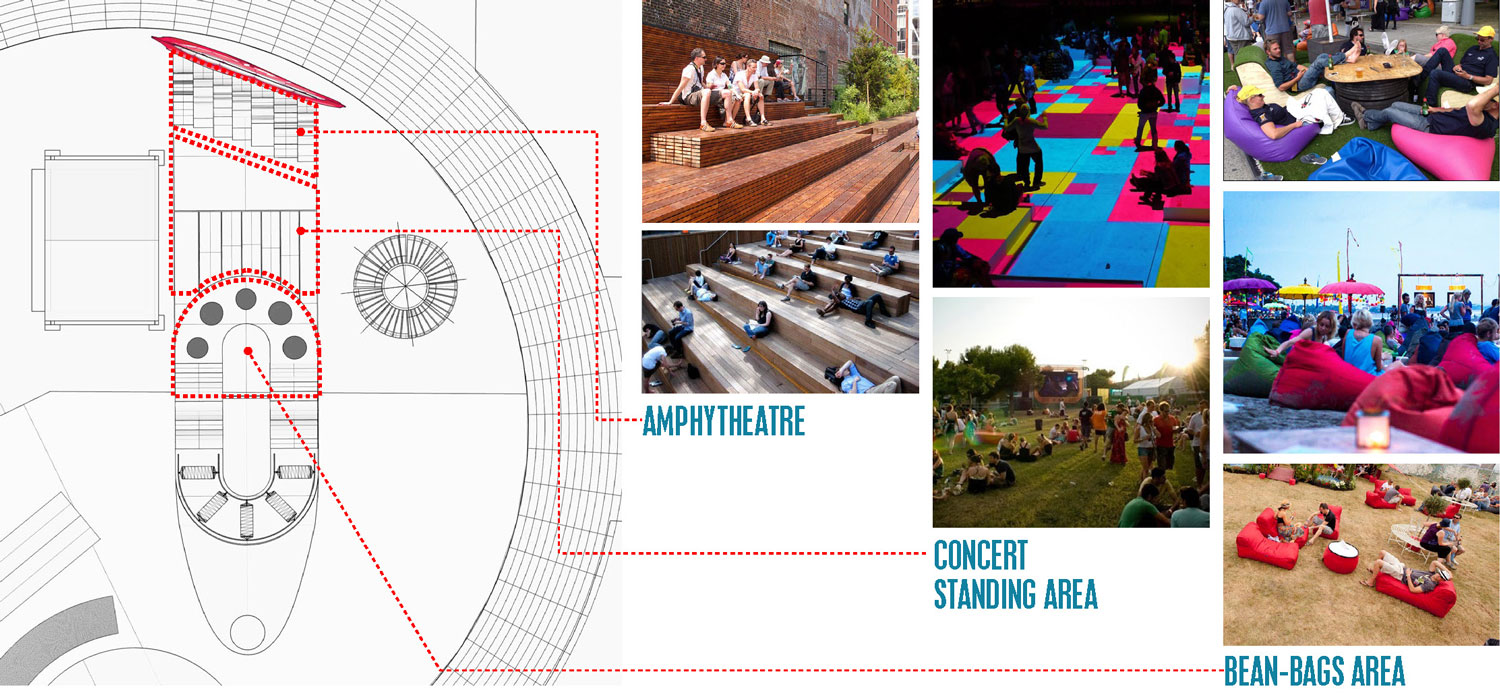
And then, behold the “Rocking Tong” – an awe-inspiring representation of a meteorite-traveling Alien, its colossal lips forever imprinted on the moon’s surface. During the Summer Festival, a delightful surprise awaits as it reveals a gigantic tongue, symbolizing the rock bands’ passion, while offering seating features, play equipment, and vertical surfaces for mesmerizing projections and music.


© 100architects


© 100architects


© 100architects


© 100architects


© 100architects


© 100architects


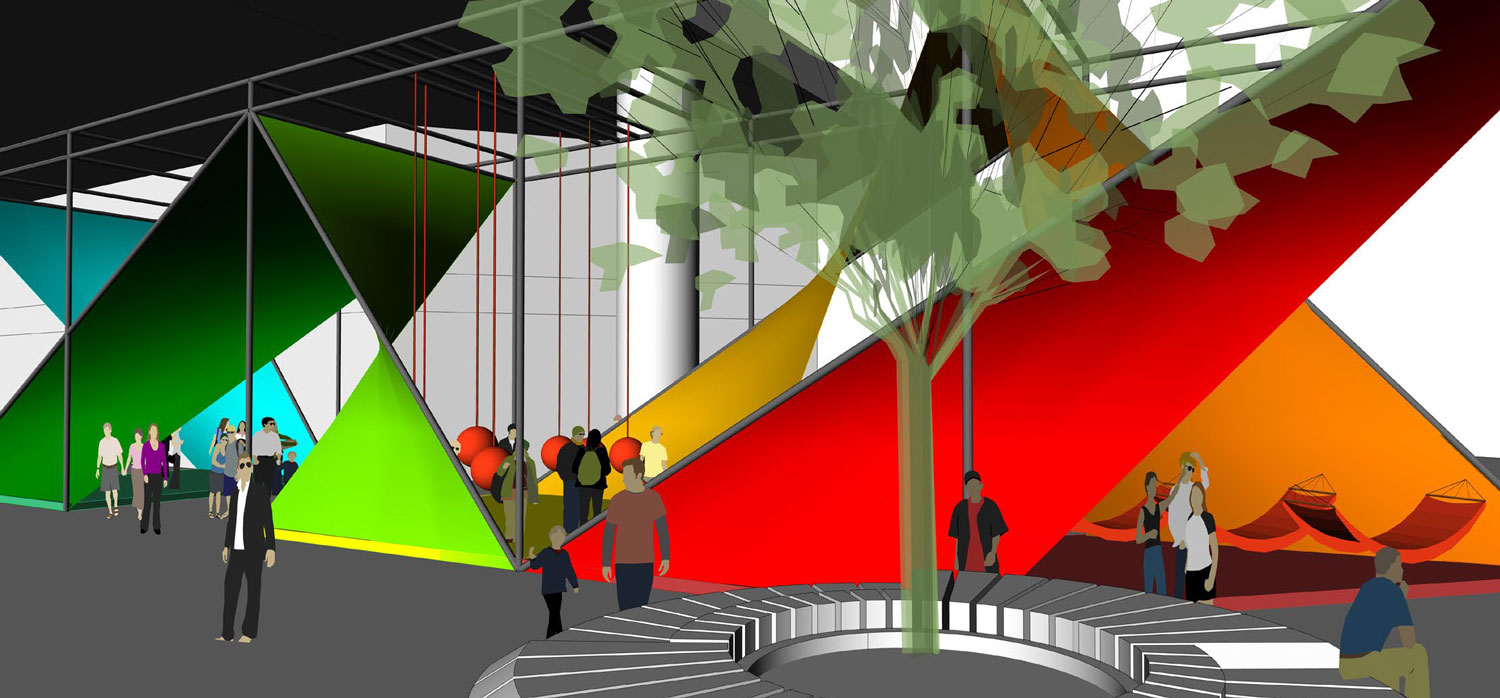
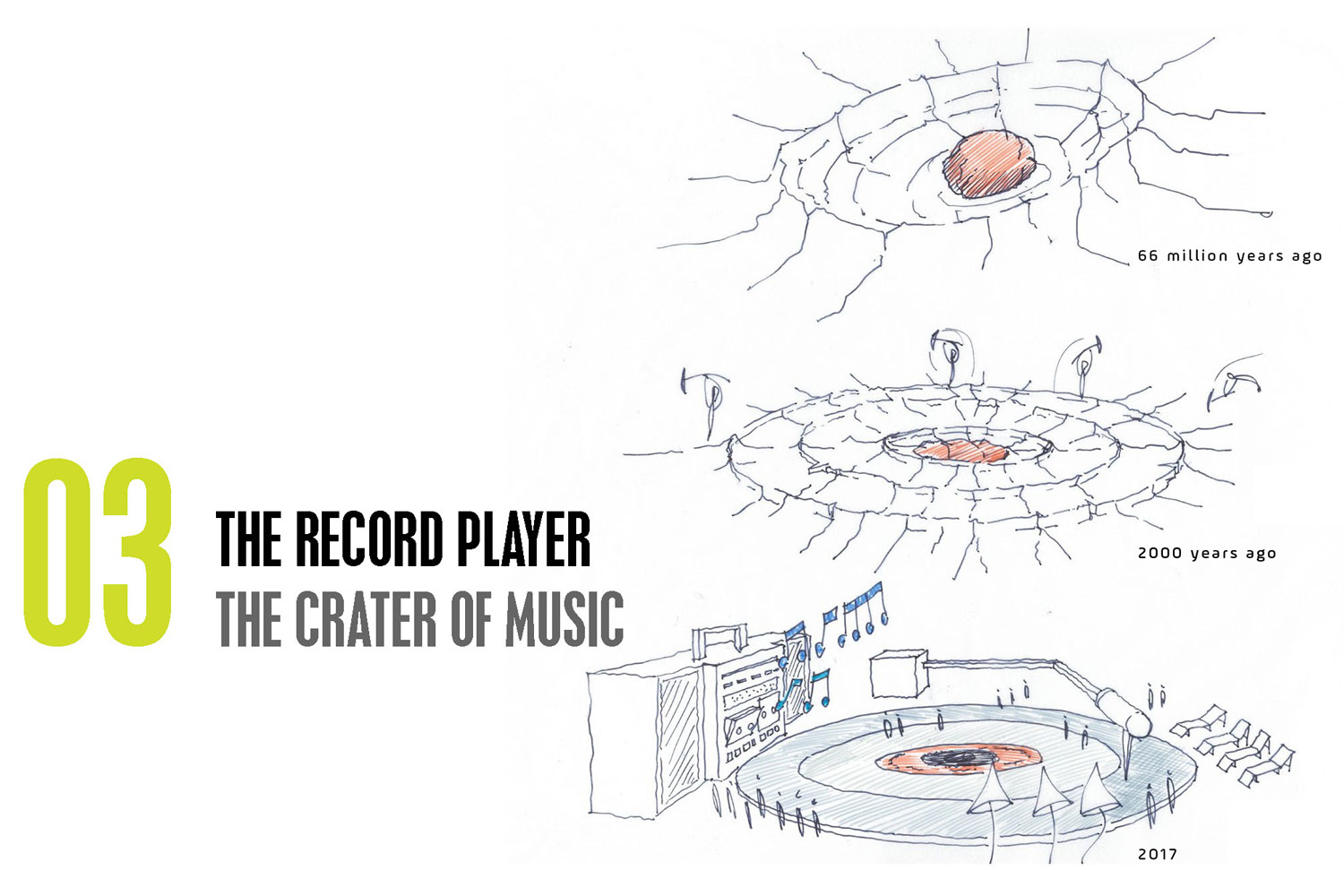
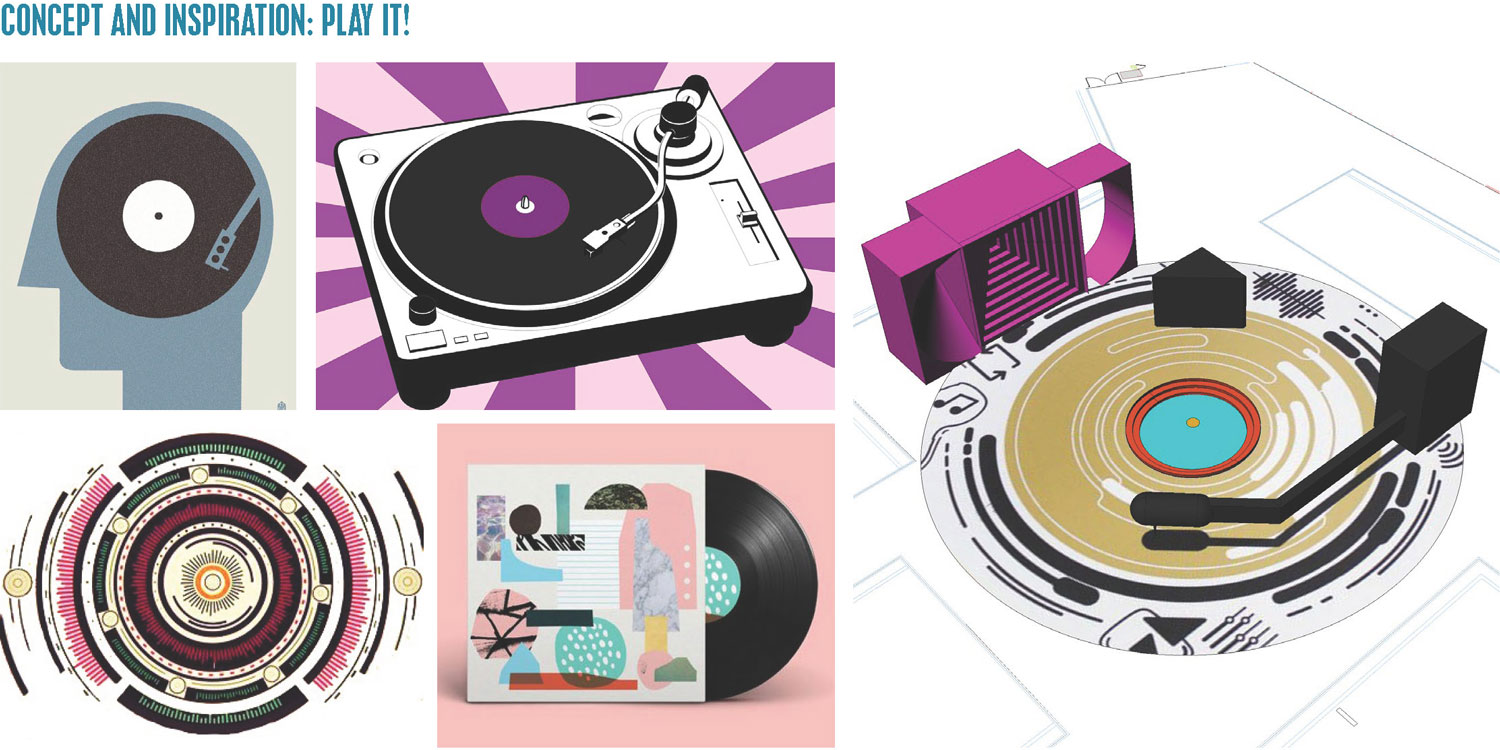
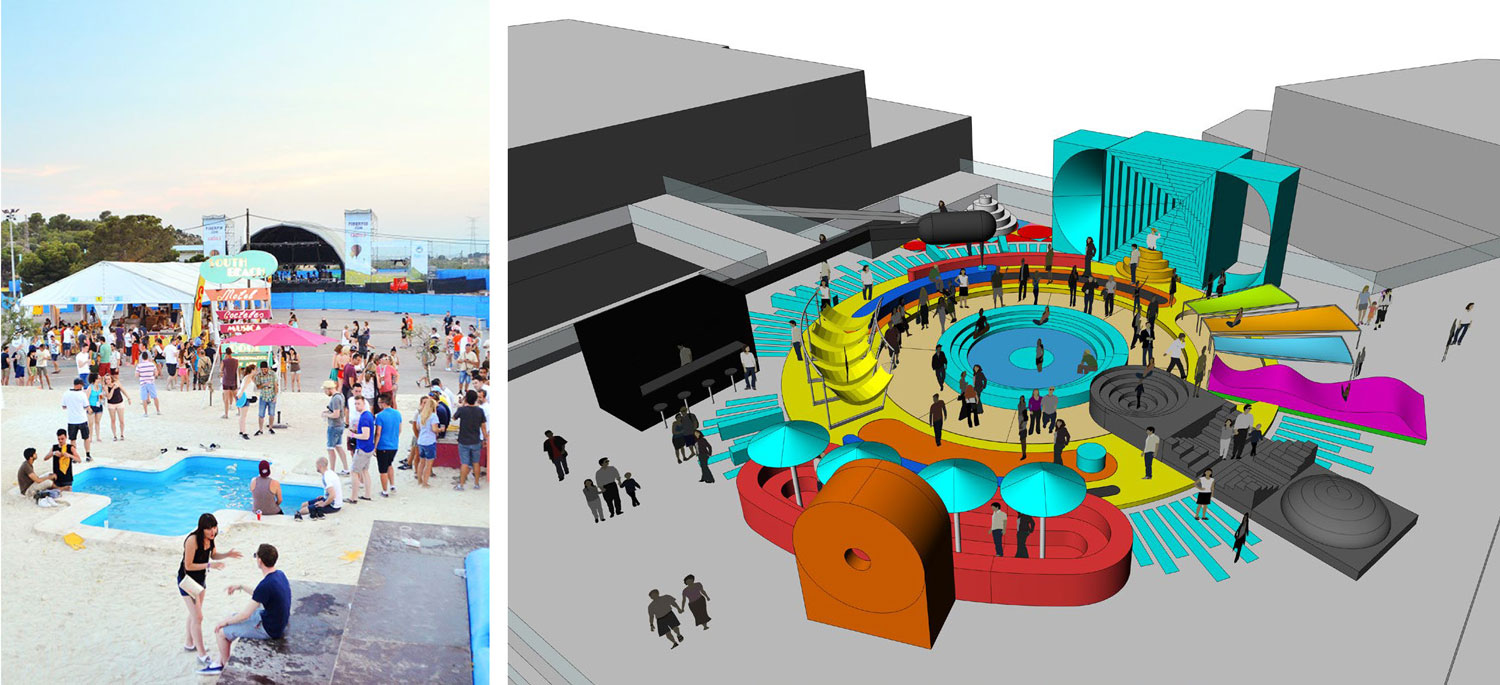
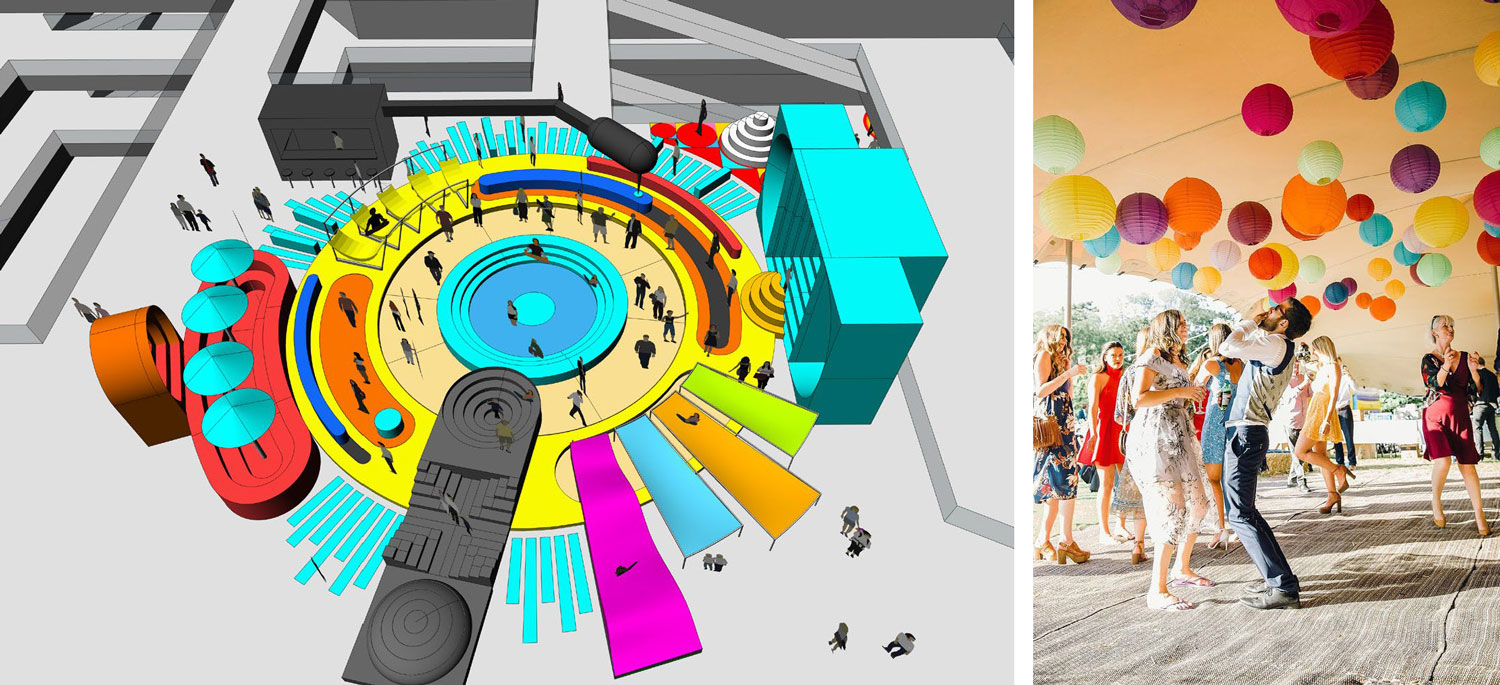
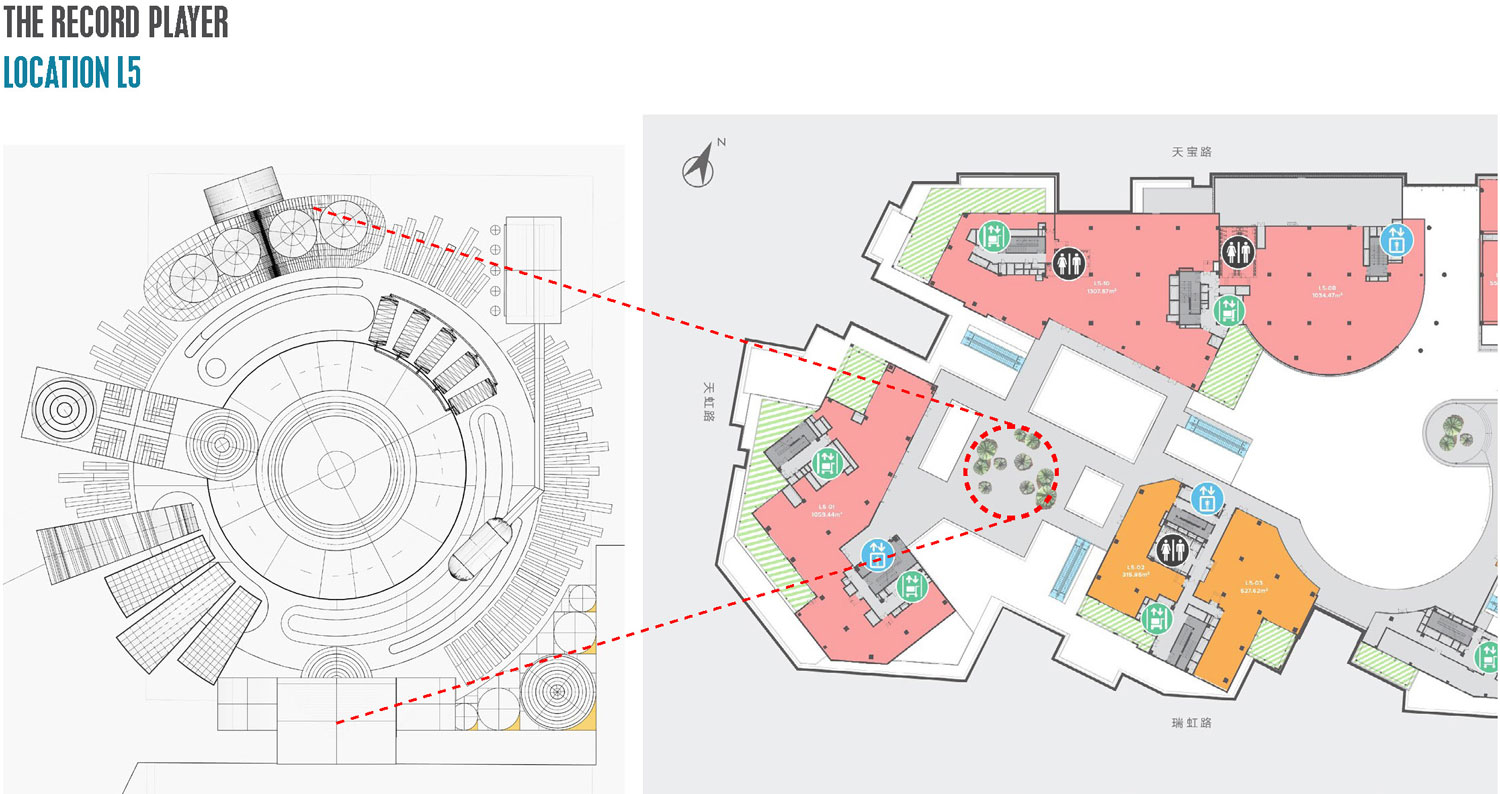
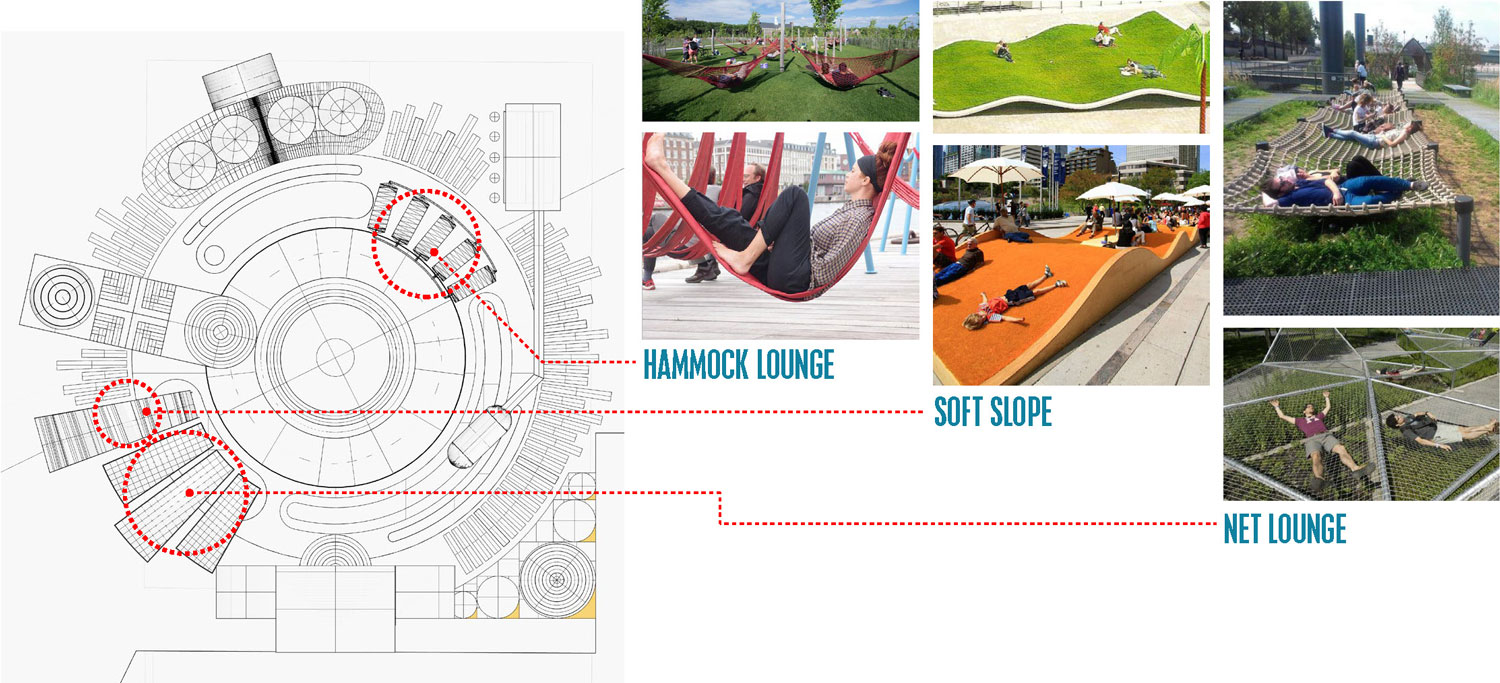
Continue the exploration to the “Record Player,” the crater left after the crash, where most of the meteorite impacted the moon’s surface. Transformed over time into a summer plaza on the rooftop, this vibrant space features sand pits, hammocks, a DJ booth, a bar, and more, providing the perfect ambiance to chill, unwind, and savor the magic.


© 100architects


© 100architects


© 100architects


© 100architects


© 100architects


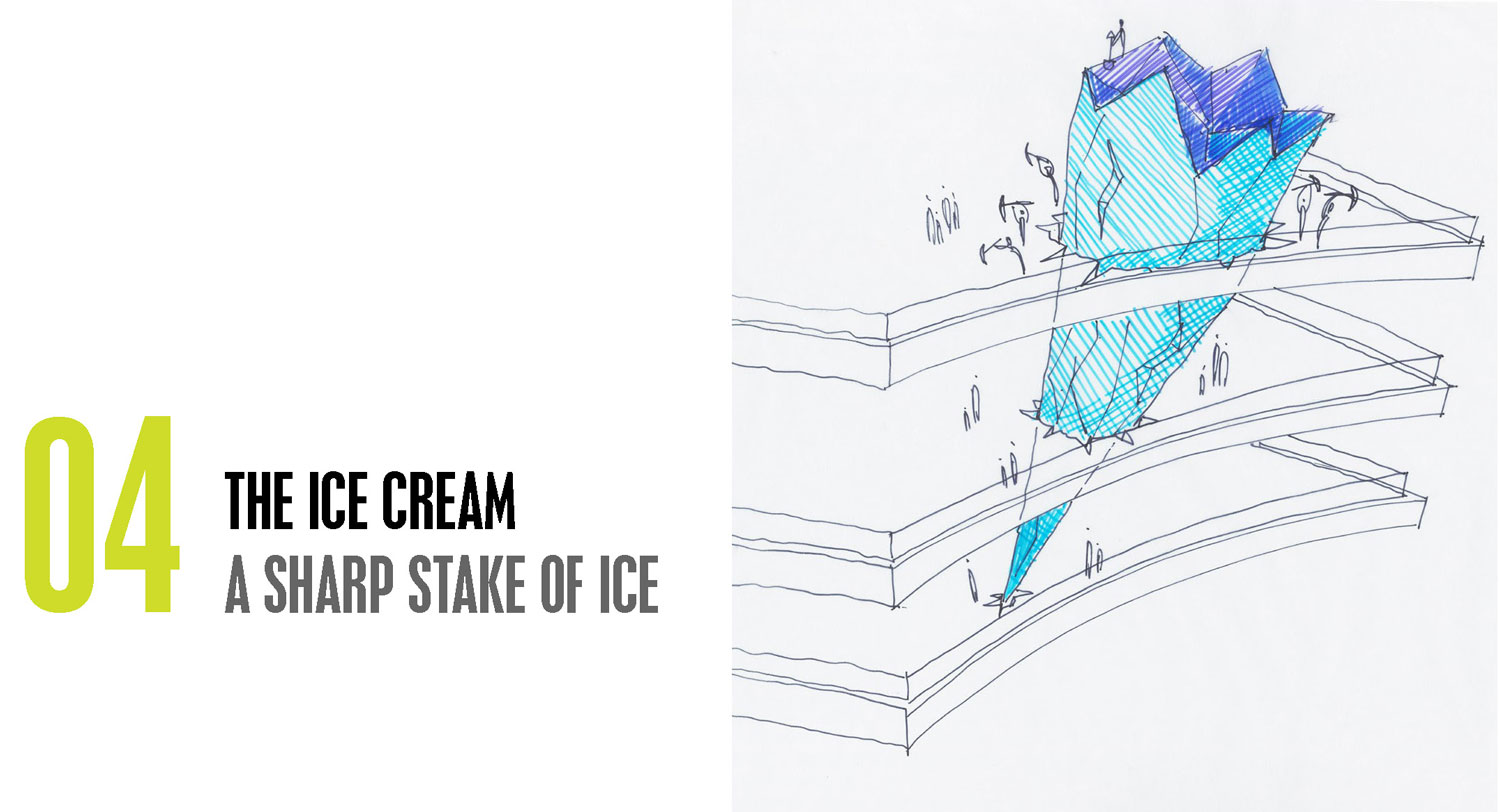
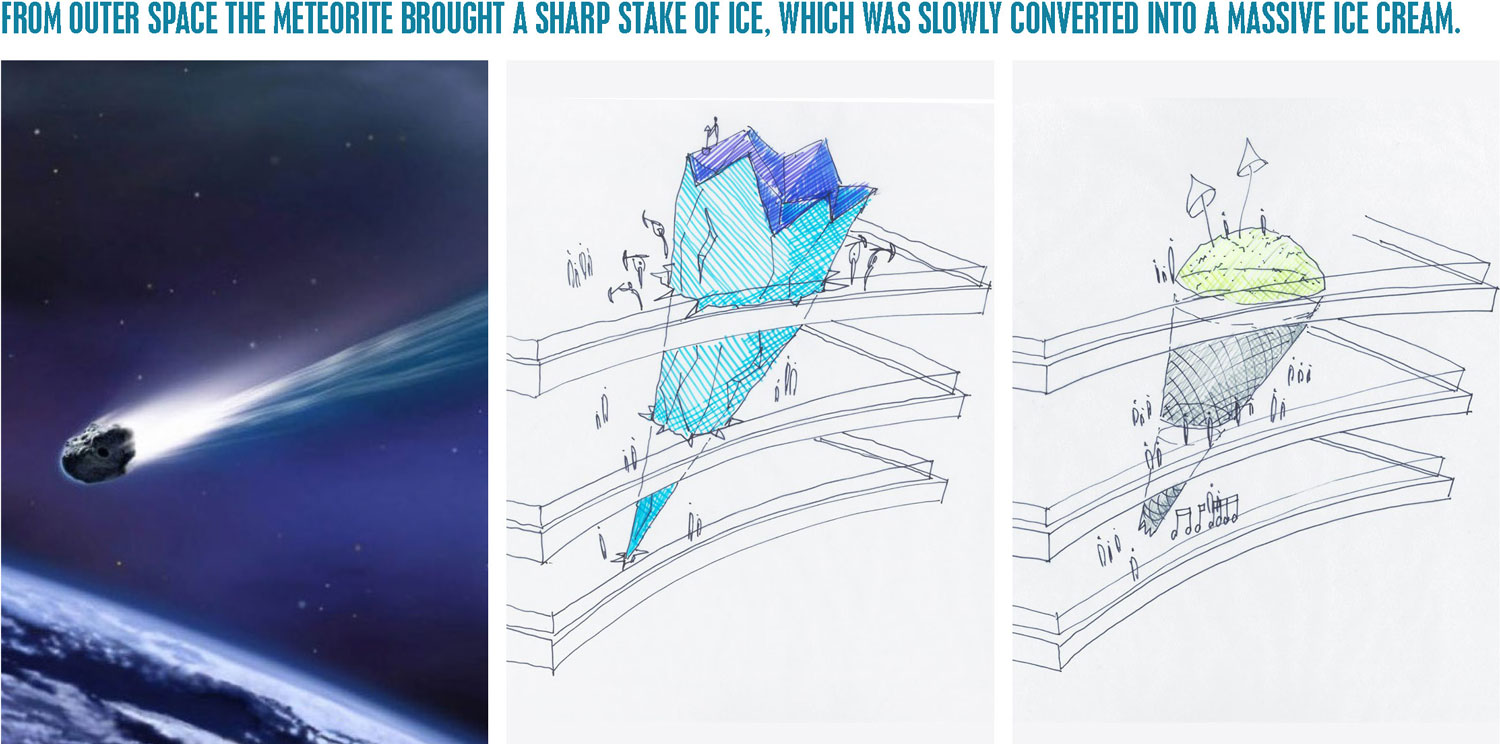
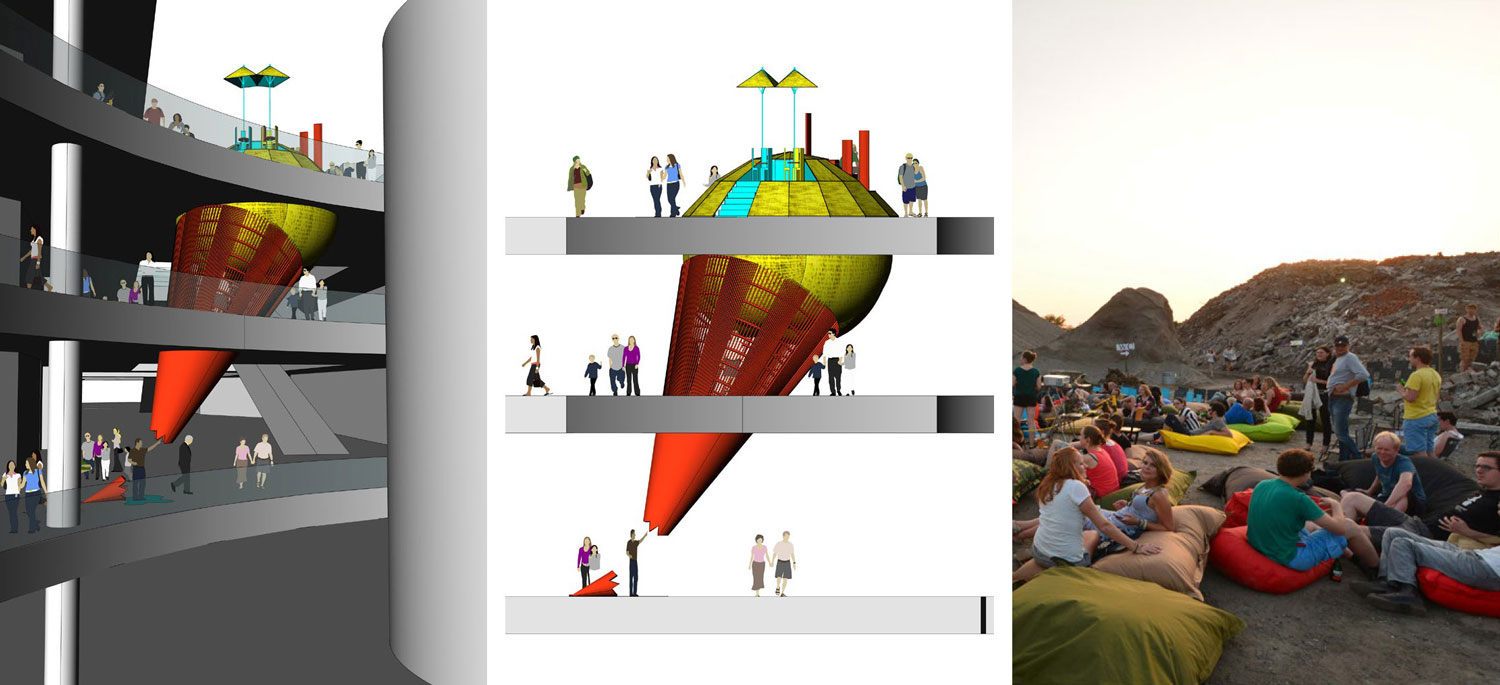
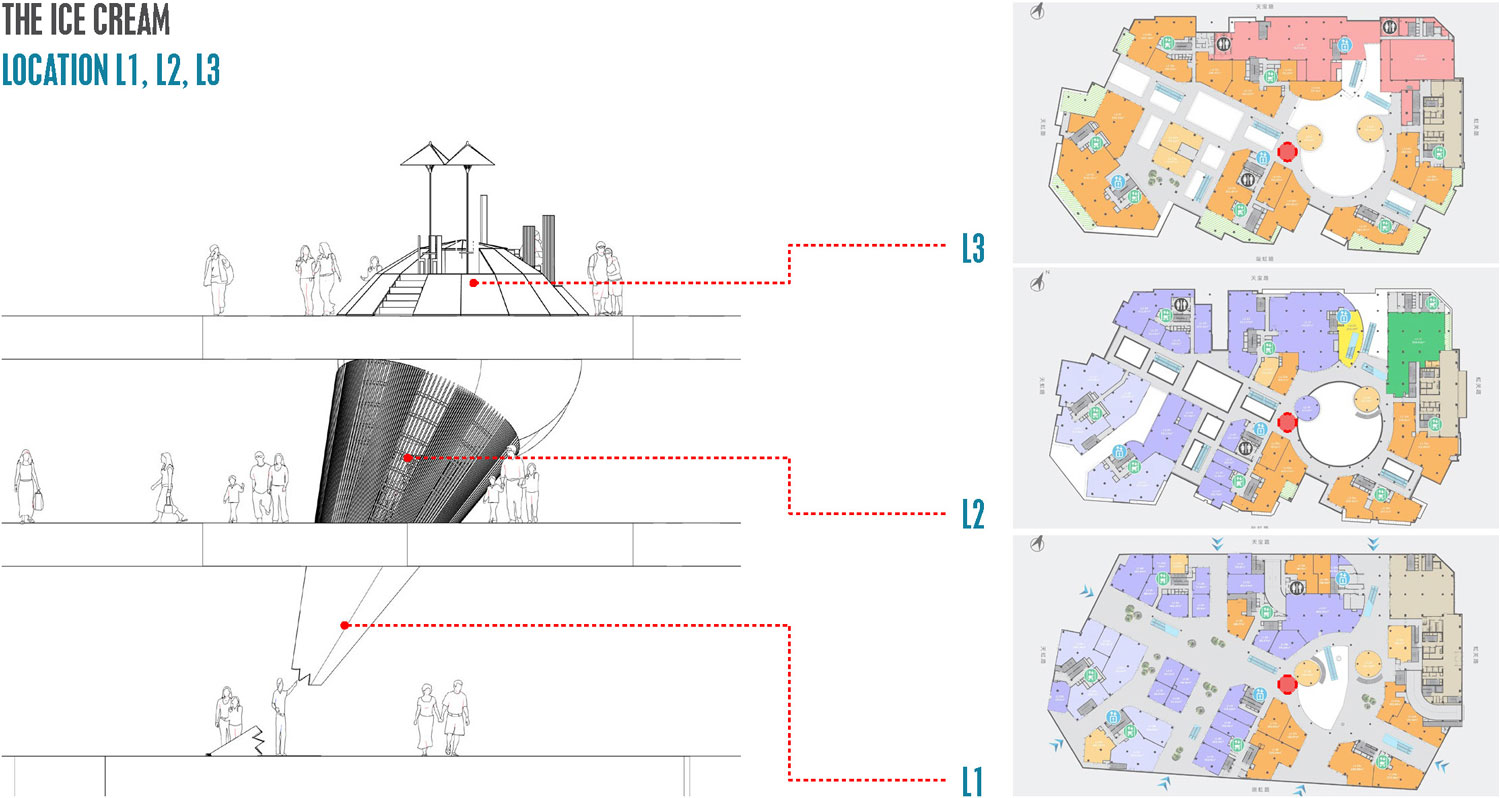
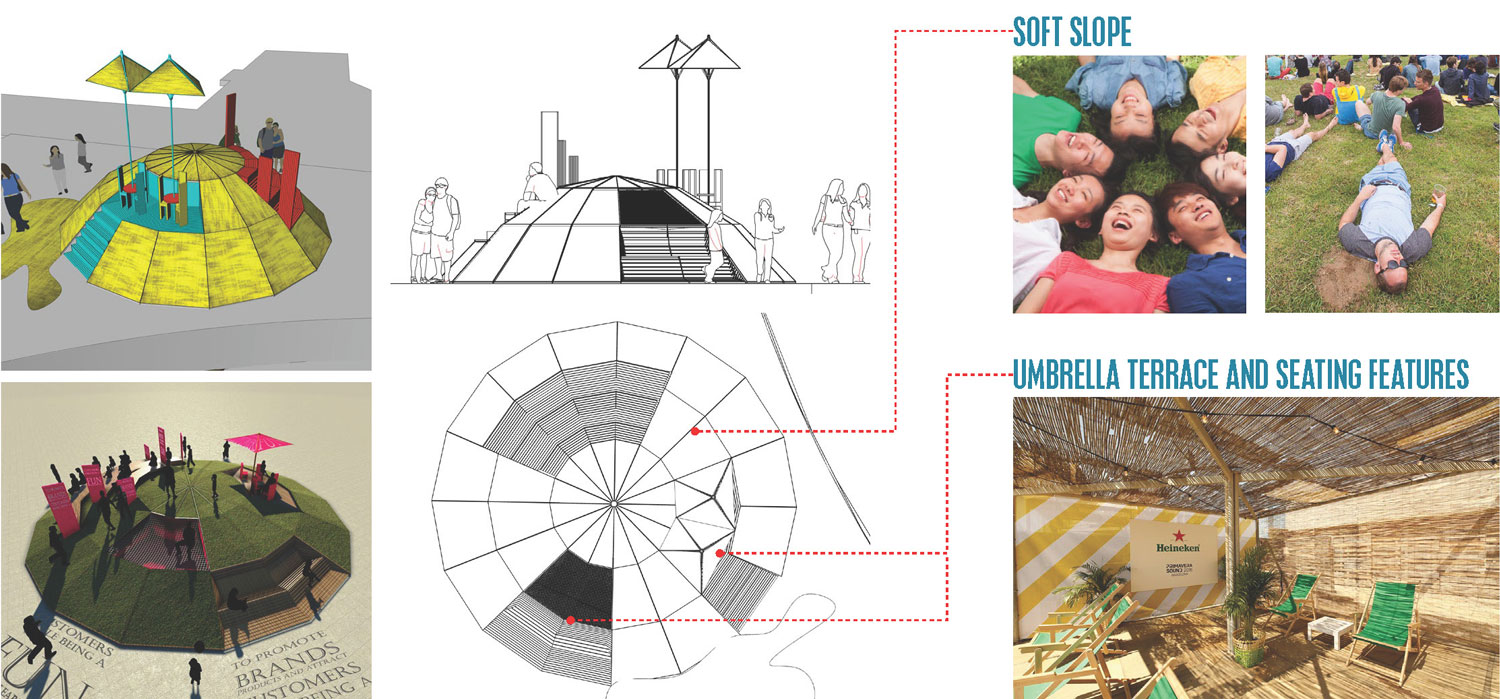
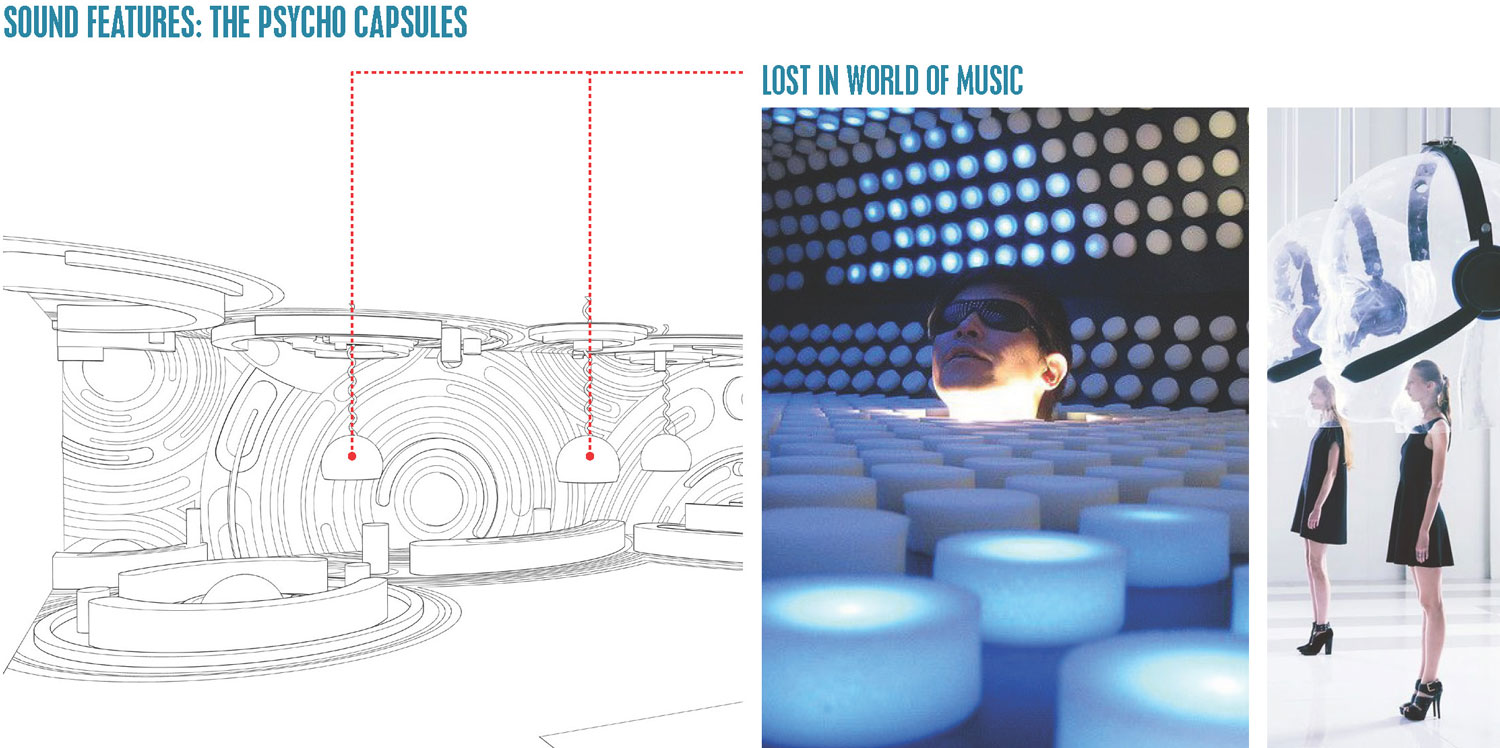
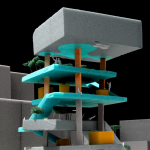
Prepare for another delightful surprise as you encounter the “Ice Cream Cone” – a relic from the meteorite’s first impact, now a multi-level installation offering an array of enchanting activities. The top part boasts a cozy dome with lounge features, the middle dazzles with the “encapsulated universe” lighting experience, and the bottom invites you to peer inside and indulge in mesmerizing light projections and music, creating a delightful treat for the senses.


© 100architects


© 100architects


© 100architects


© 100architects


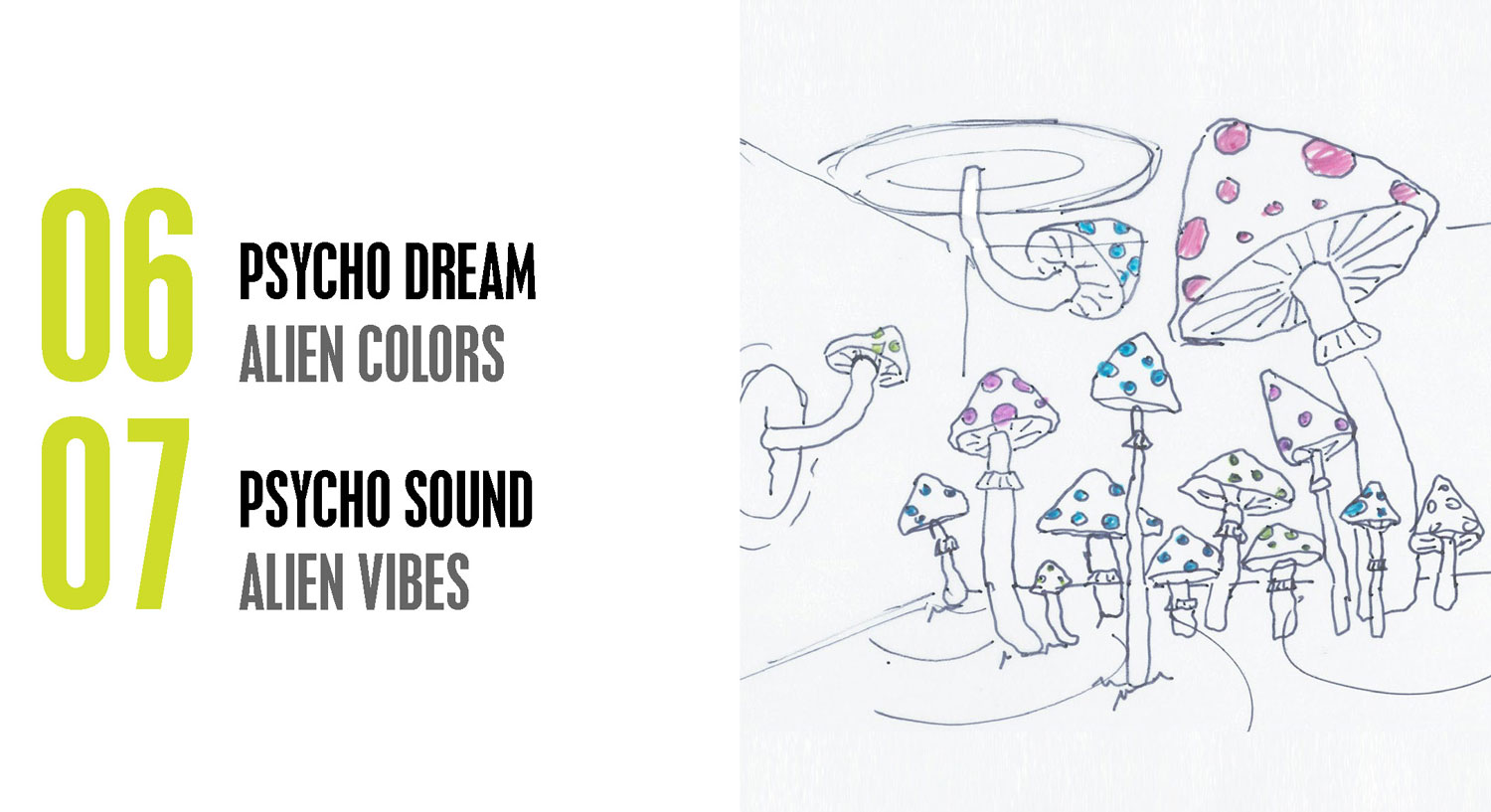
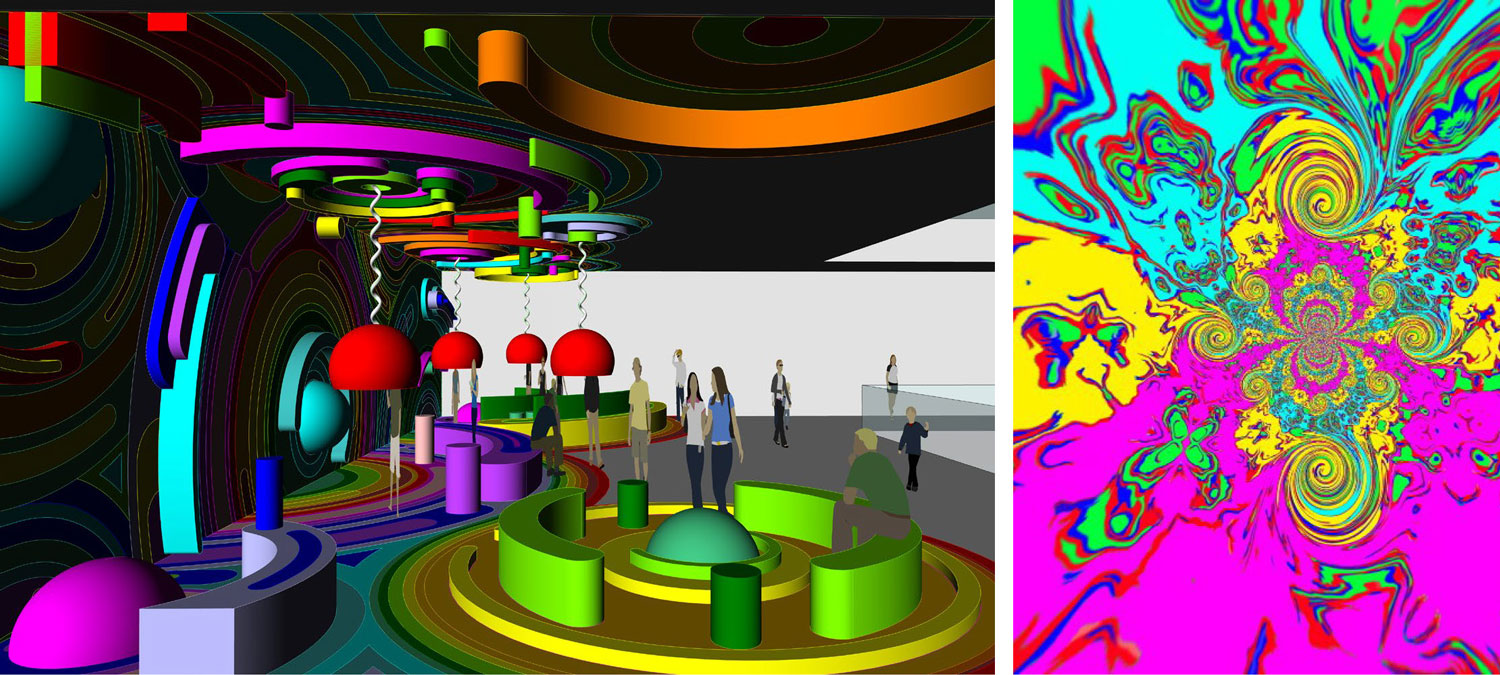
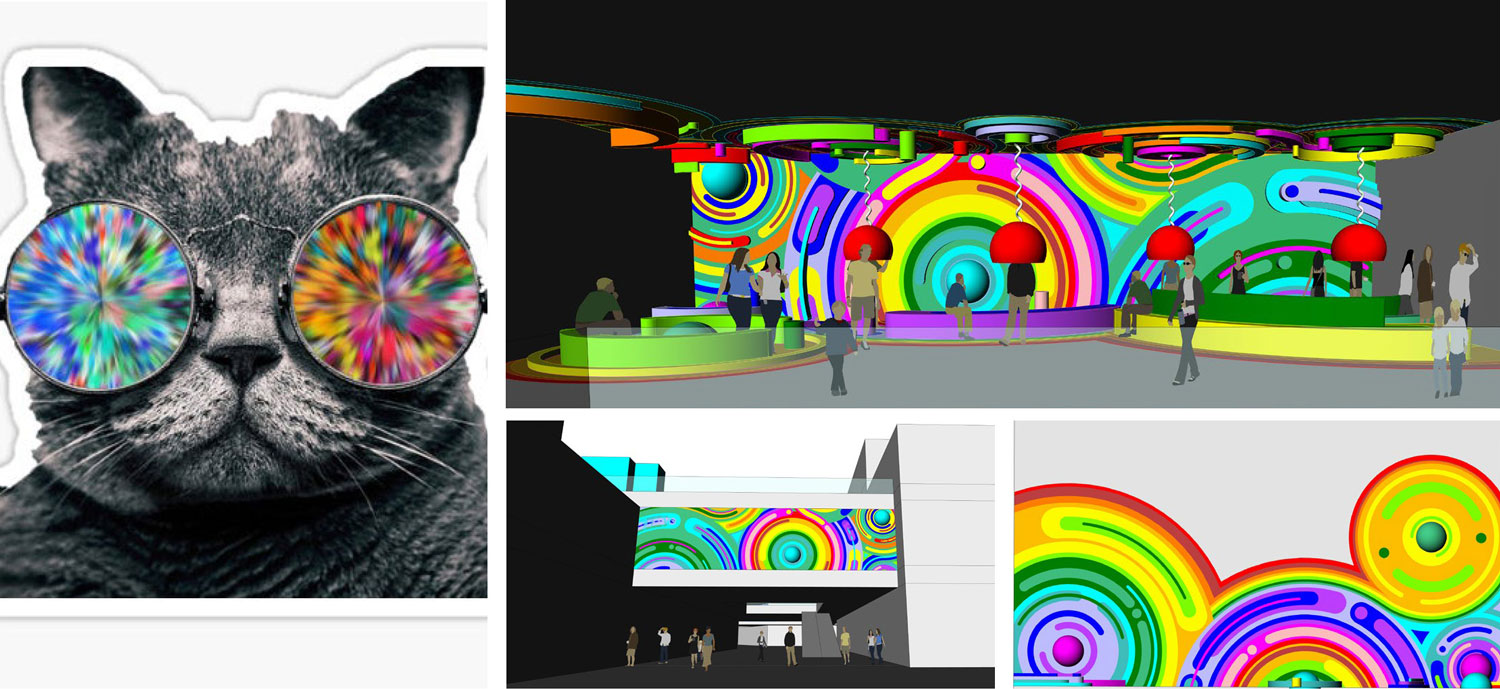
Lastly, venture into the captivating “Psychedelic Space,” where the Alien’s meteorite brought a different kind of mushroom to the moon, creating an otherworldly immersive environment. Here, psychedelic lights, colors, and music converge, transporting visitors to an ethereal realm of wonder and delight.
 
Together, “Alien Crashing” revitalizes the newly built commercial space, infusing joy and excitement into the retail experience. Embrace the fantasy, the colors, and the music, as this extraordinary architectural intervention embarks on a lunar adventure, leaving an indelible mark on the landscape – a testament to the power of creativity and imagination.
 
Credits
 
PROJECT NAME: Alien Crash
DESIGN: 100 Architects (Shanghai) Co., Ltd.
DESIGN TEAM: Marcial Jesús, Javier González, Nasim Serat
PROJECT MANAGEMENT TEAM: Maxim Media
CLIENT: Hall Of The Moon
STATUS: Unbuilt
LOCATION: Shanghai (China)

THE CUT FOOTPRINT

The Cut Footprint
 
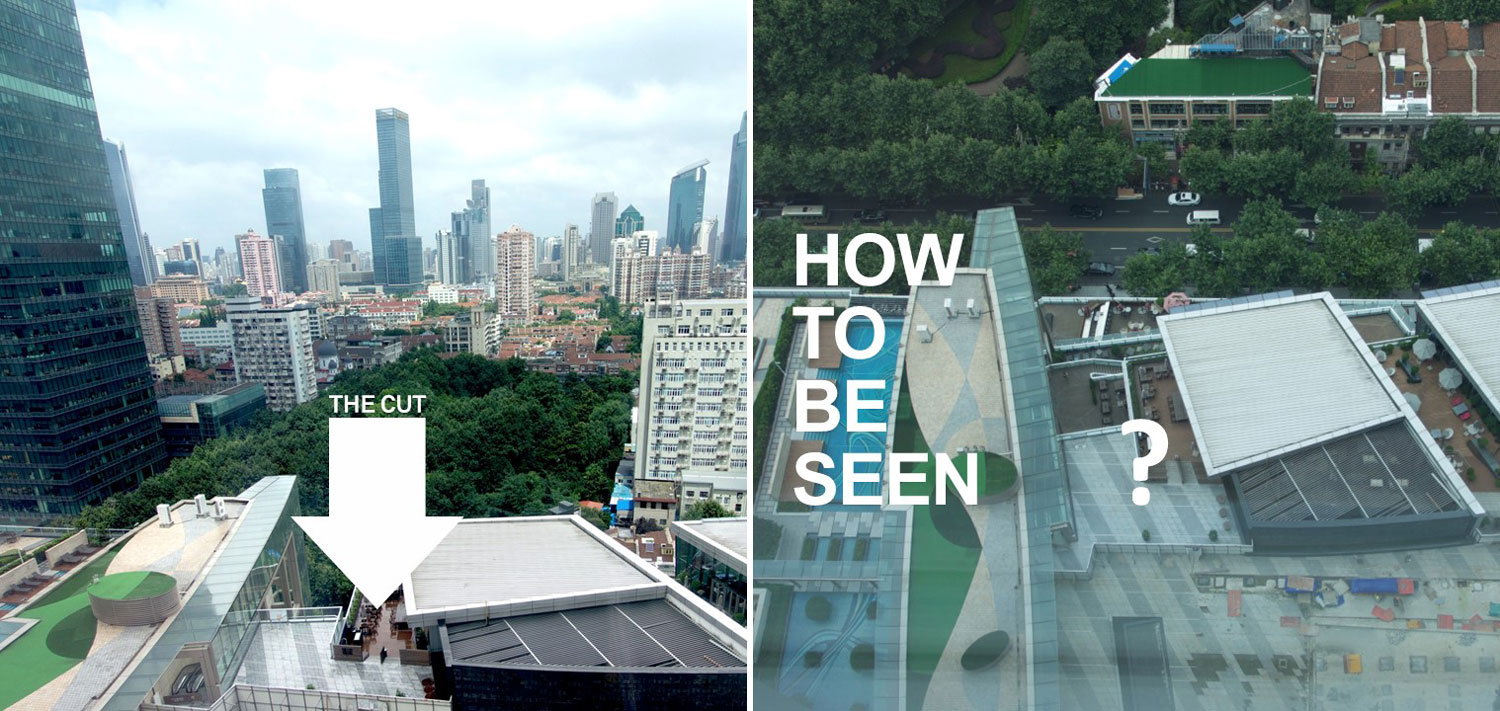
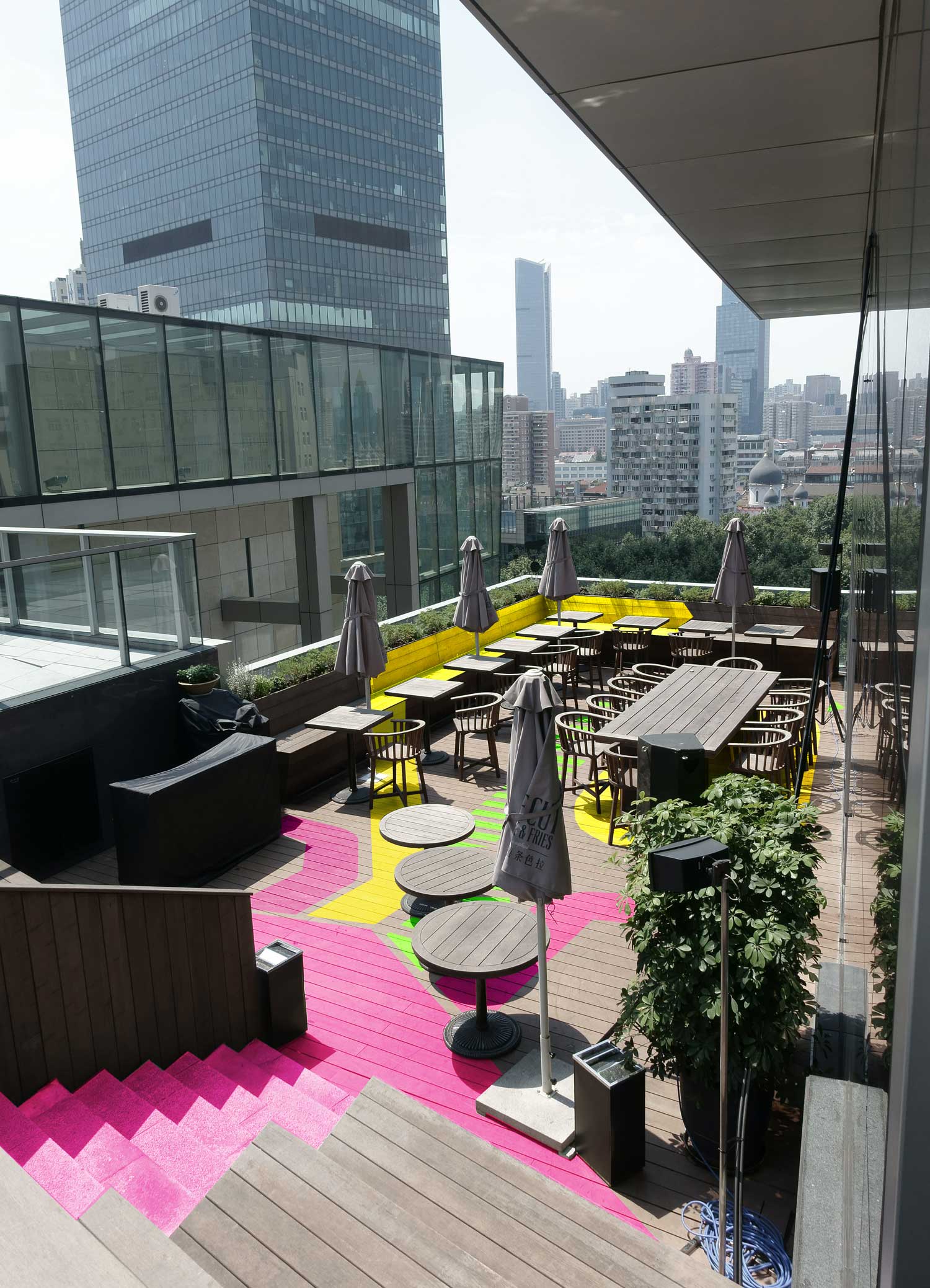
The proposal for The Cut was initiated by the owners with the desire to add a captivating element to the existing terrace, aiming to attract users and enhance the restaurant’s activity and revenue. The first challenge was to create a focal point in the outdoor space, capturing the attention of users from two nearby office buildings, allowing them to enjoy the unique views of the shopping center roof and the restaurant terrace.


© 100architects


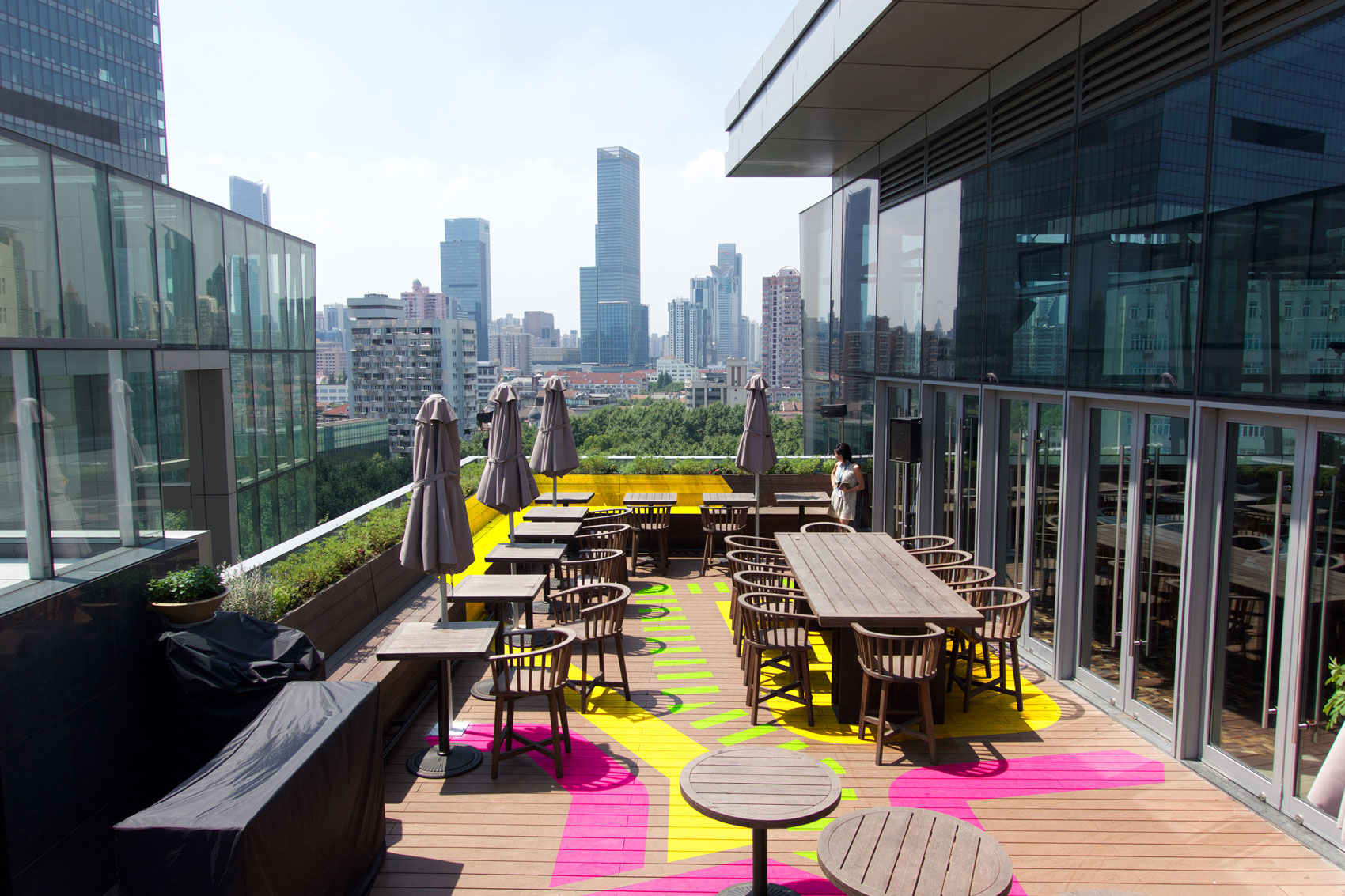
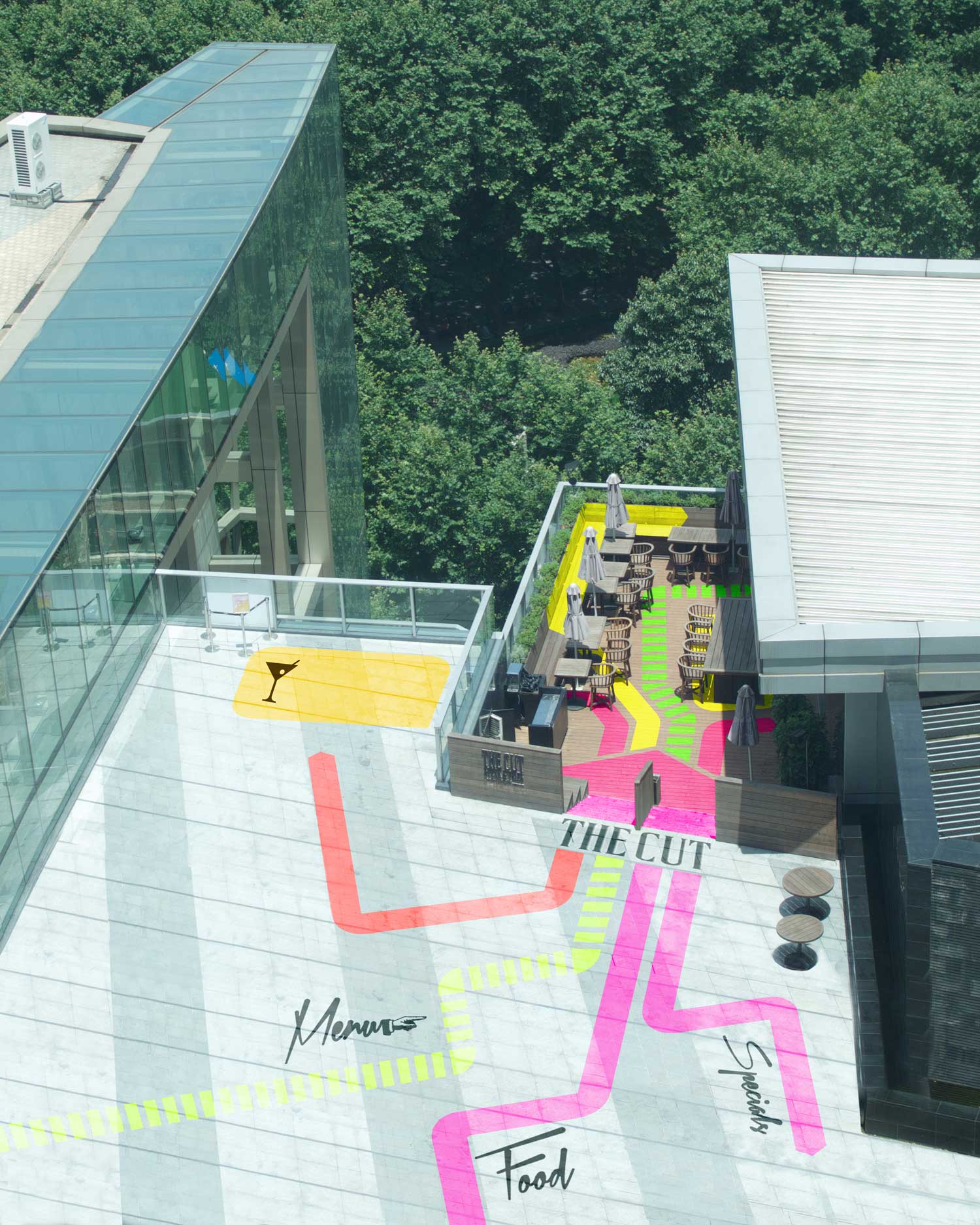
The second challenge was to achieve this goal without disrupting the restaurant’s regular operations or requiring changes to outdoor furniture. To address these challenges, the concept focused on using the exterior terrace as an overhead horizontal billboard. The idea was to incorporate painted landscapes as the primary element, with vibrant colors partially intruding into the space, adding freshness and a cool vibe while highlighting the restaurant’s presence.


© 100architects


The goal was to transform the space in an unexpected way without the need for adding unnecessary three-dimensional objects that would disrupt the existing terrace. The aim was to create a hotspot, attracting users from the two office buildings and enticing them to visit the restaurant. Urban advertising or city marketing is an important tool for promoting products, brands, or events by leveraging social dynamics.
 
Using painted landscapes as architectural catalysts involved using paint or coatings to partially cover intervention areas. This approach influenced the conception and usage of space, adding personality to it. Take The Cut, for example. The restaurant is located within a renowned complex in Shanghai, which includes a large shopping center called IAPM, featuring an extended semi-public terrace facing Huaihai Road. At the top of the podium are two office towers.


© 100architects


The private two-level restaurant is located on the fifth and sixth floors of the shopping center, each featuring a small outdoor terrace. These terraces are internally connected by the restaurant’s private staircase and externally connected by the shopping center’s public escalators.
 
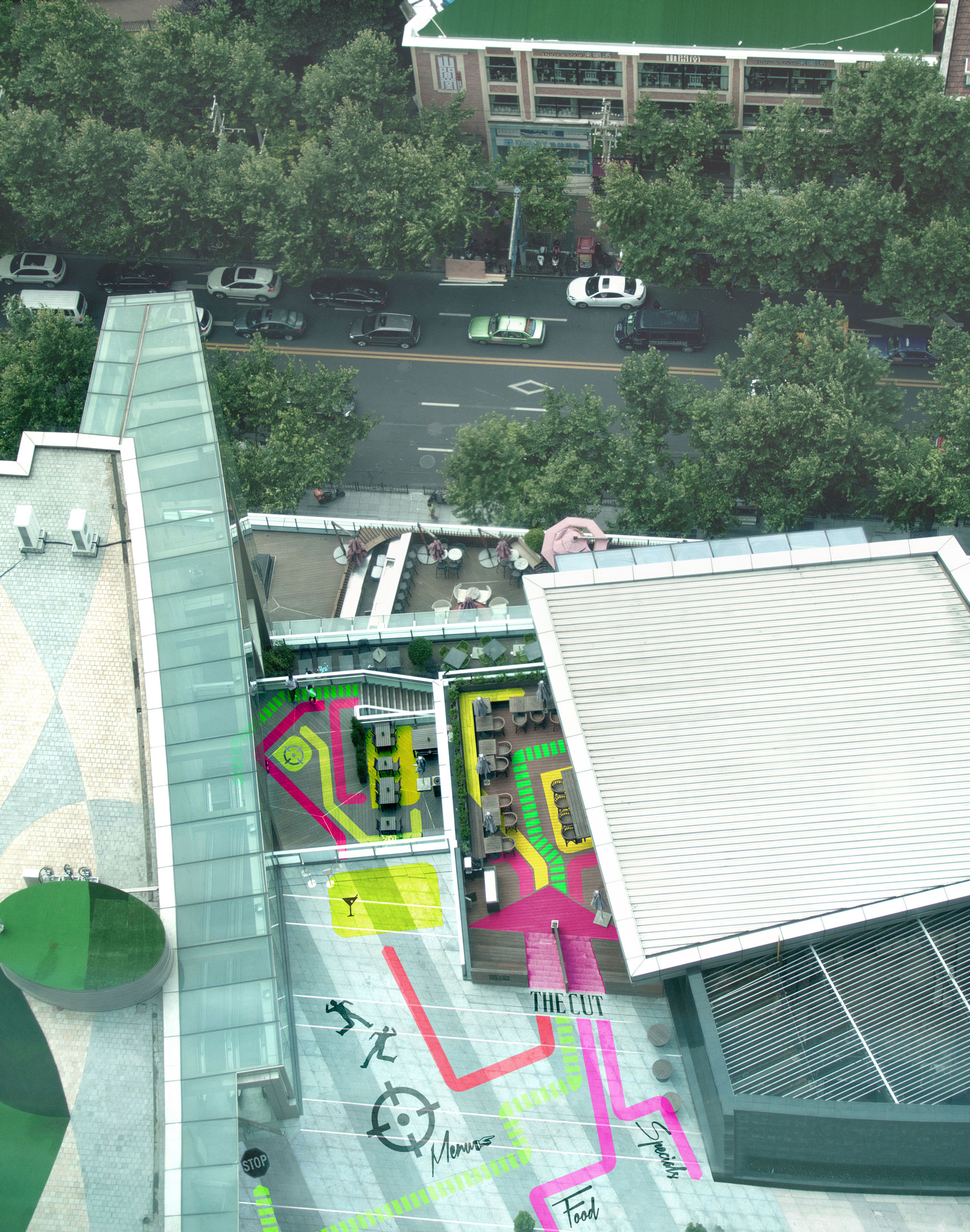
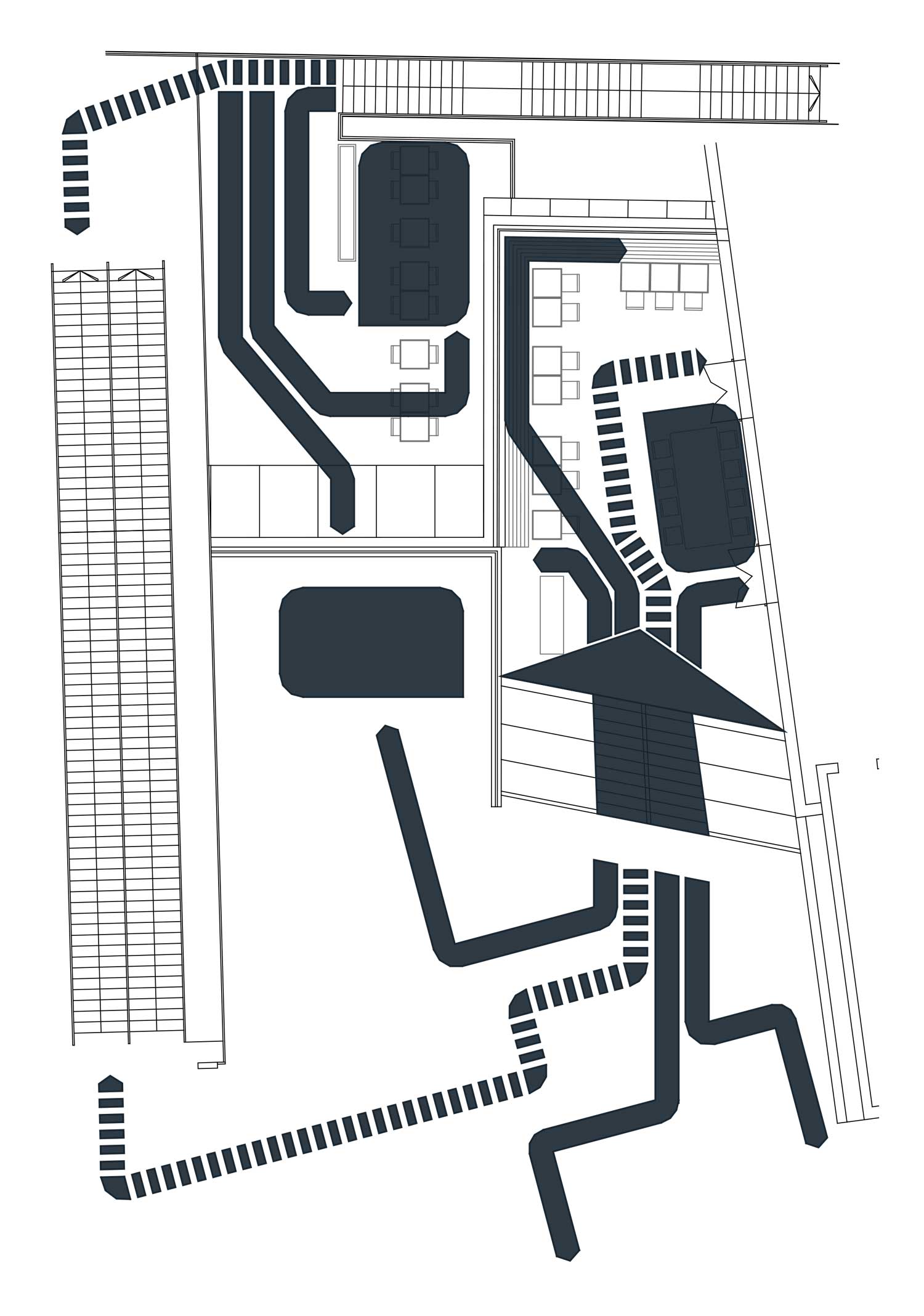
To create a visible and attention-grabbing platform from above, we designed vibrant colors and pathways to highlight the restaurant’s presence and direction. These pathways showcase new functionalities, routes, and areas, enhancing the restaurant’s new image and attractiveness.


© 100architects


After analyzing the terrace’s form and considering their potential, we determined that the stairs leading to the upper terrace were the perfect elements to showcase the primary “indicator.” The indicator took the form of large arrows, using the staircase’s lines to directly point to the terrace. The arrows featured clear and concise information: “THE CUT is right here.” This primary element formed the basis for the rest of the proposal, defining seemingly uncontrolled but carefully considered pathways or processes. These pathways connect the exterior and interior of the terrace, highlighting important positions such as main tables and entrance doors


© 100architects


© 100architects


CREDITS:
 
Project Name: The Cut Footprint
Design: 100architects (Shanghai)
Design Team: Marcial Jesús, Javier González
Client: no client
Area: 300 m2
Completion: May 2015
Location: shanghai, China
Photographer: 100architects


YELLOW PARASITE

Yellow Parasite
A Vibrant Facade Intervention of Leisure and Fun
Shanghai | China
 
Introducing “Yellow Parasite” – a groundbreaking architectural endeavor at the iconic Crown Plaza Hotel! This captivating project is the brainchild of Clubmed, who is taking the reins as the hotel’s operator. Picture a mesmerizing conceptual proposal designed to rejuvenate and reimagine this space like never before.


© 100architects


© 100architects


© 100architects


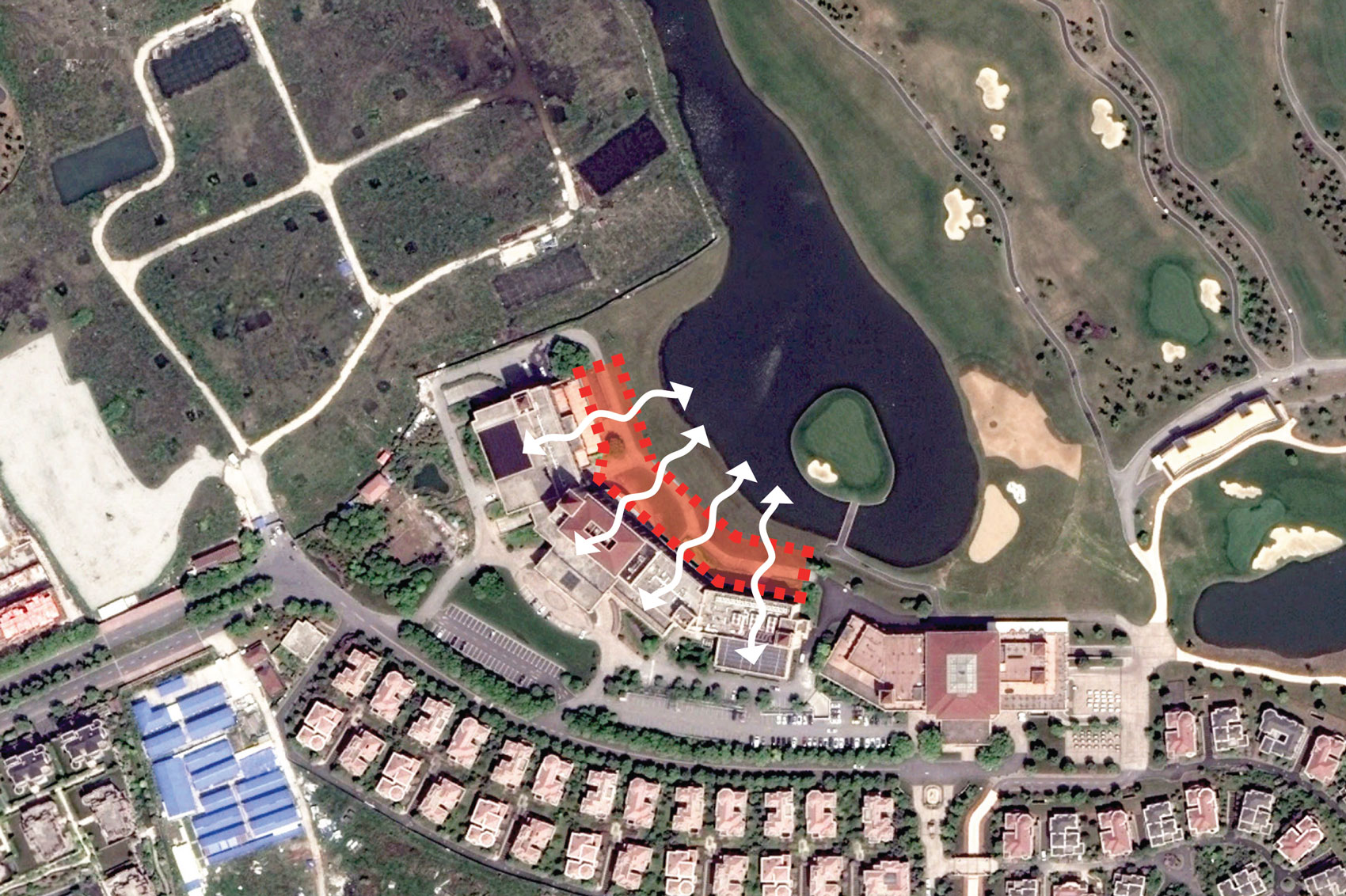
At the heart of Crown Plaza lies its major attraction – one of Shanghai’s most splendid and expansive golf fields. But here’s the twist – instead of the usual sea or mountain vistas, the wonder is a lush green field right before your eyes, creating a uniquely enchanting setting.
 
 
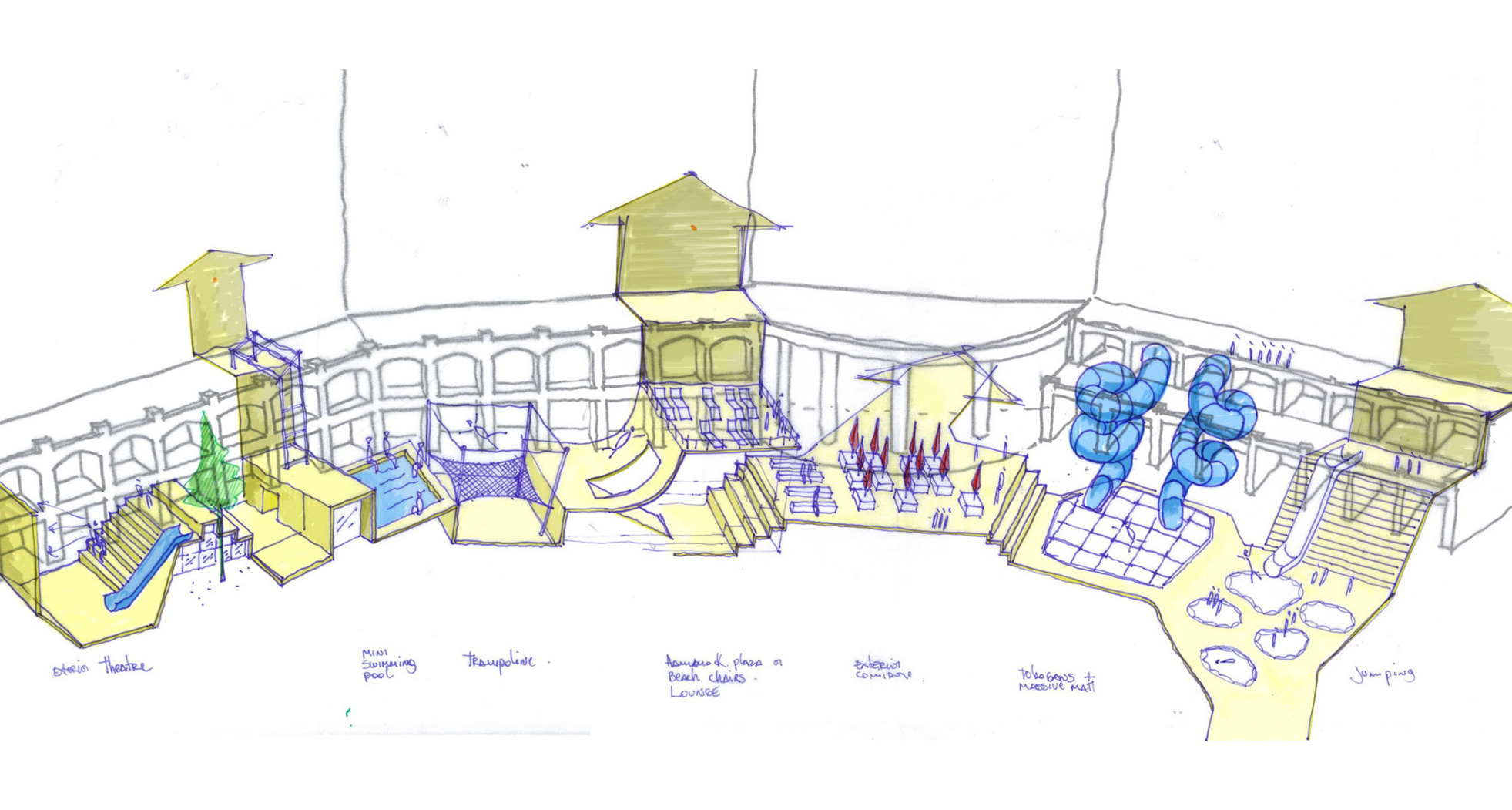
“Yellow Parasite” sets out to enhance this splendid attraction by becoming the perfect interface between the hotel and the golf field. Think of it as a vacation object like no other – a gigantic, vibrant yellow structure seamlessly attached to the hotel’s facade, creating a harmonious connection that breathes new life into both spaces.
 
Step onto the hotel’s terraces and entertainment decks, transformed into hubs of joy and leisure, offering unobstructed views of the magnificent golf fields. “Yellow Parasite” serves as the ultimate leisure paradise, inviting guests to revel in a spectrum of entertainment activities just steps away from the hotel, all while gazing upon the mesmerizing green landscape.


© 100architects


© 100architects


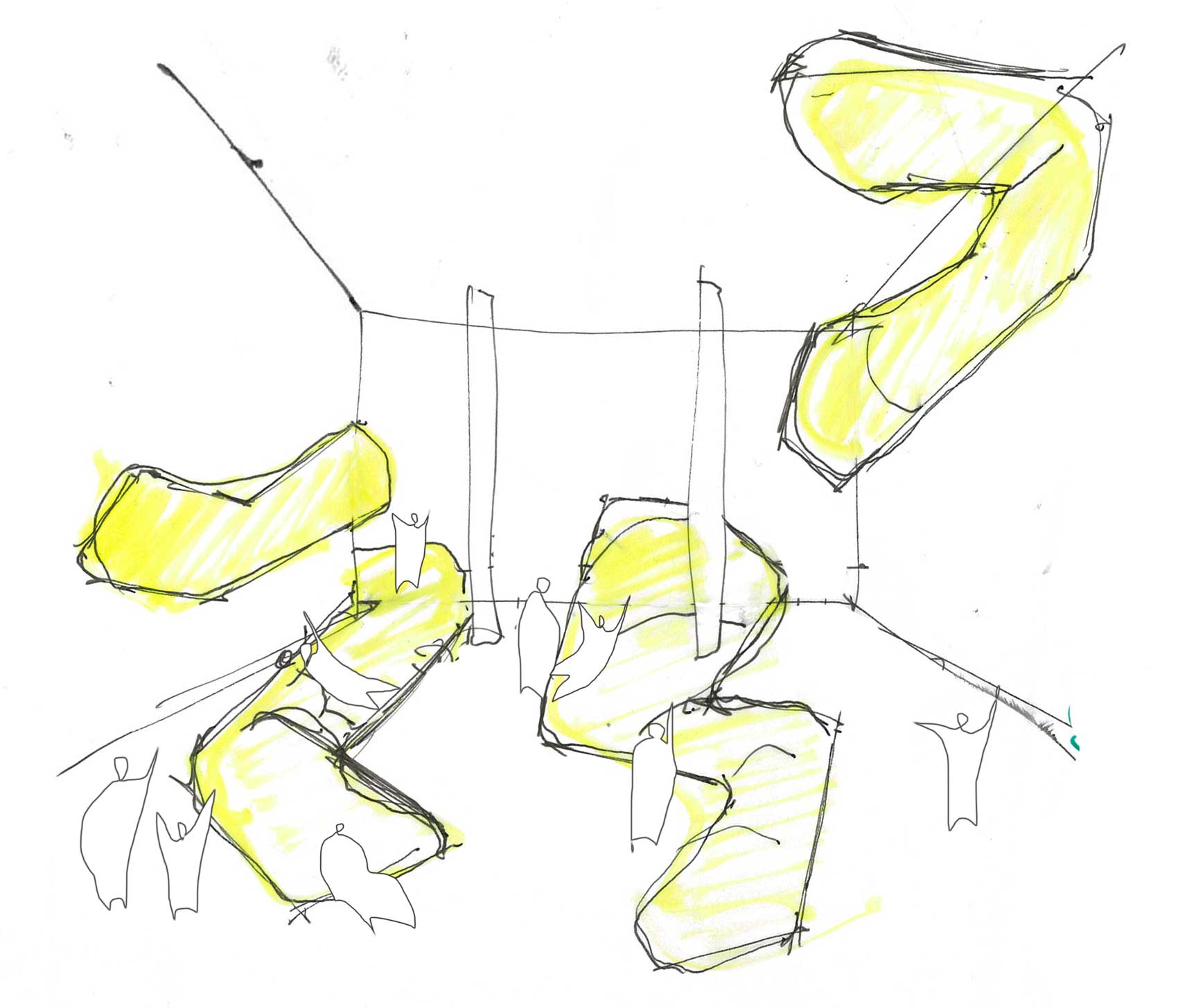
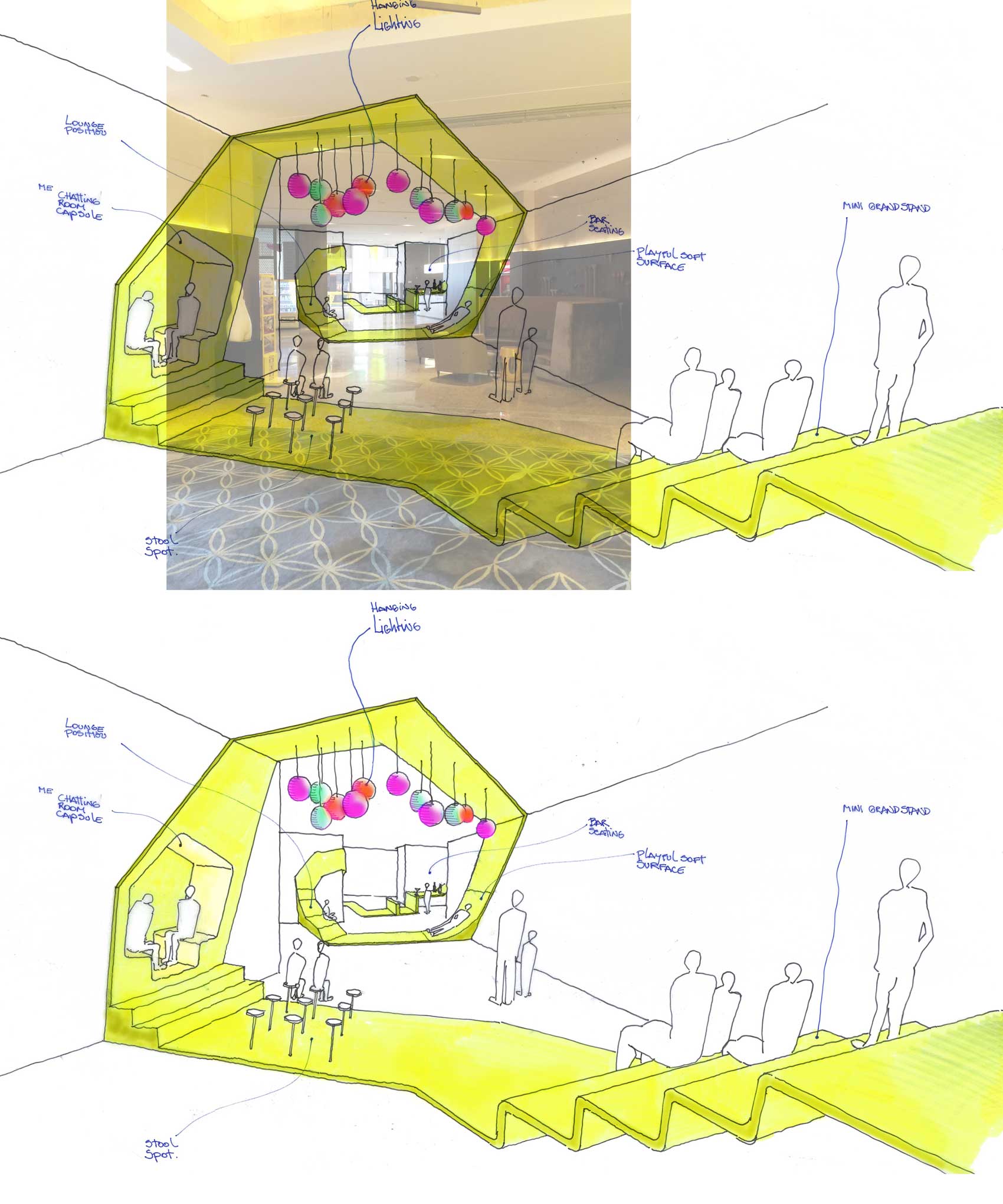
But that’s not all – “Yellow Parasite” also ventures boldly into the hotel’s interior, penetrating it at four strategic points. It colonizes the main public spaces, including the Lobby, All-Day Dining area, MICE, and Pool & Sports zone, infusing each space with its vibrant yellow charm.


© 100architects


This bold architectural marvel promises to redefine the very essence of a vacation, as it marries the hotel’s elegance with the natural wonder of the golf field. Get ready to be enthralled as “Yellow Parasite” showcases the seamless coexistence of leisure and luxury, offering an unparalleled experience at the Crown Plaza Hotel.
 
Get ready for a groundbreaking adventure, where innovation meets nature, and where “Yellow Parasite” proves that extraordinary design can transform an already incredible destination into an absolute masterpiece.


© 100architects


© 100architects


© 100architects


Credits
 
PROJECT NAME: Yellow Parasite
DESIGN: 100 Architects (Shanghai) Co., Ltd.
DESIGN TEAM: Marcial Jesús, Javier González.
CLIENT: ClubMed Shanghai.
STATUS: Unbuilt
LOCATION: Shanghai, China
Images: 100architects

RED CARPET

Red Carpet
Shanghai, China | East Nanjing Road
 
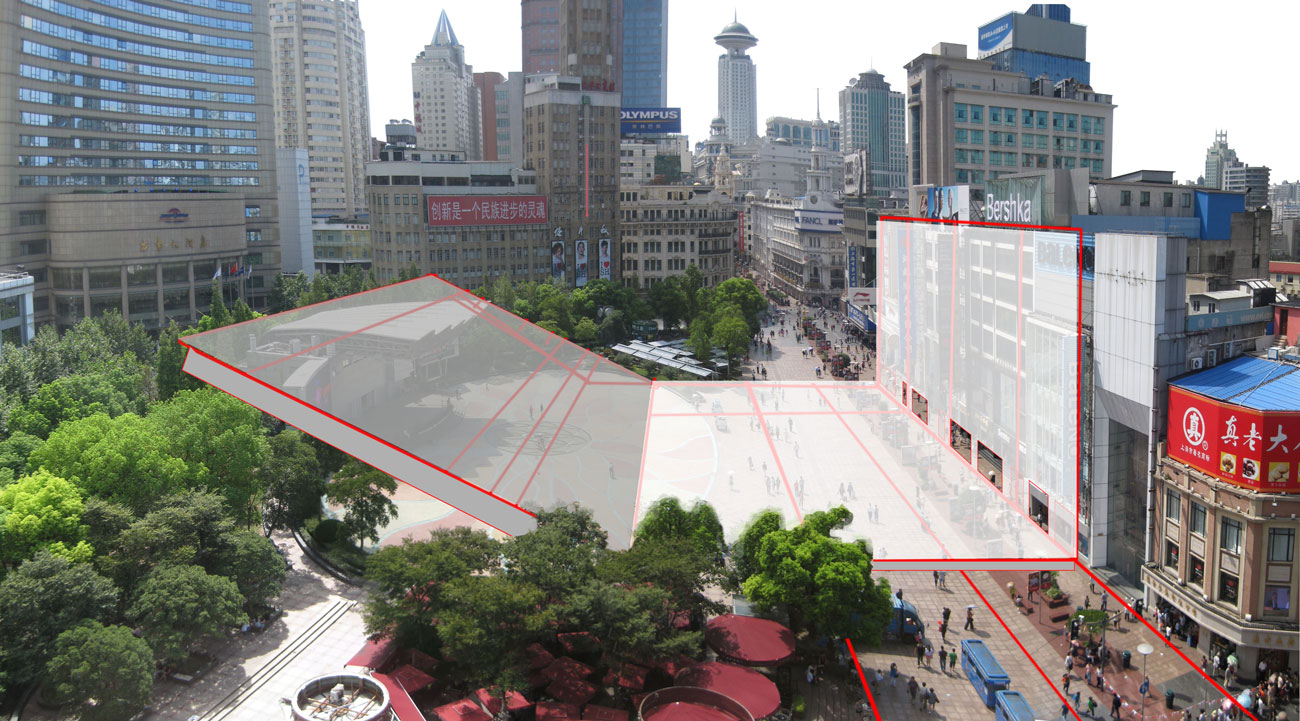
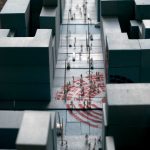
This project is located in Shanghai, on East Nanjing road’s Century Square, the most famous and glamorous pedestrian street in the “heart” of the city center.
 
The essence of this street is its commercial status, which was historically developed as a link between East and West, connecting directly the port with the city, therefore used as the principal trading platform, becoming a cultural and social active axis.


©100architects


These features and its consequences on space have remained till now, being today the commercial street in Shanghai per excellence, constantly receiving thousands of pedestrians, locals and tourists, enjoying the existing multicultural mixture and its commercial stores. Currently, the Century Square is a flat car-free open area that also contains a small performance stage rarely used during most of the year.
 
It is the only area with this condition in the whole east Nanjing road but it lacks of an attractor, a landmark for its urban scape.


©100architects


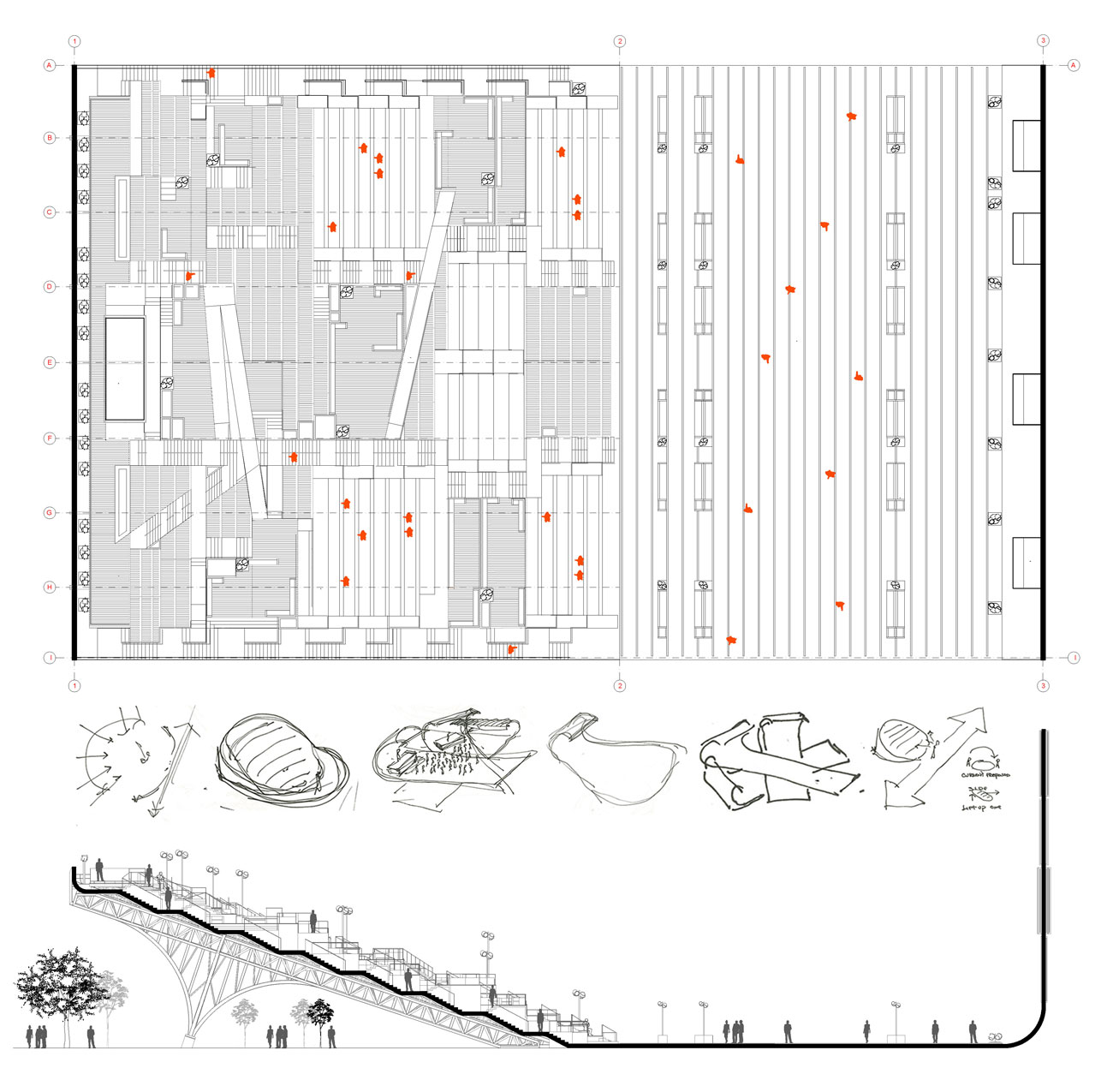
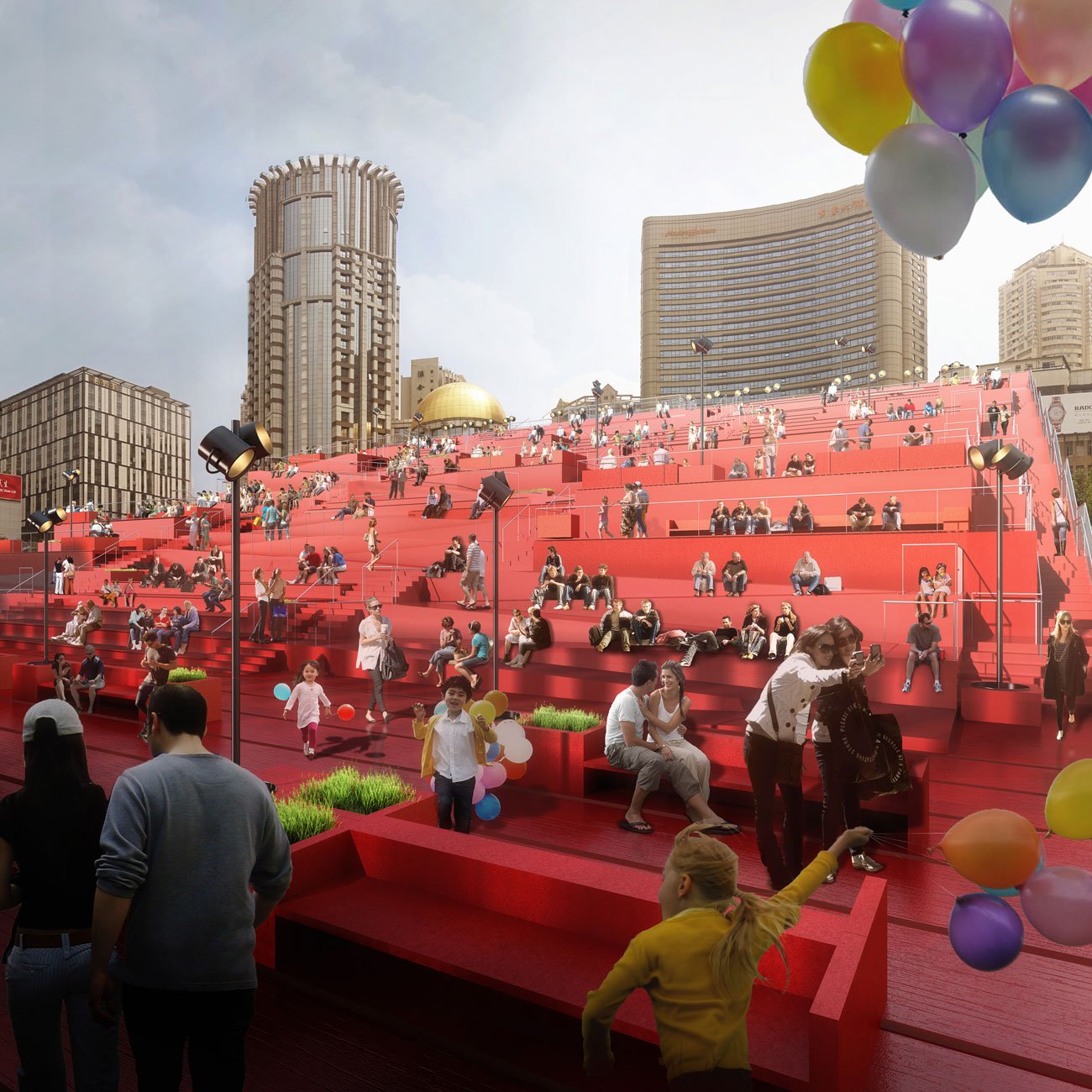
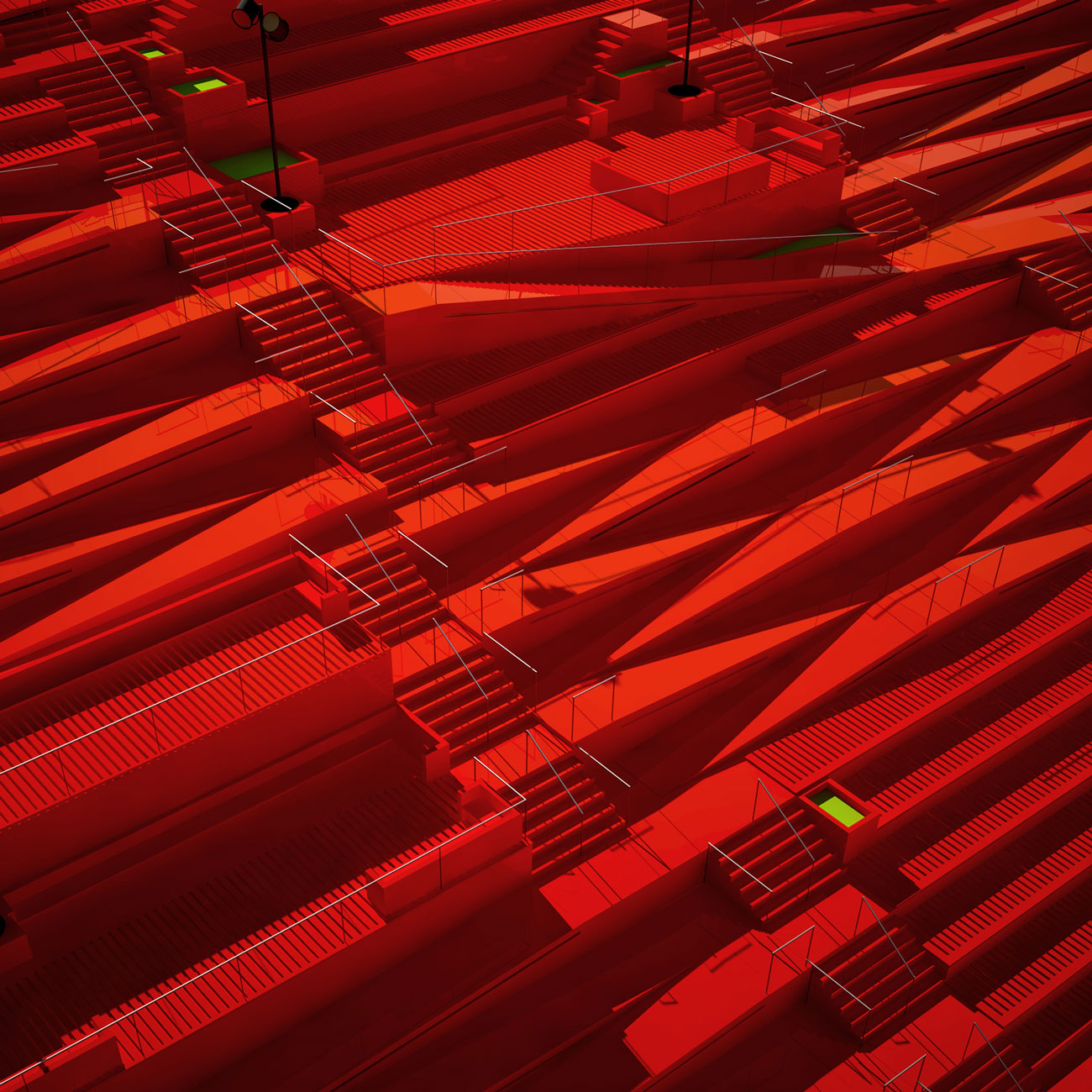
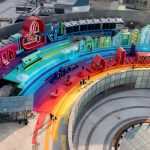
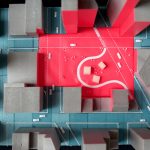
The design strategy is to create a massive inclined plaza as a grandstand that overlooks toward the pedestrian road, generating unique urban views of Shanghai downtown. Also, the “red” layer reaches the road to then climb up the existing buildings as a curtain façade for public art, projections and performances.
 
This produces a very intense segment in the pedestrian Nanjing road. The object’s shape contains the space adding new properties transforming this segment of East Nanjing in a highly stimulating space.


©100architects


©100architects


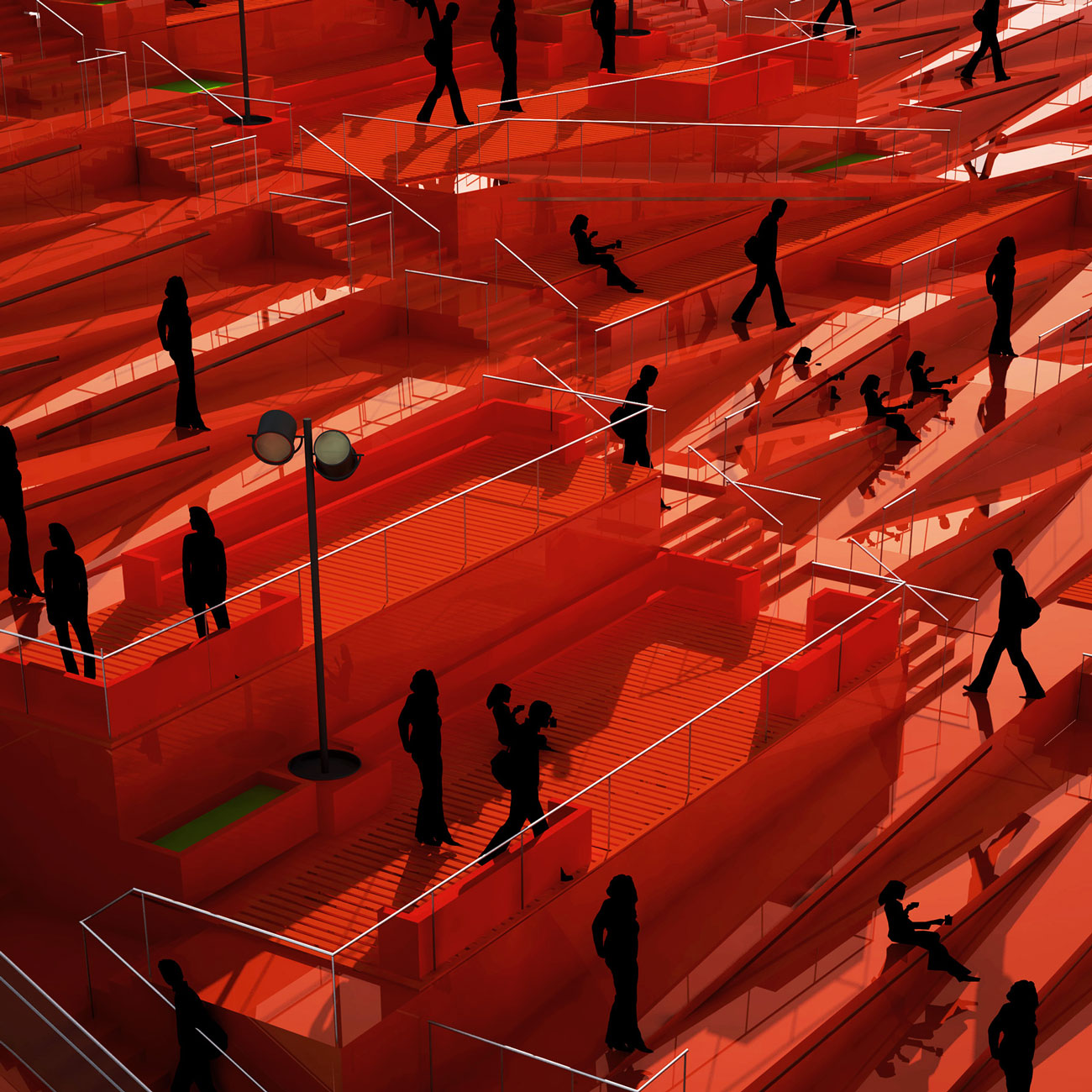
The Red Carpet is an open amphitheater, where the show is massified, inviting passersby to enjoy vibrant shows in a surreal atmosphere of design, jewelry and glamour.
 
The aesthetics of the project resembles a red carpet of giant proportions, folding from the storefronts of the building at the north, top to bottom generating a cavity in the same commercial axis.


©100architects


The covered space on the south, under the seats structure, has two different uses. A more exposed area in direct contact with the passersby, works as an open market using the structure itself as sunshade protection. While the inner area under the structure is used as a small bar, with public toilets and others amenities.
 
The structure is made of metal trusses that generate the support for the precast concrete blocks that builds the horizontal seating. While the remaining elements are built on red wood and red metal panels.
 
In the front part, the vertical metal structure is covering the buildings with perforated metal panels allowing plenty of light and air flows from the exterior, which enables to gain this massive surface for public amusements, projections and background for performances.


©100architects


©100architects


©100architects


Credits
 
PROJECT NAME: Red Carpet
DESIGN: 100 Architects (Shanghai)
DESIGN TEAM: Marcial Jesús, Madalena Sales, Pablo Juica
CLIENT: Undisclosed
SIZE: 12,080 m2
STATUS: Unbuilt
LOCATION: Shanghai, East Nanjing Road (China)