Click here to learn more about Rubix Square in Fuzhou.

© 100architects
Tea Mountains
Hangzhou | China
A landscape inspired by tea and painting
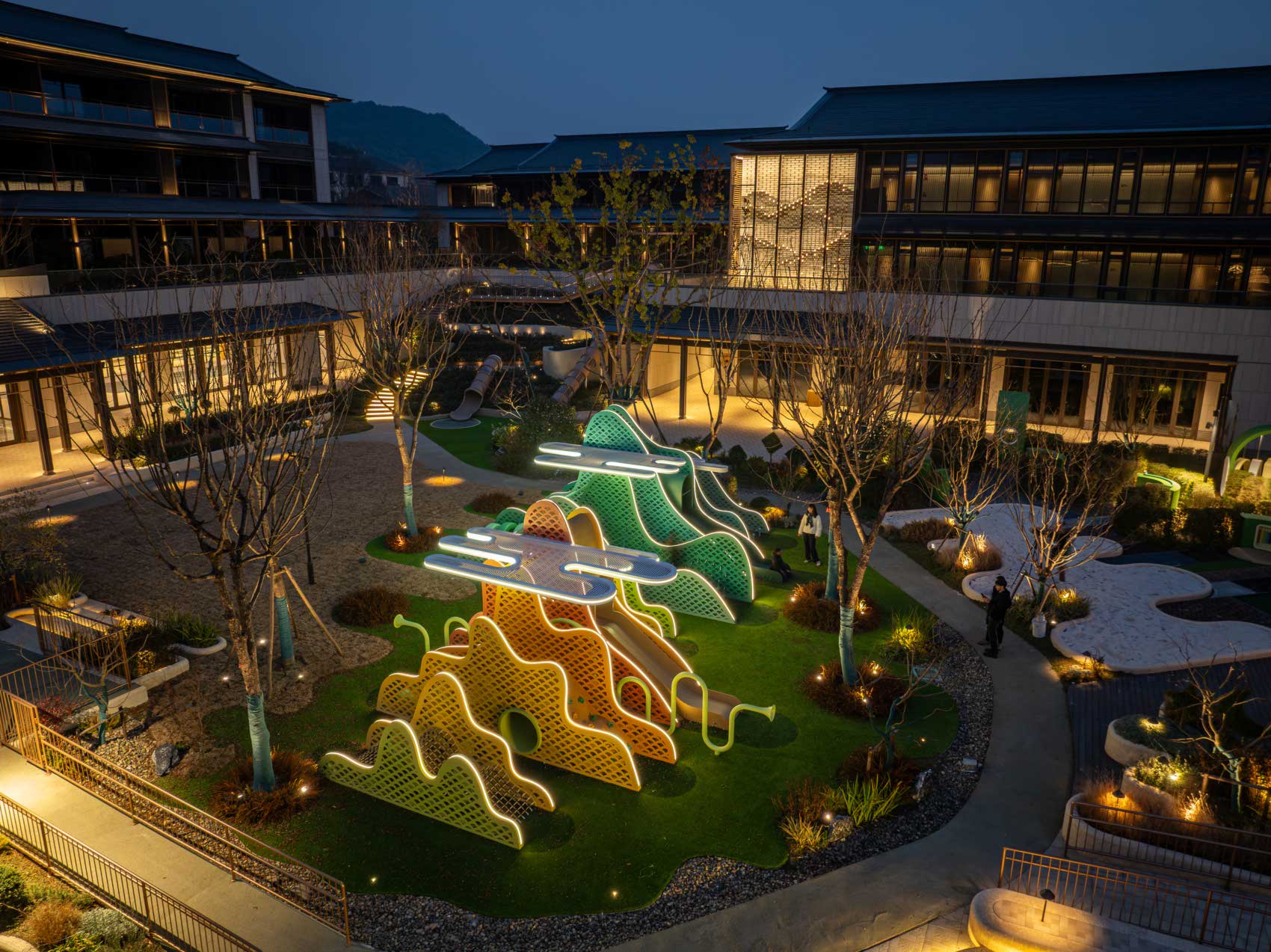
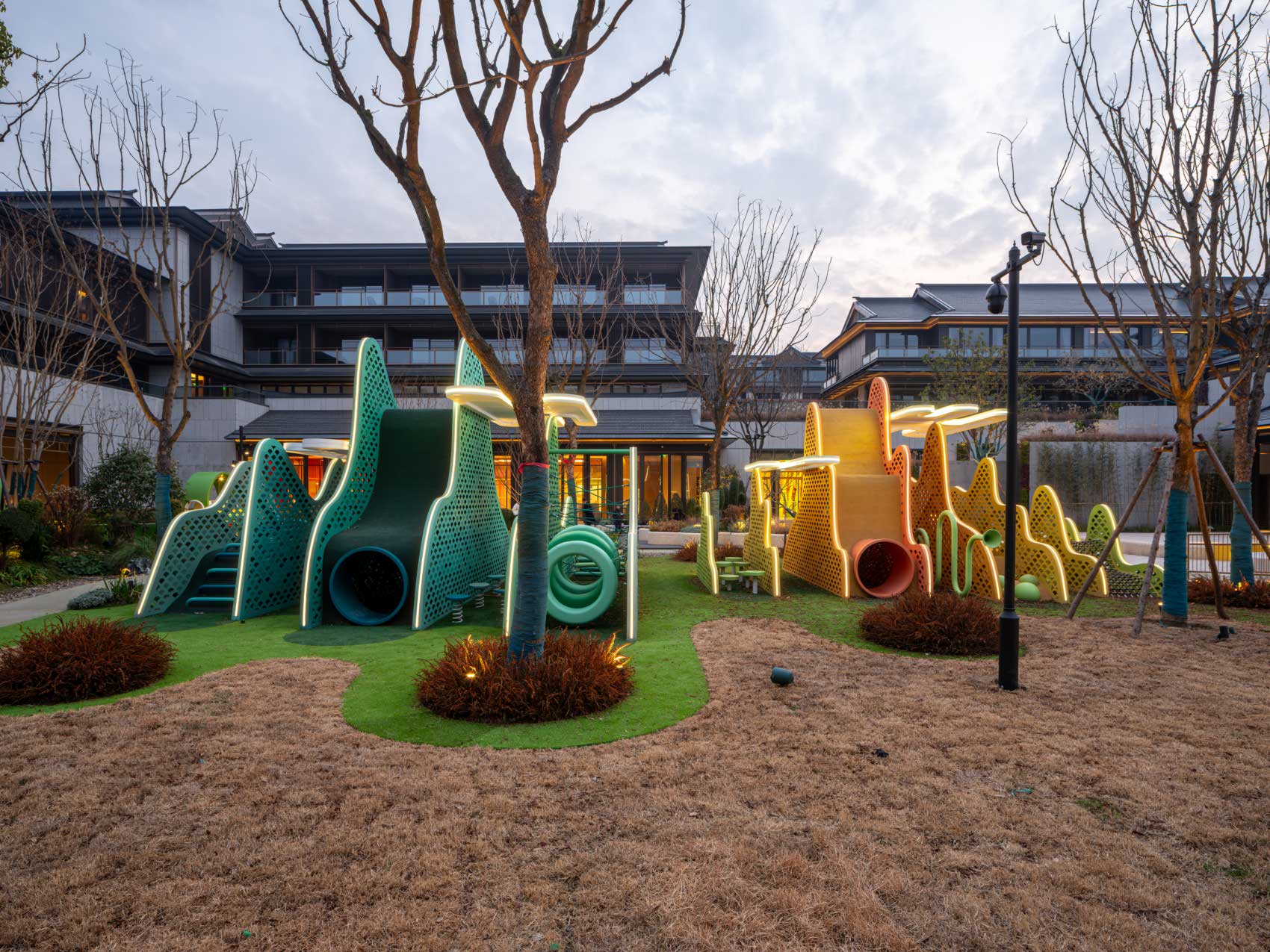
Located in Longwu, a region renowned for its tea plantations, the project draws inspiration from the rolling mountain landscapes that define its identity.
Official Video | 100A Channel
© 100architects
These tea-covered hills—deeply rooted in local culture—have long been represented in traditional Chinese painting, where depth is not achieved through perspective, but through layering, tonal variation and atmospheric gradation.

© 100architects
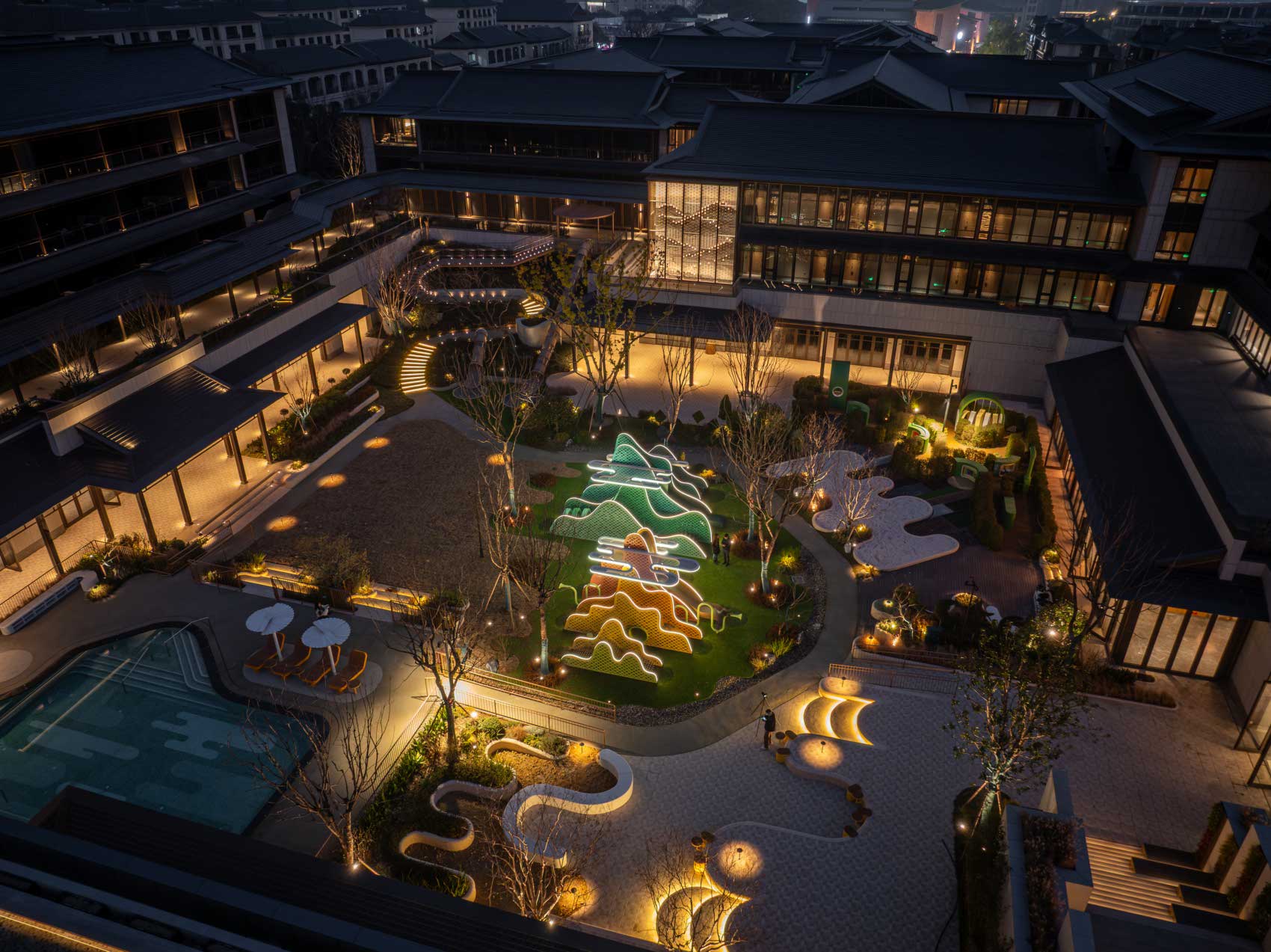
The project translates this artistic logic into space, transforming the outdoor area into a three-dimensional landscape of overlapping layers, where architecture, topography and play merge into a continuous experience.

© 100architects

© 100architects
From painting to space
Rather than replicating the mountains literally, the design abstracts their essence.
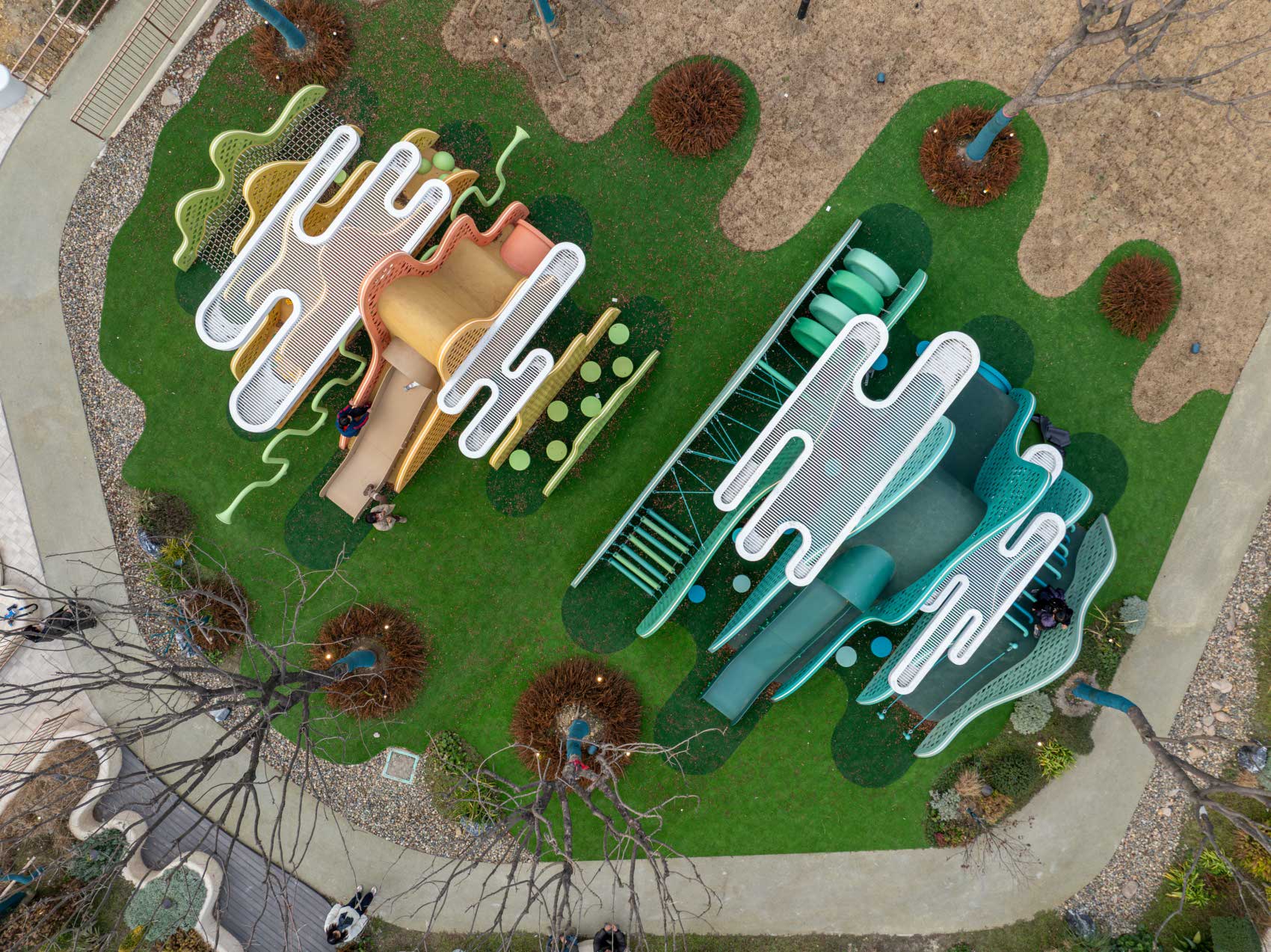
A sequence of layered platforms, slopes and soft geometries recreates the visual depth found in traditional paintings, using variations in height, color and texture to generate a sense of distance and immersion.

© 100architects

© 100architects

© 100architects
Each layer becomes both circulation and playground, allowing children to move freely across the landscape—climbing, running, exploring and discovering new perspectives at every step.
© 100architects
The result is not a playground placed on a landscape, but a playable landscape itself.

© Rex Zhou
A continuous terrain of play
The intervention avoids isolated objects, instead creating a fluid topography where every surface can be inhabited.

© Rex Zhou

© 100architects
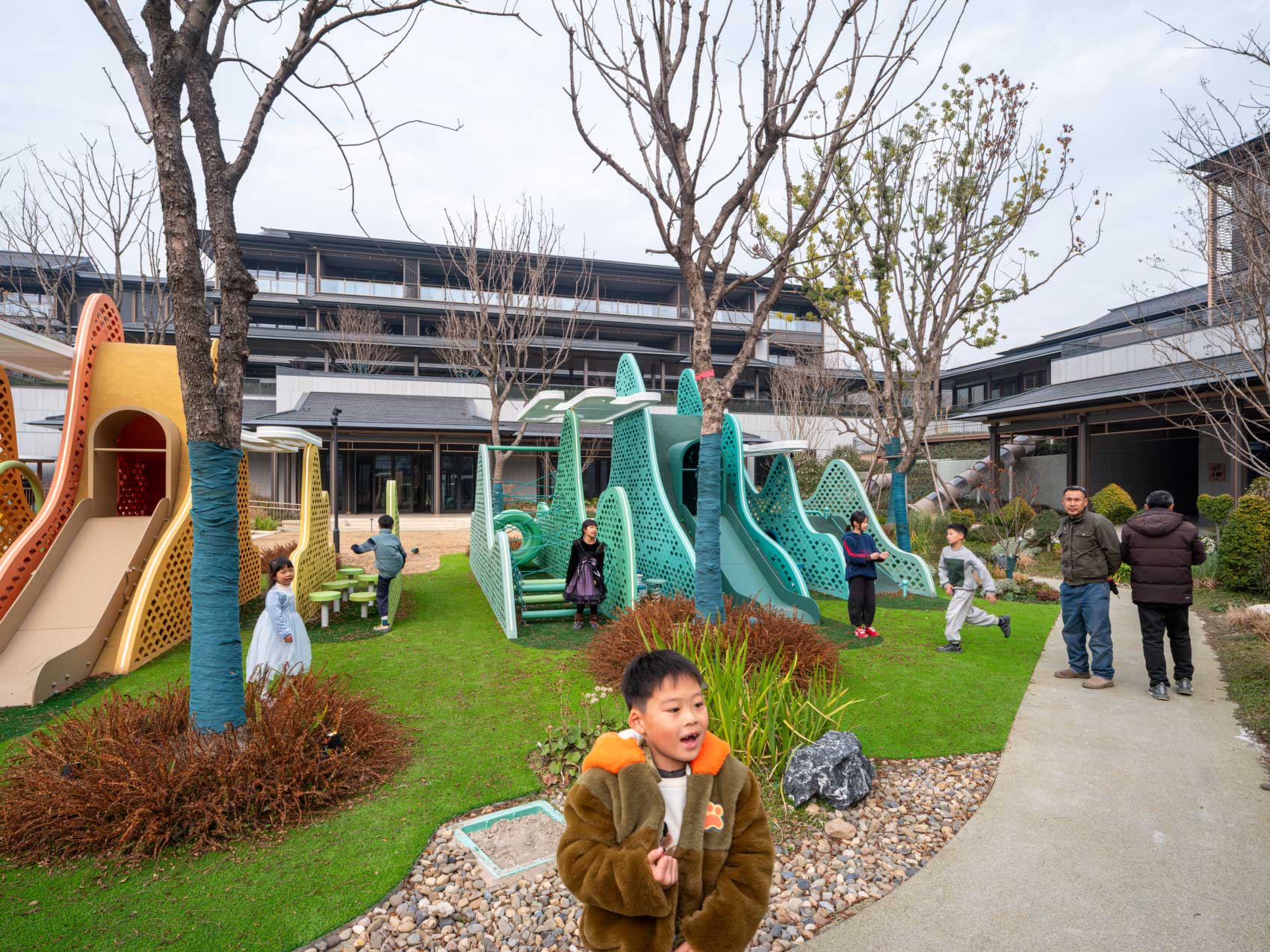
Subtle changes in elevation define areas for different intensities of use—from active play zones to softer spaces for rest and contemplation. The design encourages open-ended interaction, allowing users to interpret the terrain in multiple ways.
© Rex Zhou
Movement through the space becomes a journey across an abstracted mountain range—where scale, distance and perception constantly shift.

© 100architects
Reinterpreting local identity
By drawing from both the physical reality of Longwu’s tea plantations and their artistic representation, the project bridges landscape and culture, nature and abstraction.
© Rex Zhou

© 100architects
The result is a contemporary public space that resonates with its context—not through imitation, but through reinterpretation—offering a new way to experience a familiar territory.

© Rex Zhou
A landscape to explore
Tea Mountains Playscape redefines the relationship between play and landscape.

© Rex Zhou

© 100architects

© 100architects
Here, the ground is not static—it rises, folds and transforms into an interactive environment that invites exploration. A place where children engage with space as they would with nature itself: freely, intuitively, and with curiosity.

© 100architects

© 100architects

© 100architects
© 100architects
Credits
PROJECT NAME: Tea Mountains
CLIENT: ClubMed Hotels
DESIGN: 100architects
DESIGN TEAM: Marcial Jesús, Javier González, Mónica Páez, Lara Broglio, Keith Gong, Cosima Jiang, Michelle Aldora, Jango Zhang & Yuntong Liu.
PHOTOGRAPHY: Rex Zhou
VIDEOGRAPHY: This is Lalo Productions
SIZE: 1,000 m2
STATUS: Built
LOCATION: Longwu, Hangzhou, China
More images
© 100architects
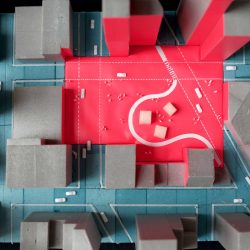
What is a neighborhood intervention?
This is the medium-scale type of intervention that takes place in the public realm of a city, related to the altering of a portion of a neighborhood. A type of intervention of such magnitude and notoriety impacts not only the immediate surrounding urban environment but rather the urban dynamics of a whole neighborhood, becoming an urban landmark and a local attractor of social interactions in a given neighborhood.
The main objective of this typology is to trigger massive public interest in the place through a strong visual impact and injection of activities, encouraging the increase of high public influx and establishing an urban landmark that can cultivate important human dynamics and boost commercial activity. These phenomena are achieved through the creation of spaces for leisure, entertainment, play and collective joy, catalyzing important social interactions throughout the neighborhood.
This topology of intervention, normally is used by real state developers to bring fresh and unique ideas to the public realm of their urban developments, which contributes to stand out in the market, establishing a distinct brand identity through innovative, and user-oriented design solutions that enhance the quality of life and thus, the appeal and value in the eyes of potential buyers or tenants, increasing the marketability of the project and potentially leading to higher property values, rental rates and ultimately faster sell out. This interventions maximize the value of the entire neighborhood.
Projects
insta100

Loved seeing the kids get along!!
There are places that just stop you in your tracks. This one does exactly that! every view, every moment feels like it’s straight out of a dream.
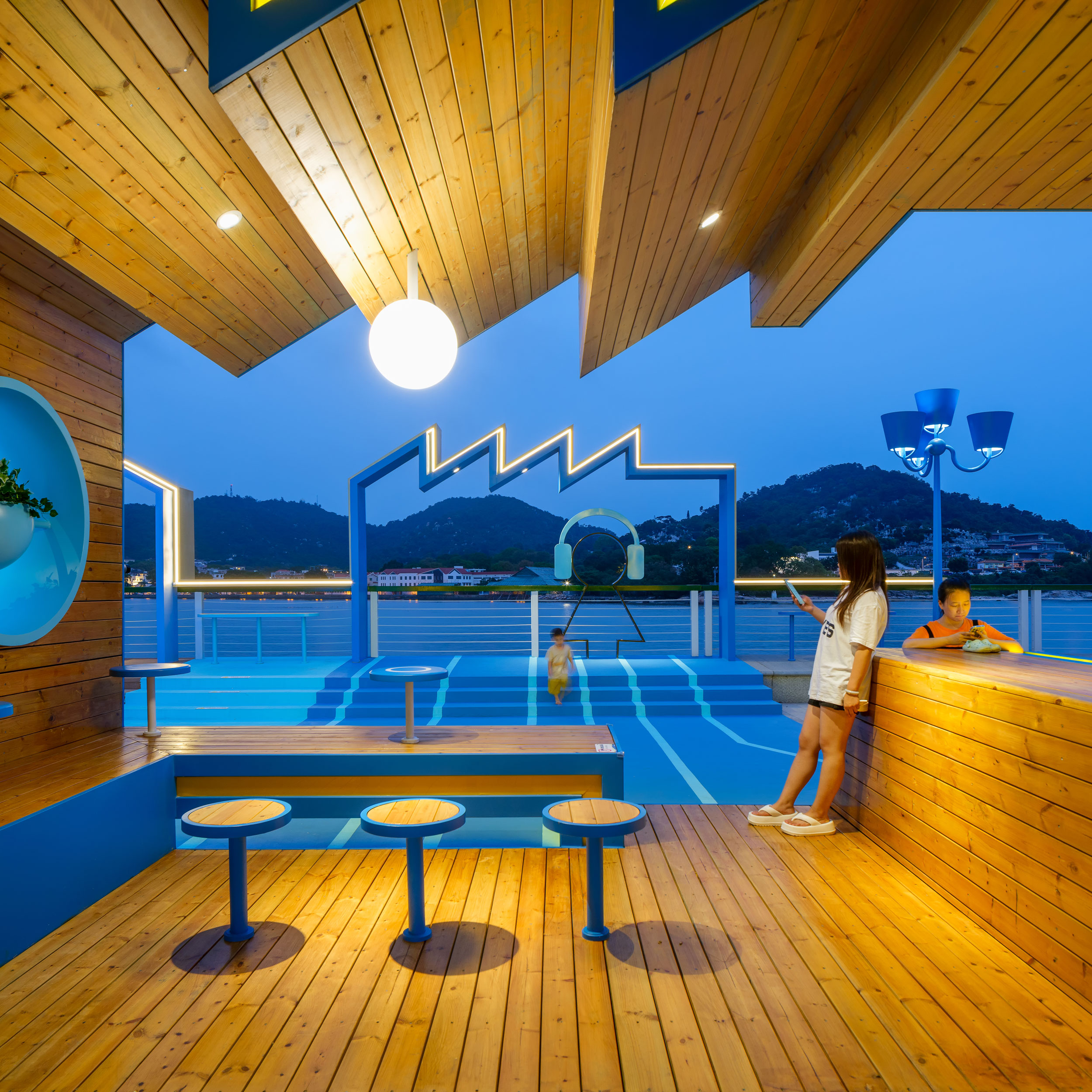
My favorite place from now on!!!!!!!!
Publications
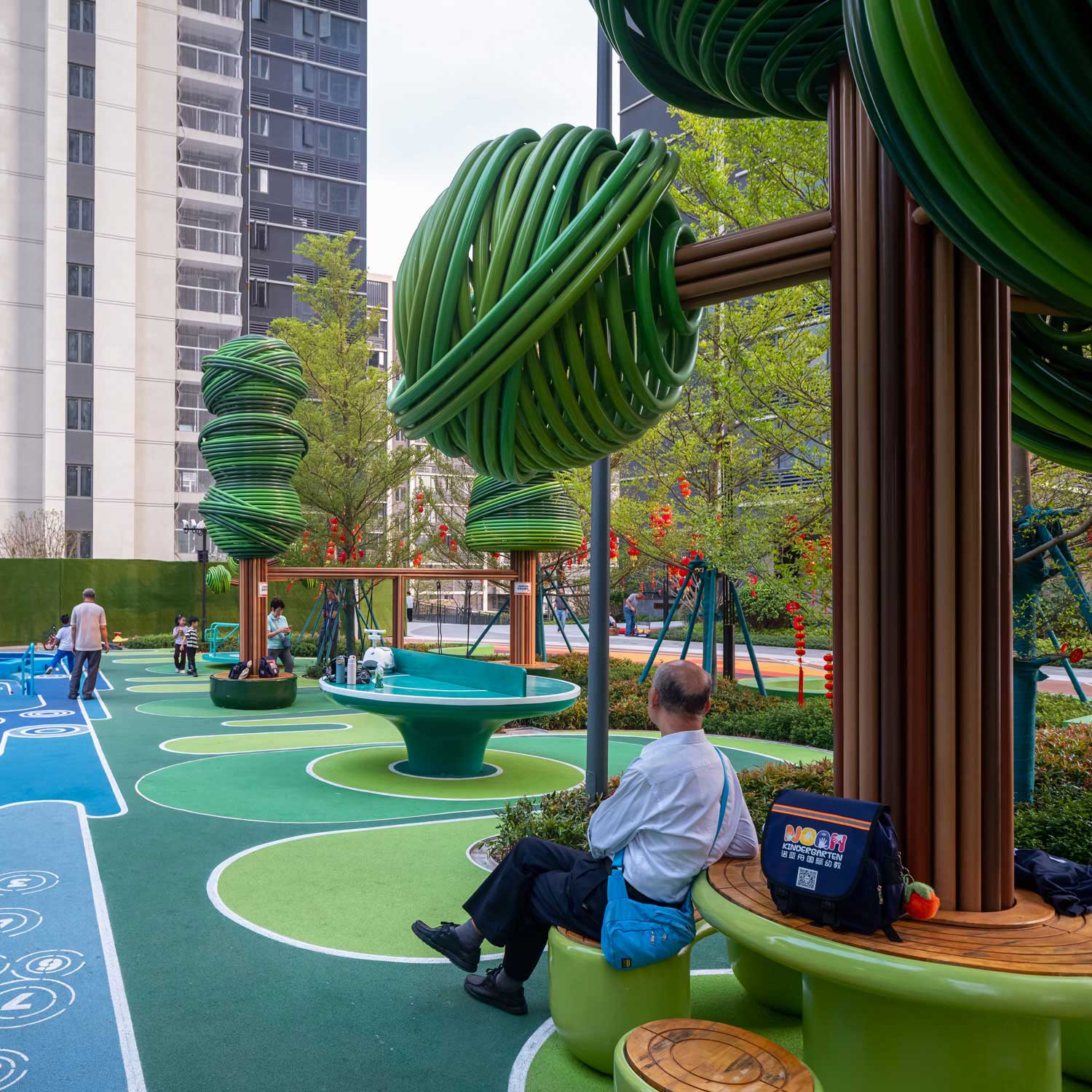
Wired Scape, designed by 100architects, is a groundbreaking playscape in Guangzhou, China, blending natural landscapes with dynamic, fluid forms. This innovative public space offers a unique play experience for all ages, combining nature, design, and adventure into one captivating destination.

It is an explosion of colors, where vibrant hues blend seamlessly to form four distinct rectangular stripes, each representing a unique activity zone. These stripes create a dynamic flow, inviting users to engage with the space in different ways. The interplay of colors and design transforms the area into an interactive and playful environment.
It’s not classical landscape architecture where design focuses on elegant alignment with a space’s existing character, but “injecting identity into places that do not have one,” he says.
Moments & Experiences











 Home

 Projects

 Moments

 Products

 About