Check other metropolitan interventions by clicking here!
© 100architects
The Orange Moon
Jamsil Hangang Park Natural Swimming Pools | Seoul | South Korea
The Orange Moon | Official Video | 100 Channel
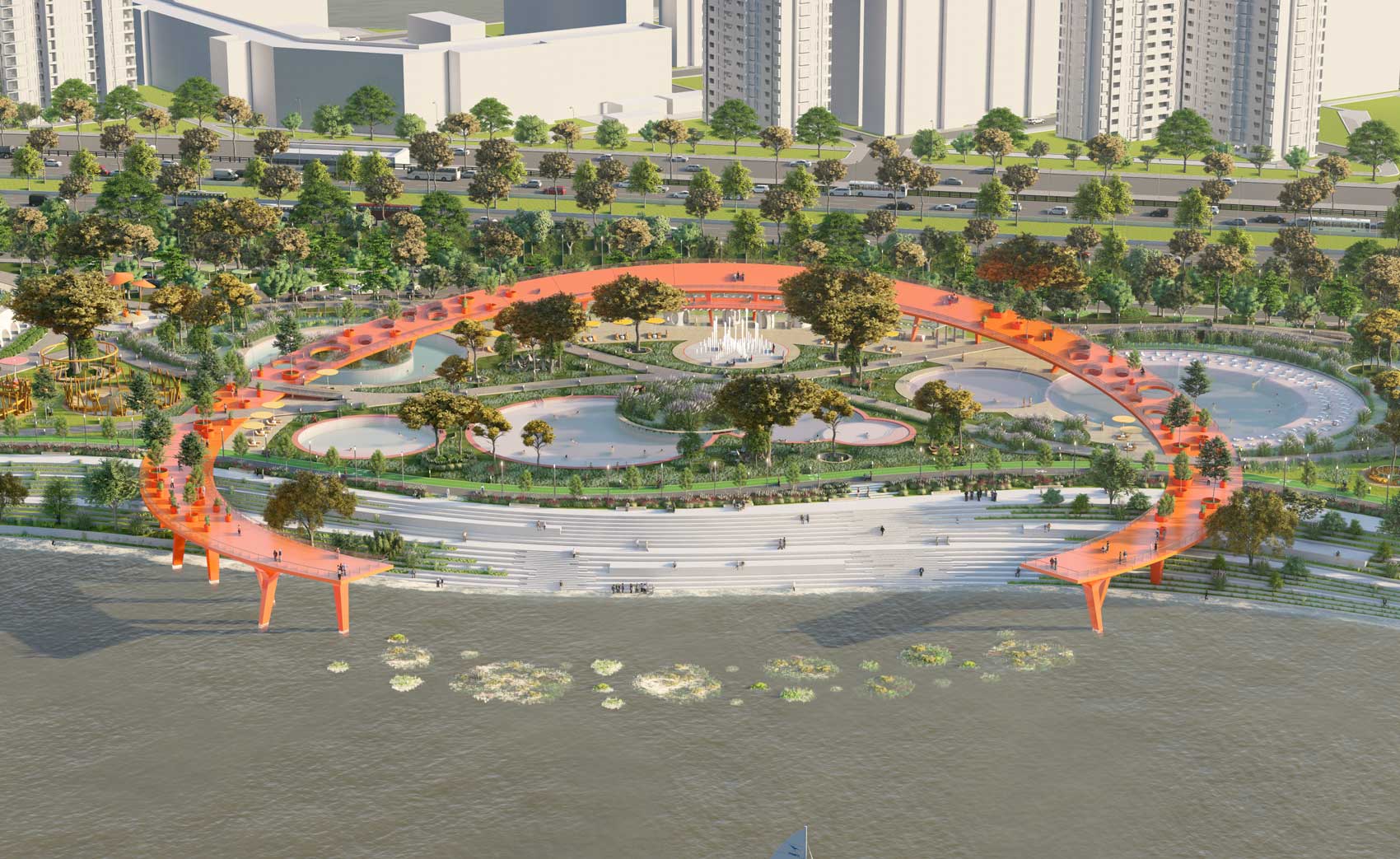
The Orange Ring is a metropolitan intervention that aims to boost commerce and tourism catalyzing economic development by positioning this huge object on the riverbank of the Hang River, contributing to the city brand identity with a functional and eye catching project that will serve the entire city.
© 100architects
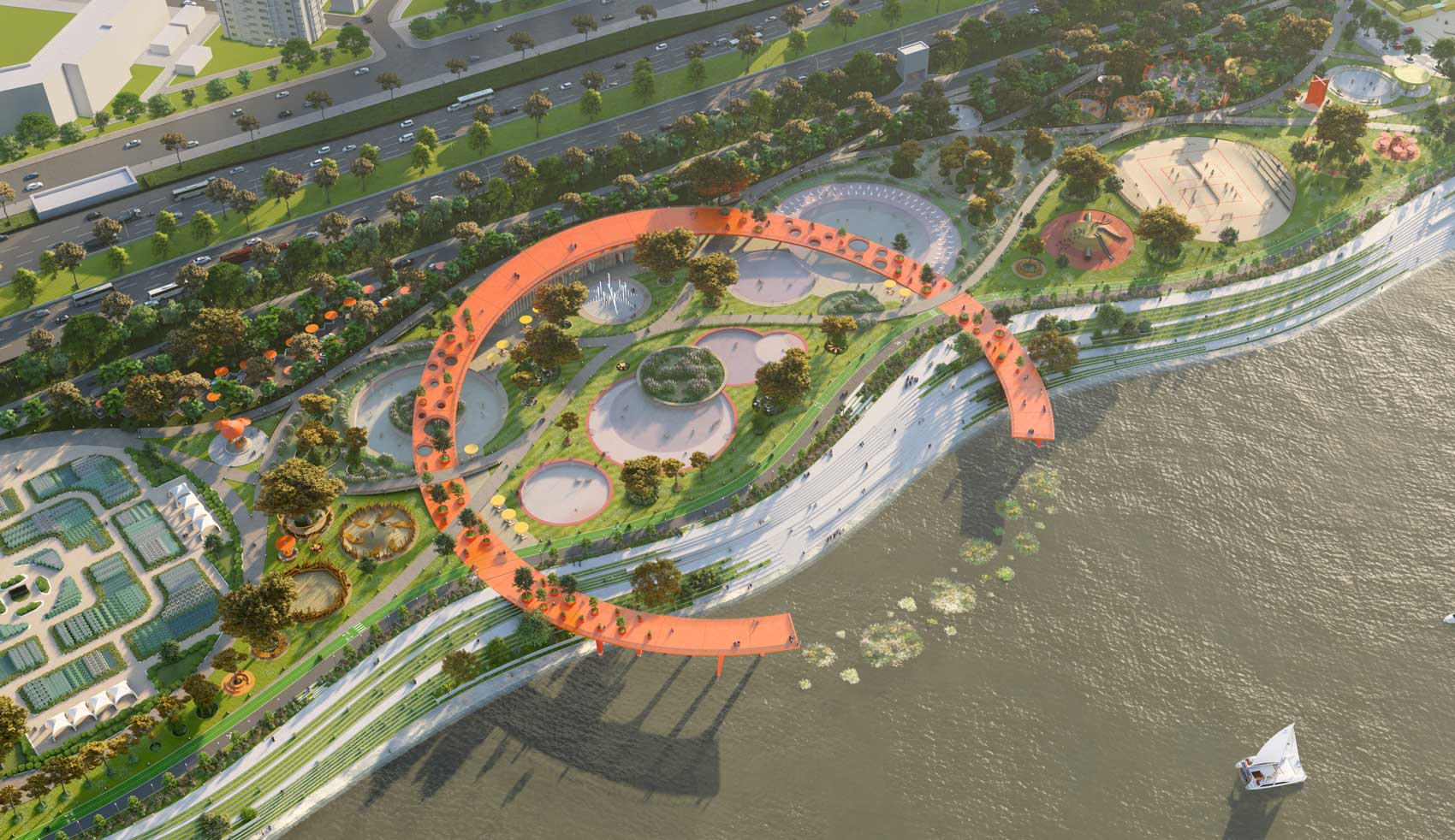
Drawing inspiration from the captivating sight of the Orange Moon phenomenon, our project, Orange Moon, finds its home in the heart of Seoul, a city that thrives amidst the harmony of urban life and natural beauty. Situated along the banks of the Han River, Orange Moon serves as a beacon, echoing the mesmerizing circular form and vibrant hue of the Orange Moon in the night sky. Just as Seoul embraces its natural surroundings, our project seeks to embody this connection to nature. The Orange Moon project symbolizes a harmonious blend of nature and architecture, serving as a beacon of innovation and beauty within Seoul’s urban landscape, celebrating the city’s rich cultural heritage and enduring bond with the natural world.
With the purpose of improving the existing public facility of the Swimming Pool in Jamsil Hangang Park, the Municipality of Seoul launched a Competition for a design solution that would bring back the former glory of this 30-years-old facility on the banks of the Hang River. Not only by renovating the Swimming Pools themselves, but also seeking a solution that would reactivate the entire Park as a public destination within the City of Seoul.
© 100architects
© 100architects
Our mission transcended the renovation of the existing pools, targeting the reestablishment of the natural landscape and fulfilling an entire urban regeneration, turning Hangang Park into a major urban and ecological landmark for the city of Seoul, to be used throughout all seasons.
© 100architects
© 100architects
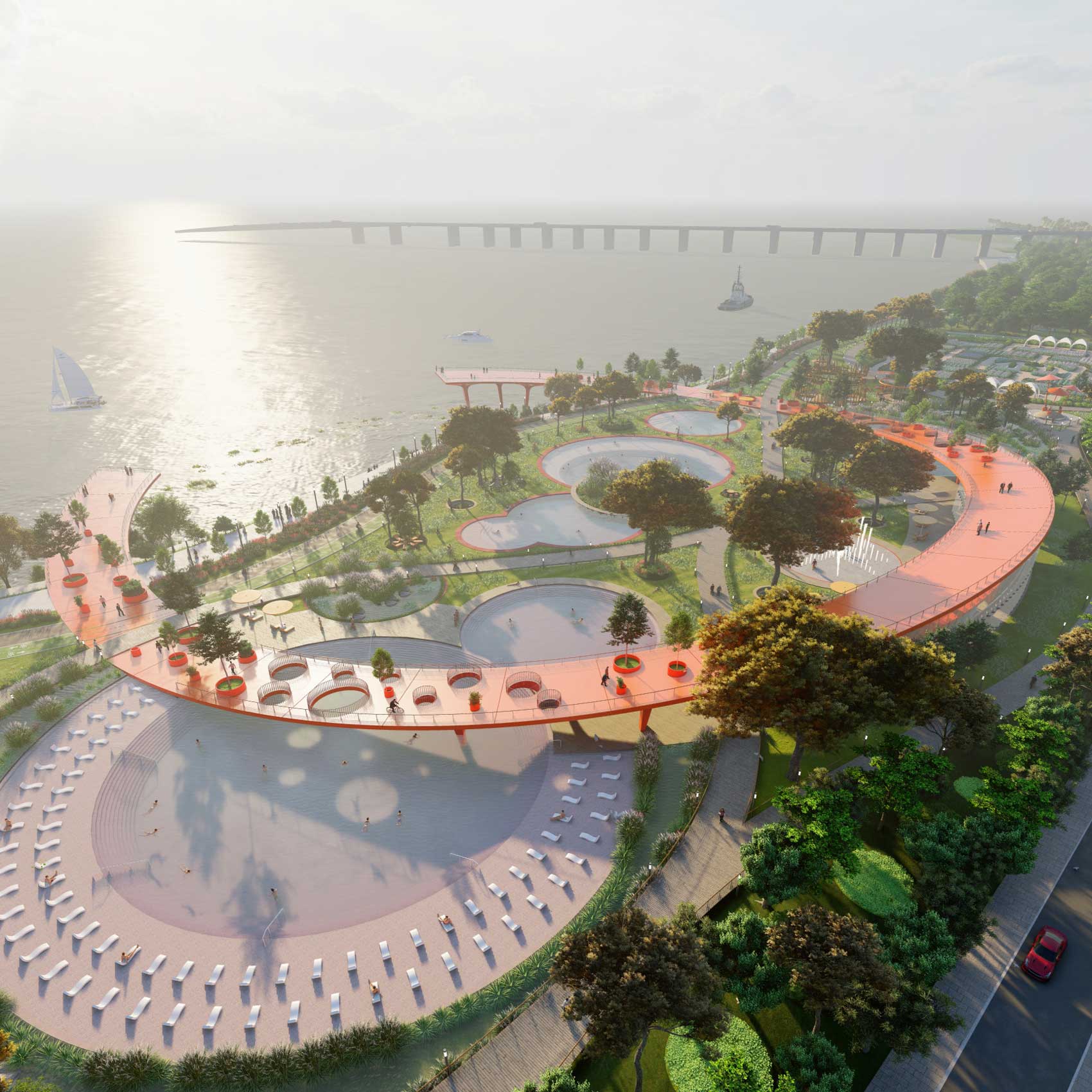
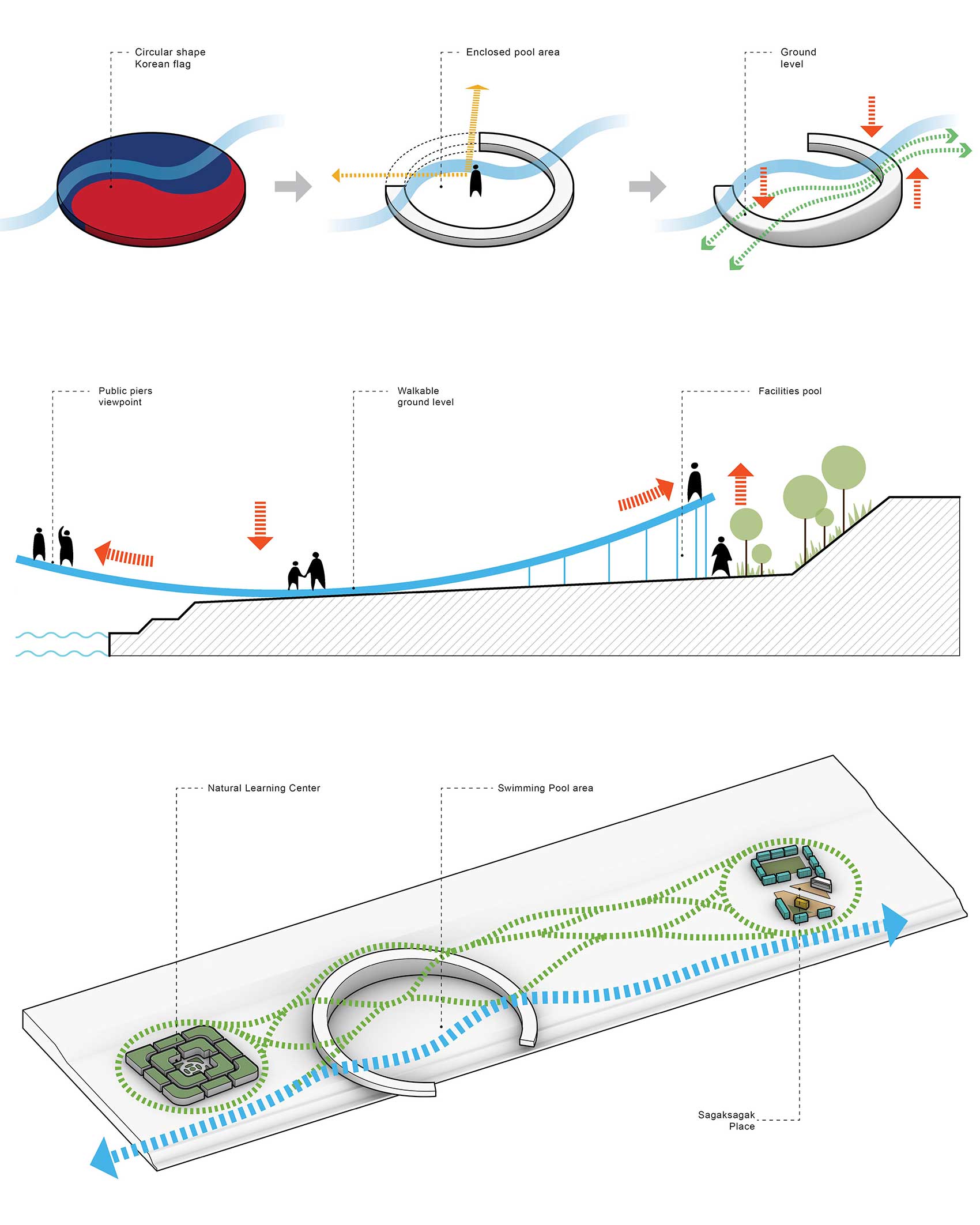
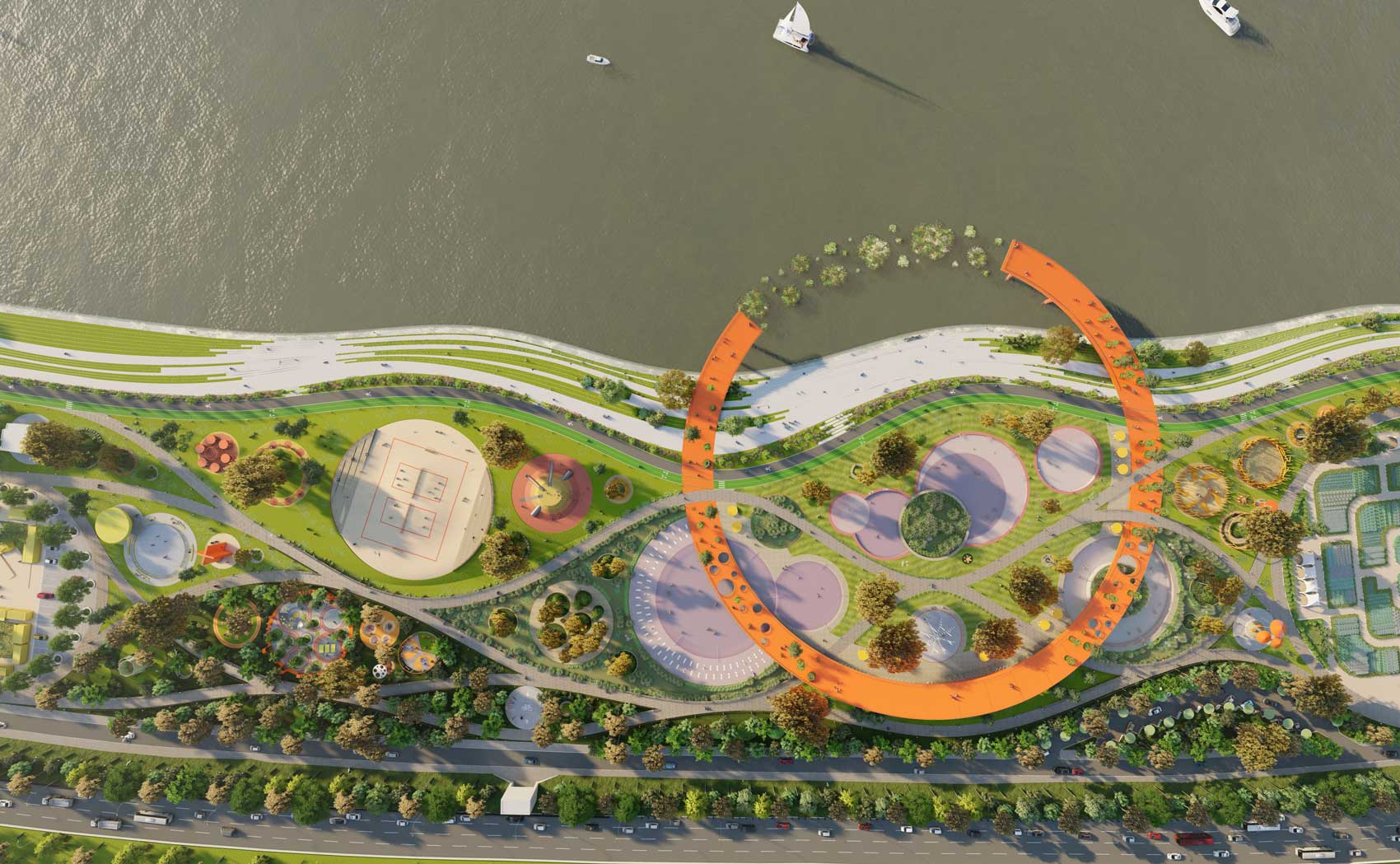
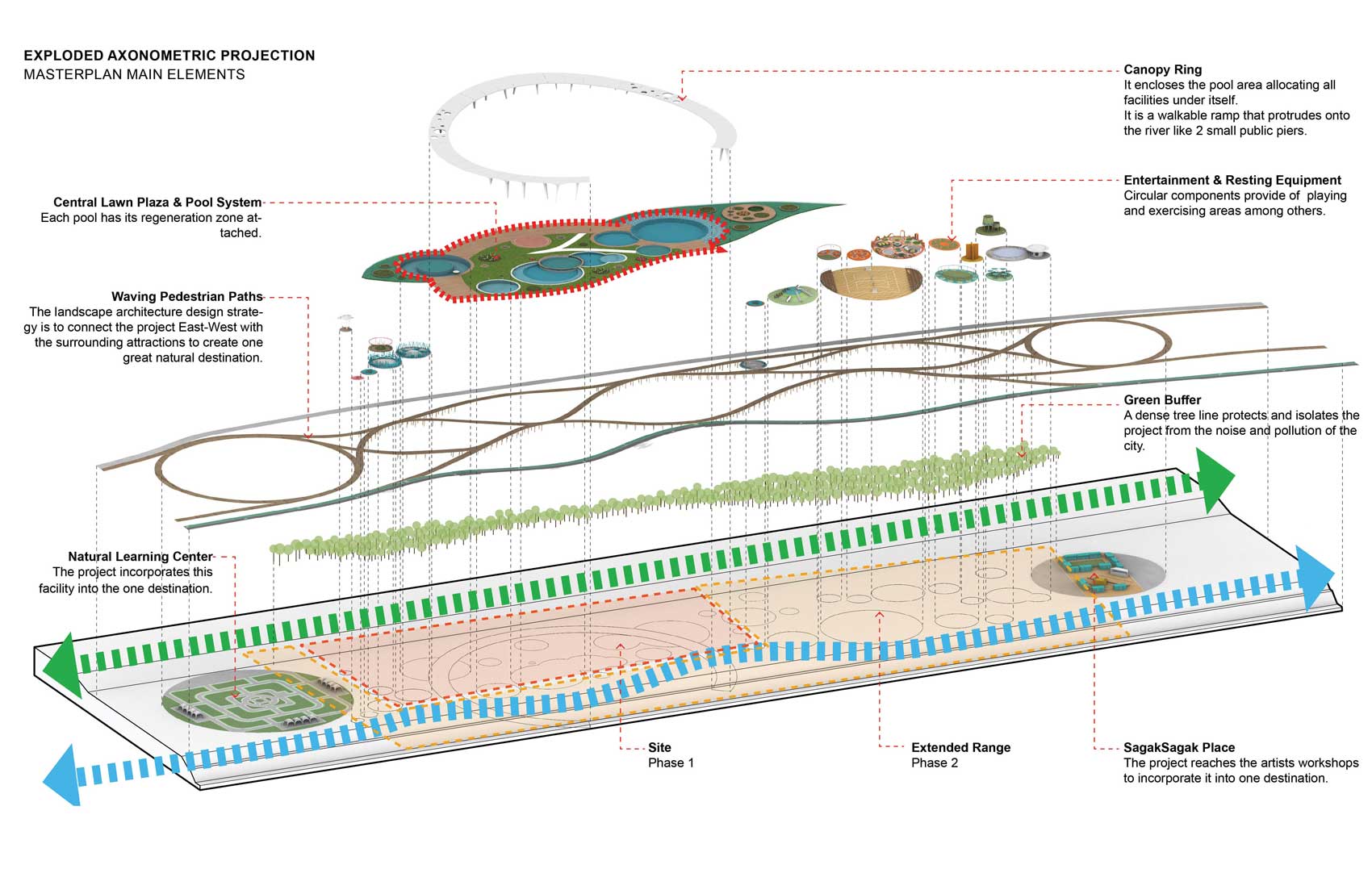
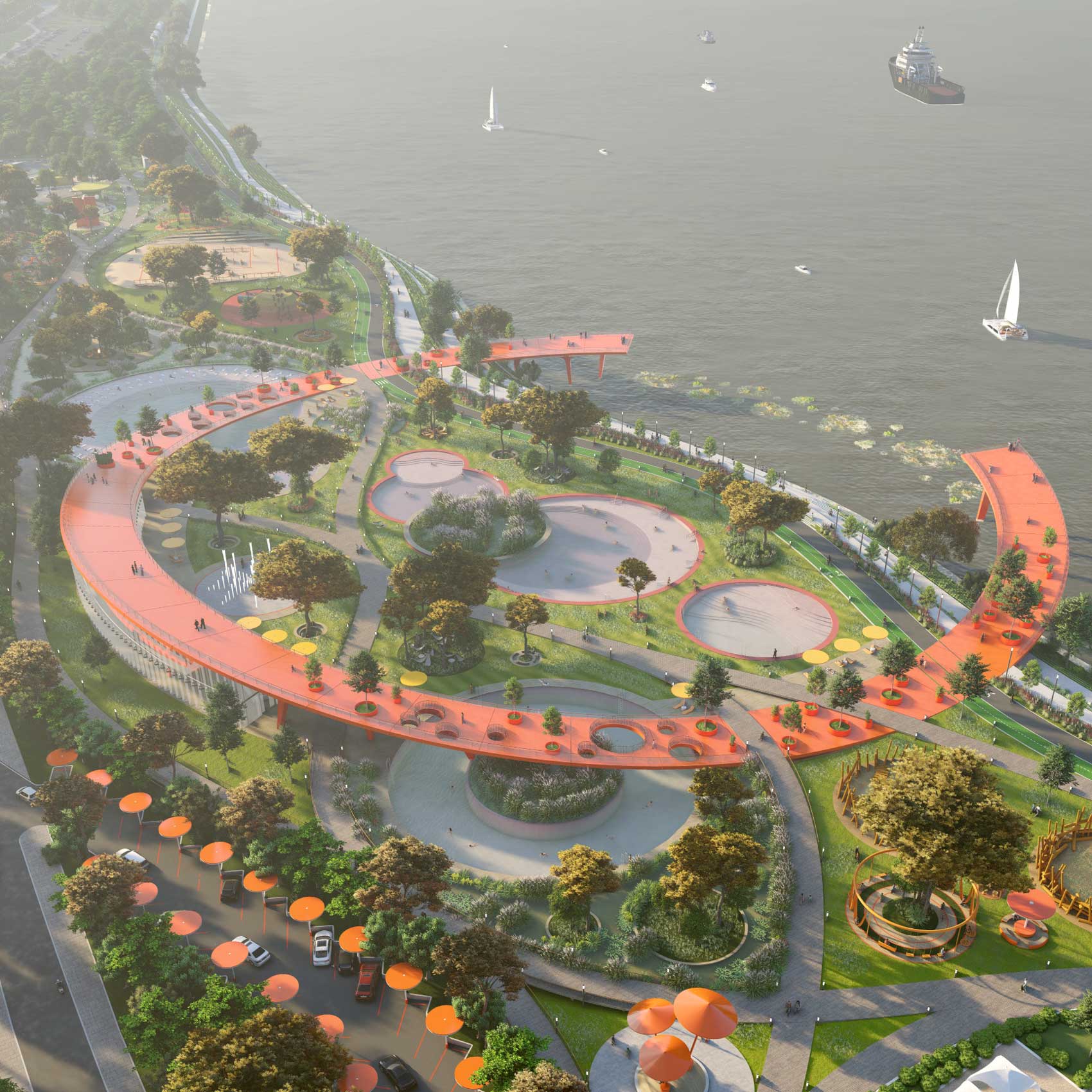
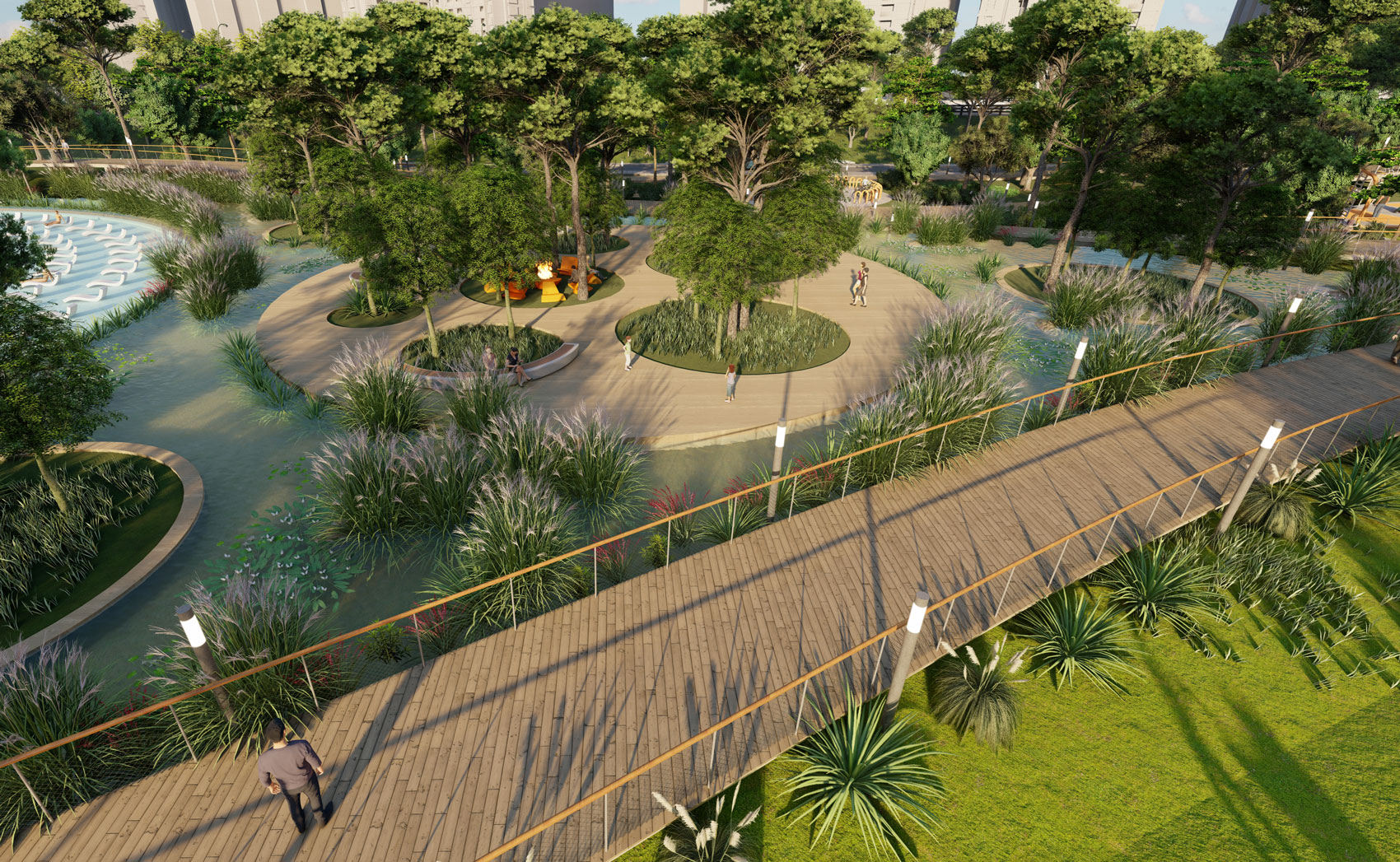
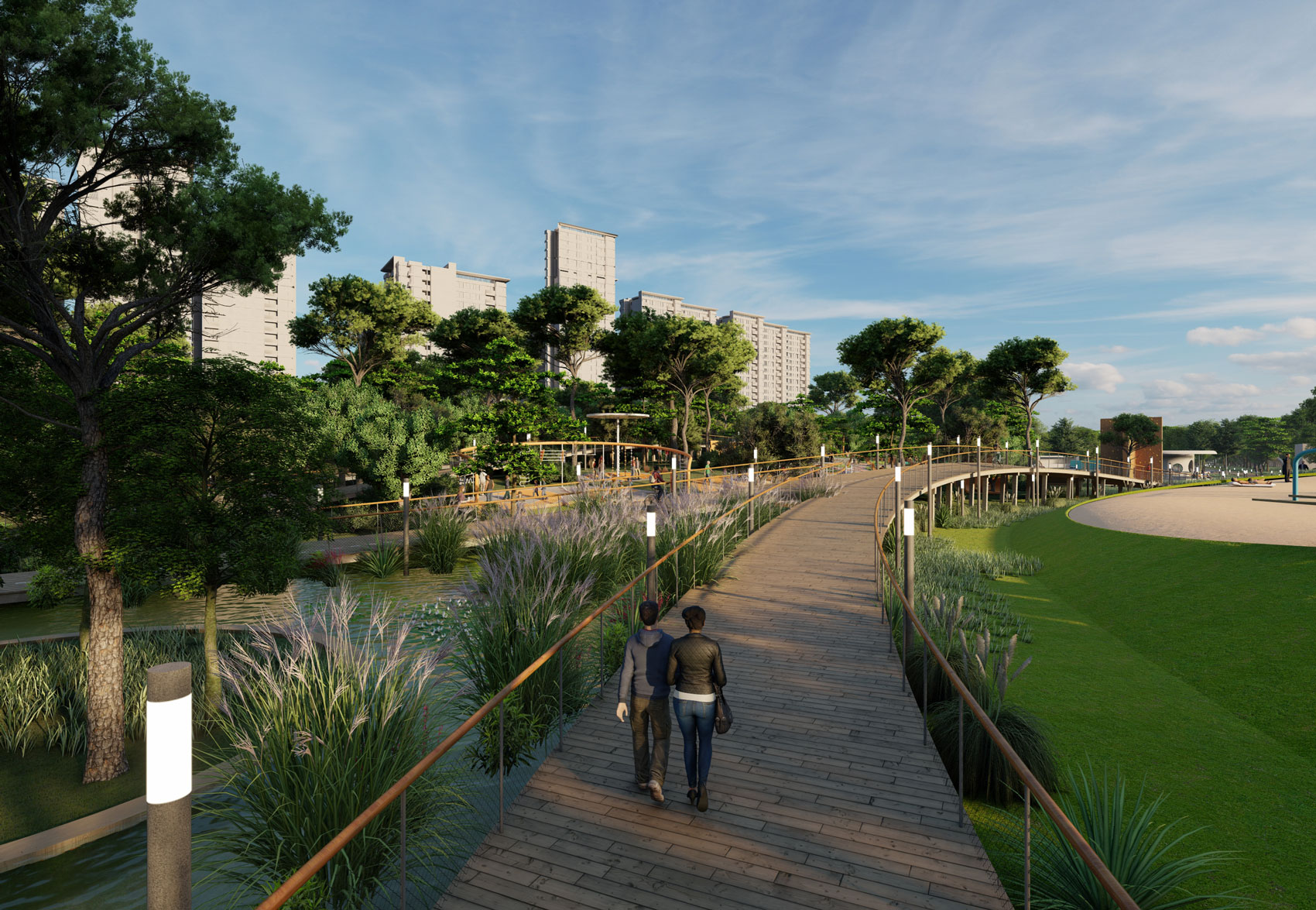
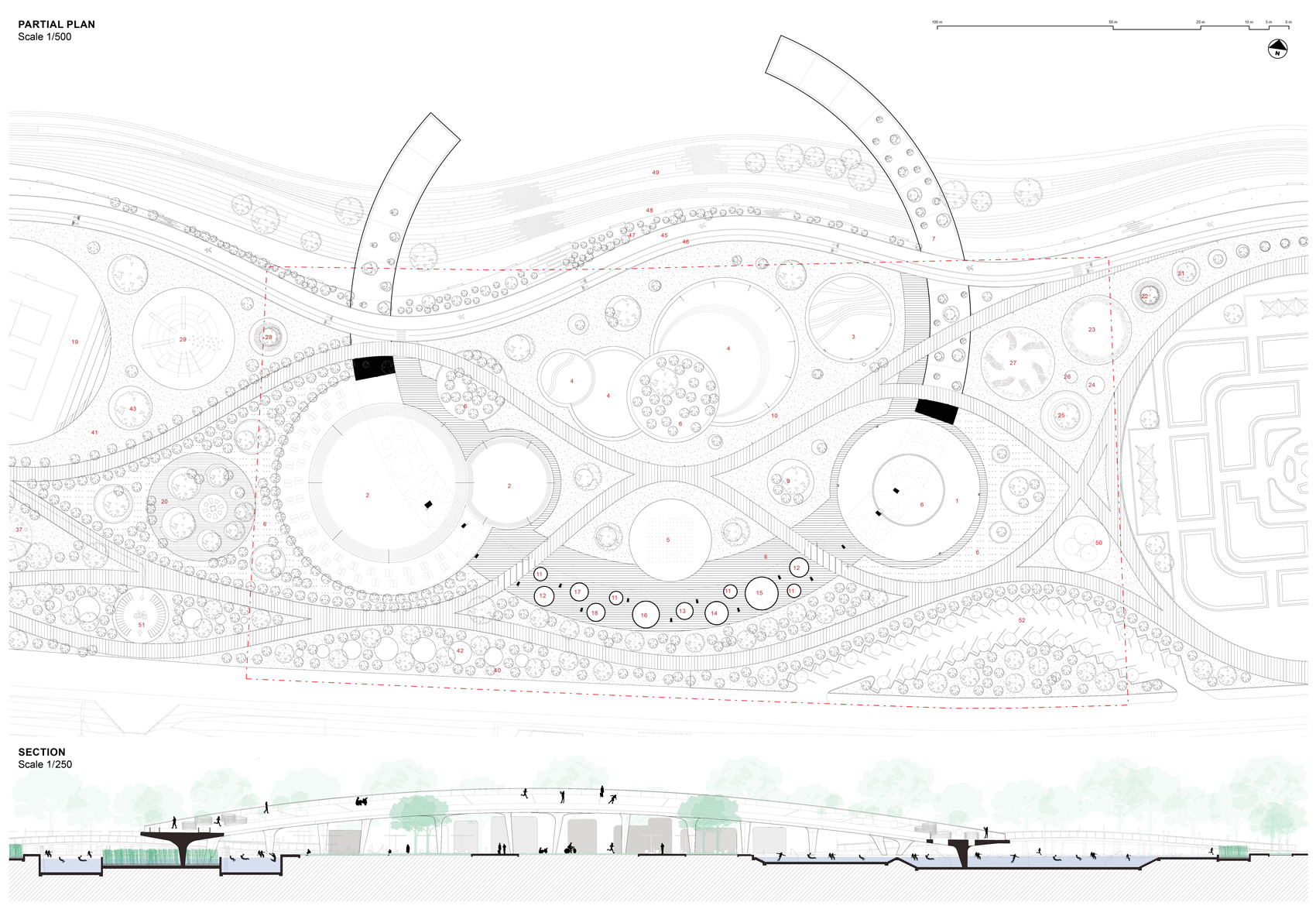
The proposal unifies the pool complex with the surrounding cultural facilities. On the West, the Sagak Sagak Artistic Area, and on the East, the Botanical Learning Center. The plan connects those 3 facilities through a system of meandering interweaved pedestrian paths, allowing easy pedestrian accessibility between all of them, transforming the entire riverfront into a prominent public natural destination.
© 100architects
© 100architects
The proposal draws its inspiration from Taegeuk, the traditional Korean symbol which can be found in the National Flag of South Korea, as a very honored, loyal illustrative and recognizable shape. A perfect circle split in two halves, red & blue, representing the balance in the universe.
© 100architects
© 100architects
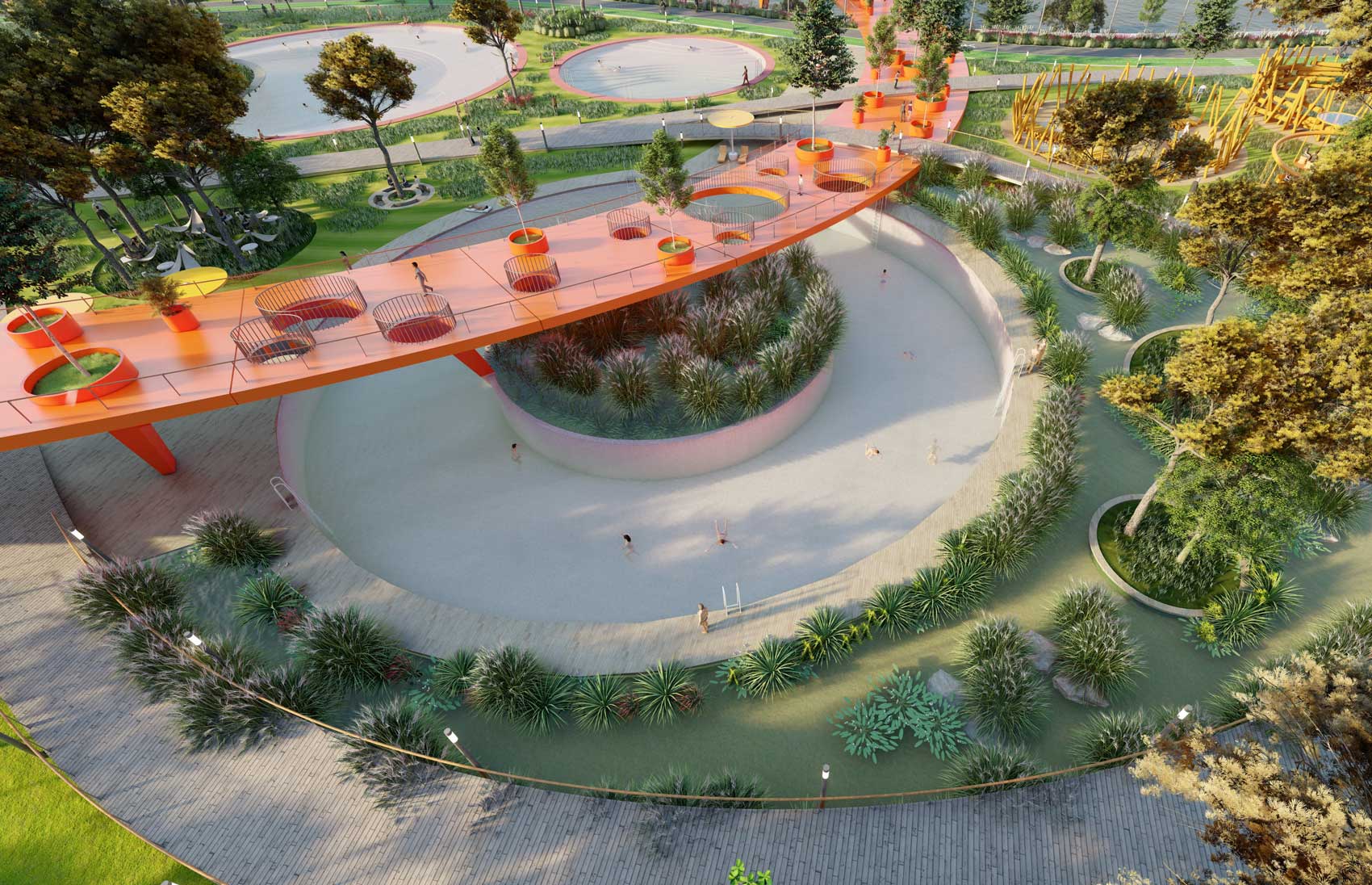
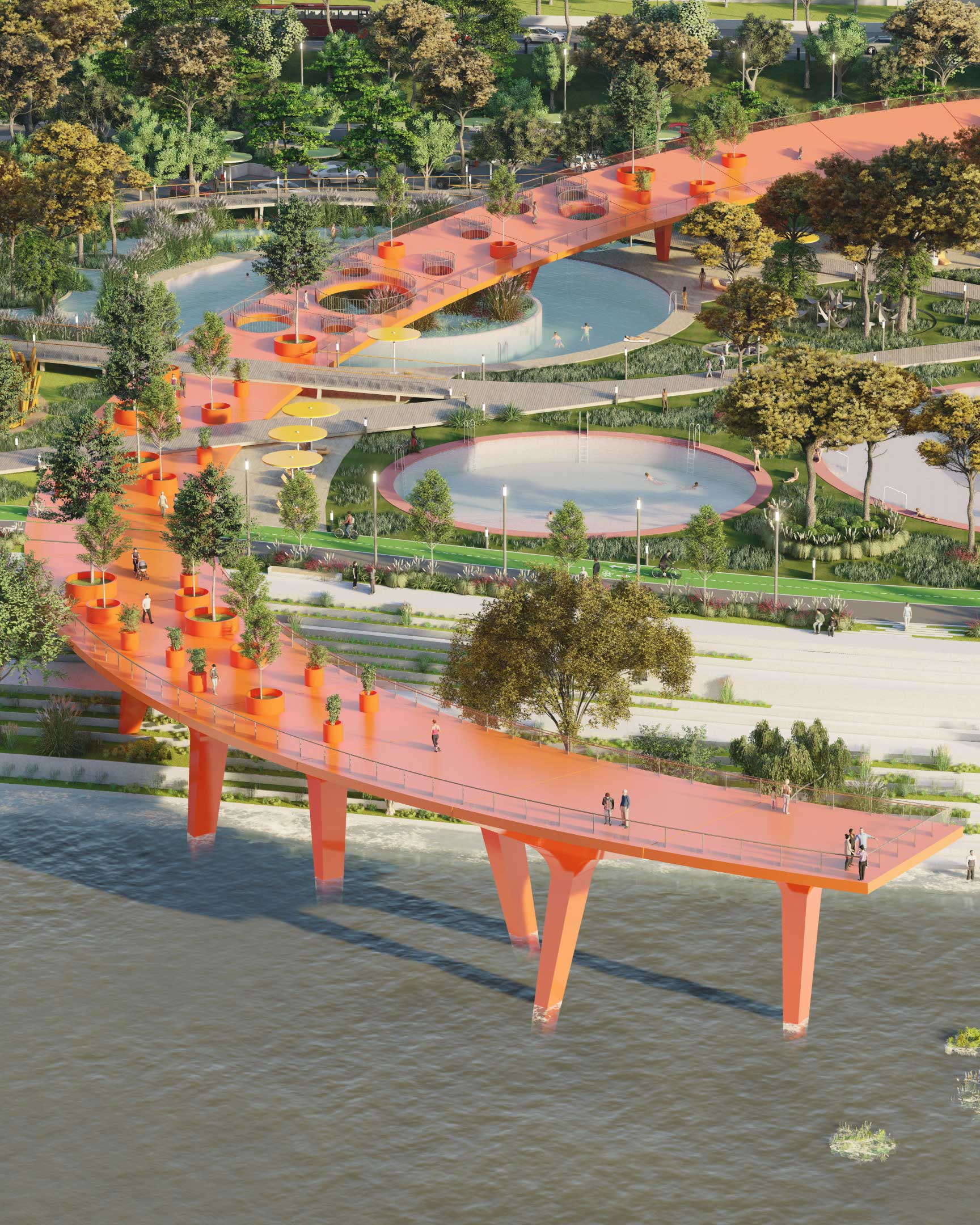
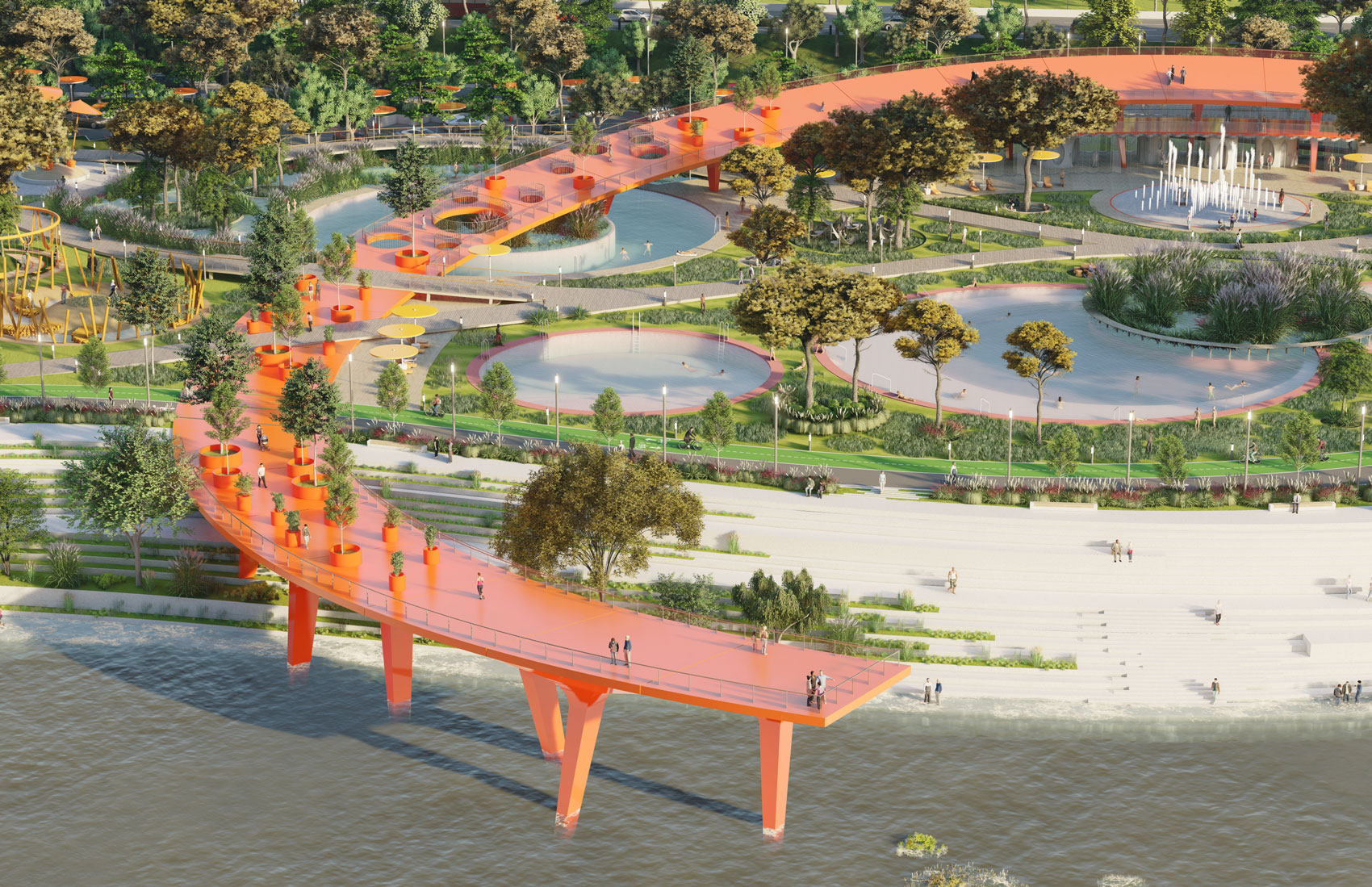
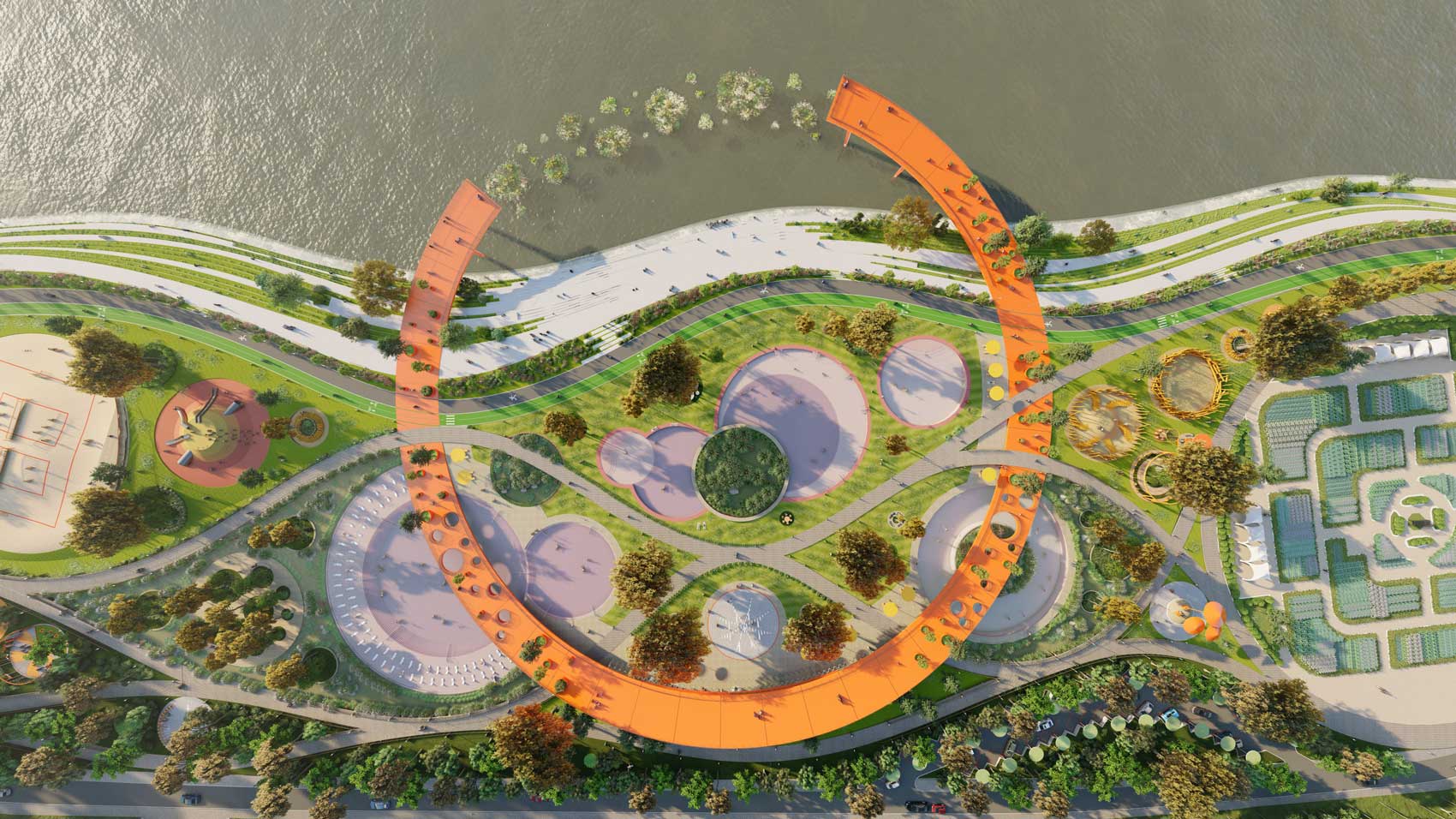
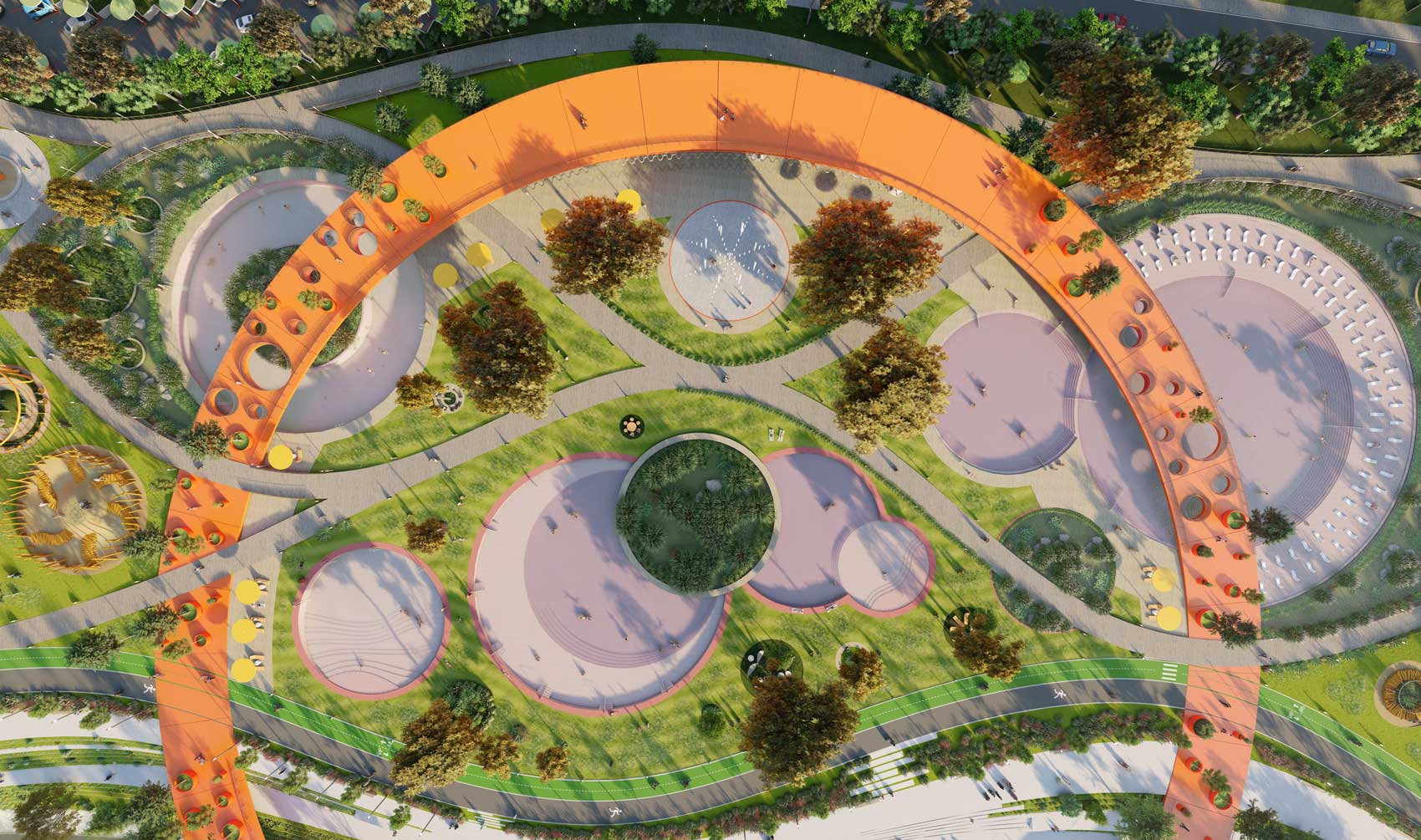
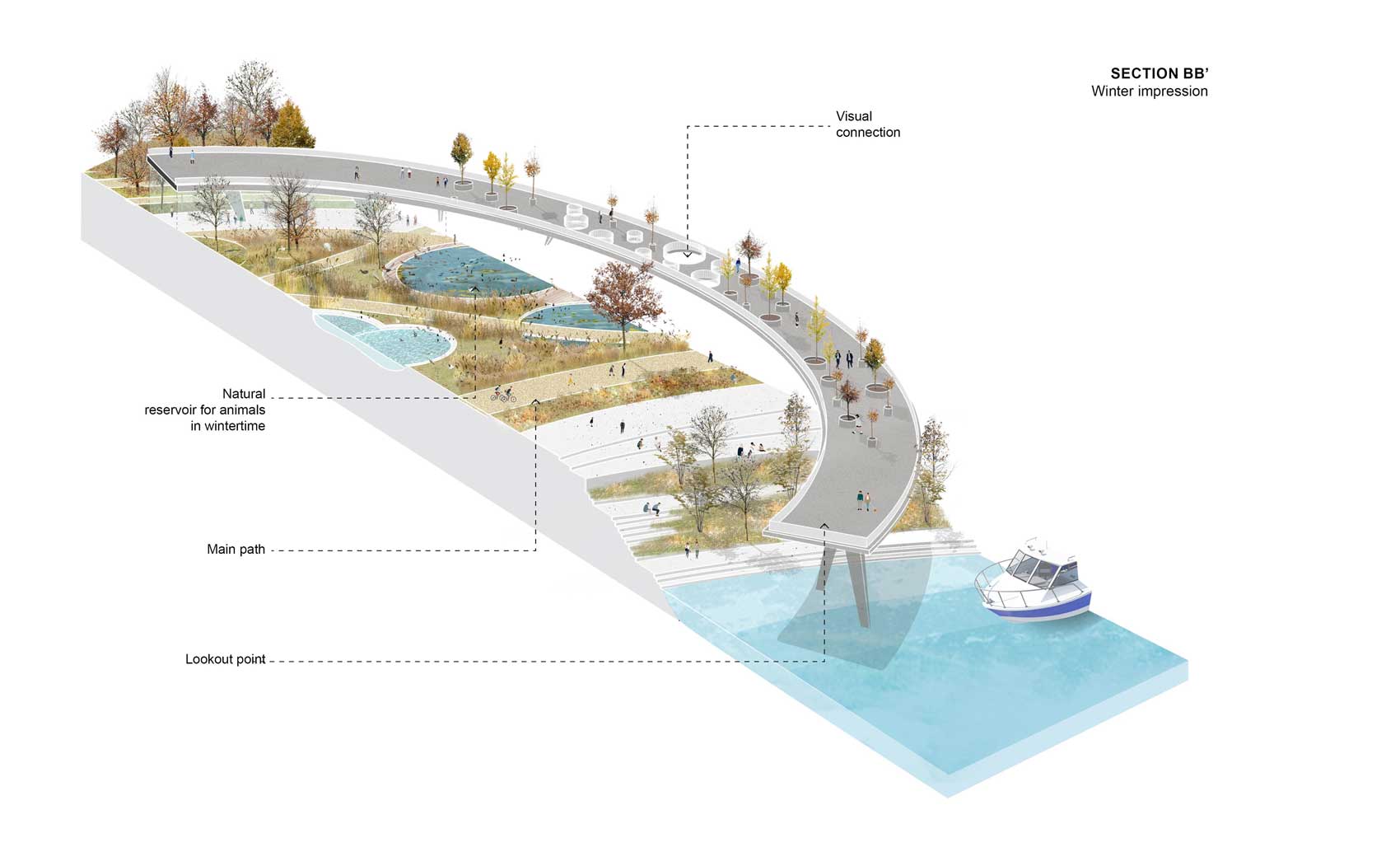
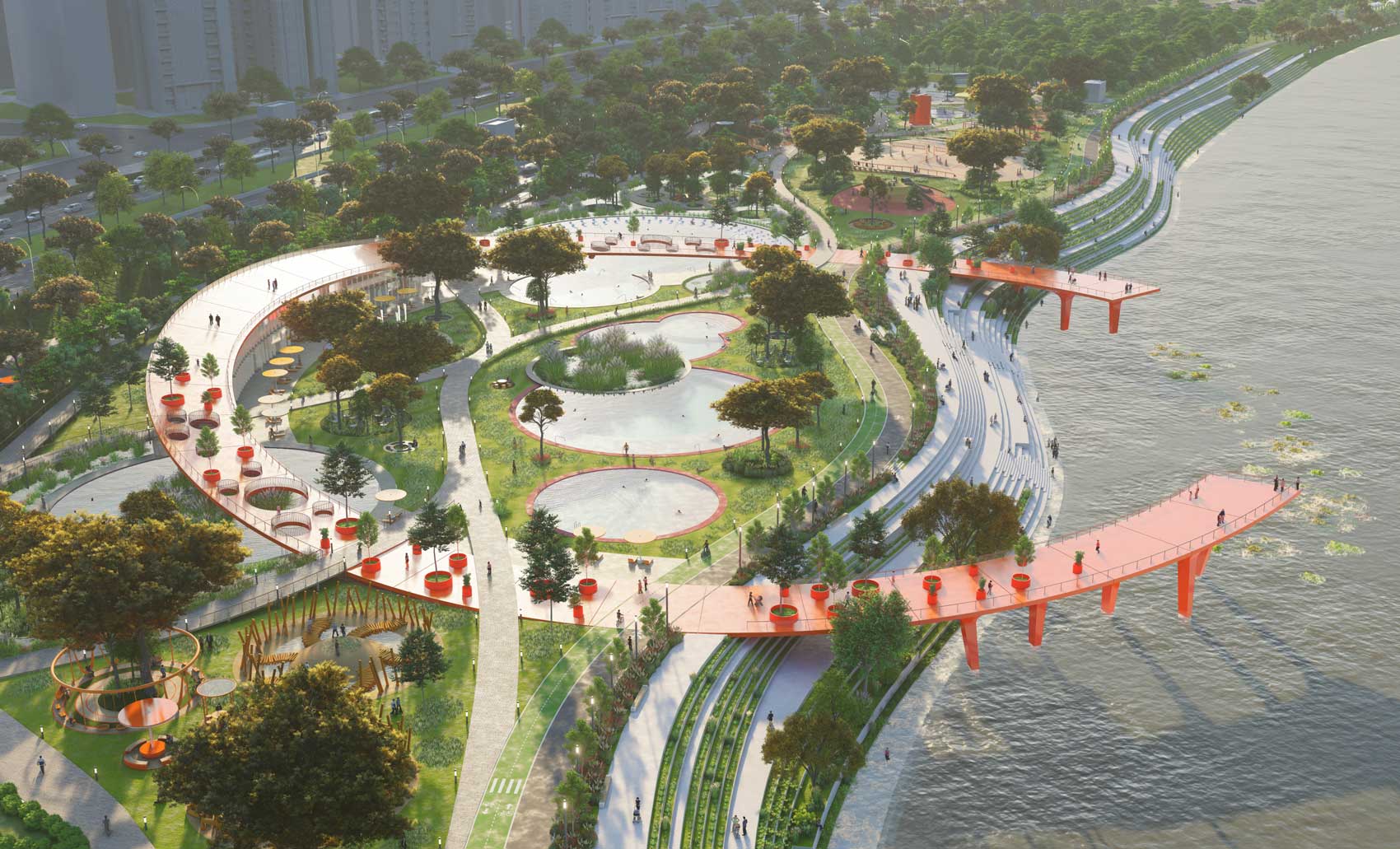
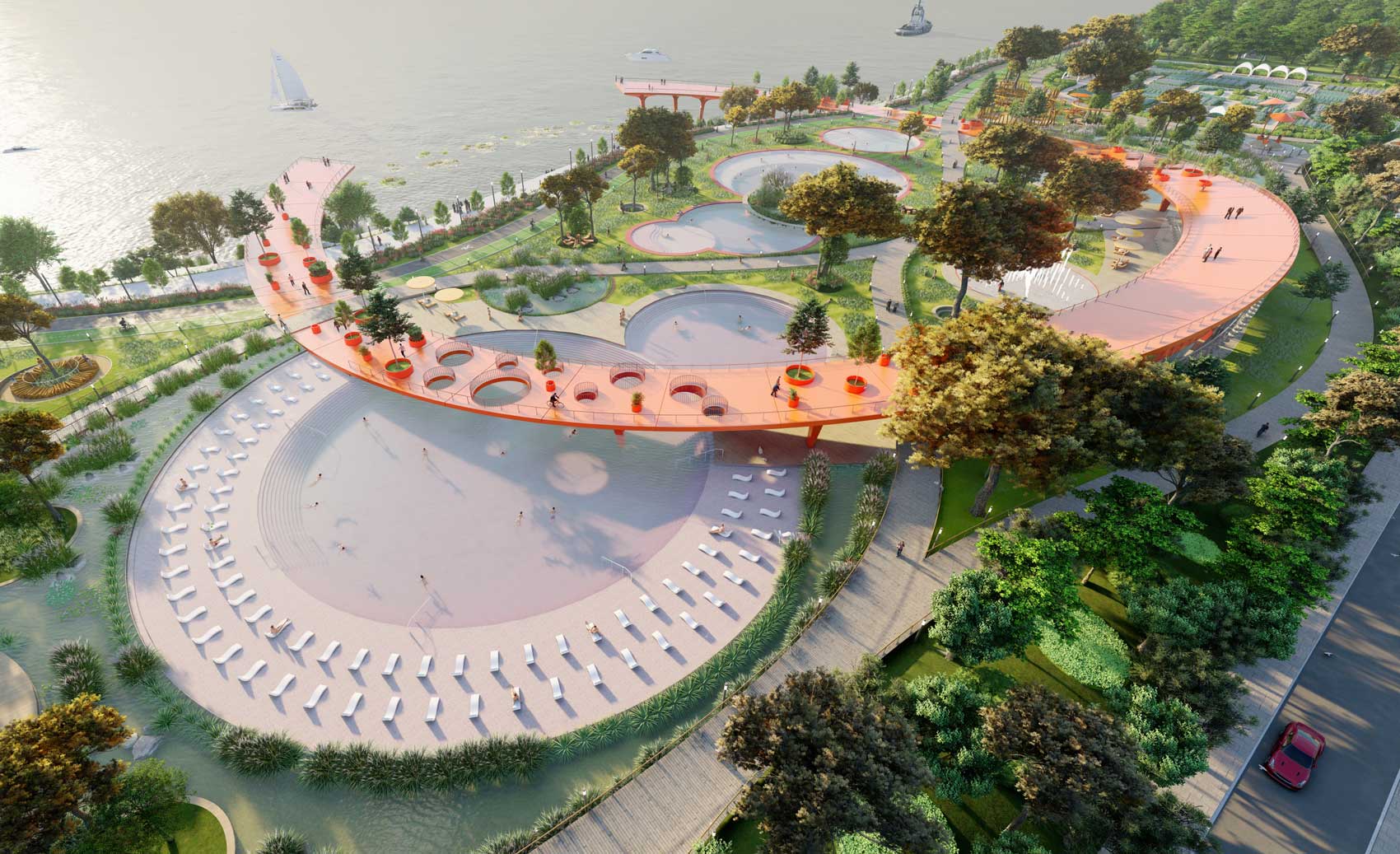
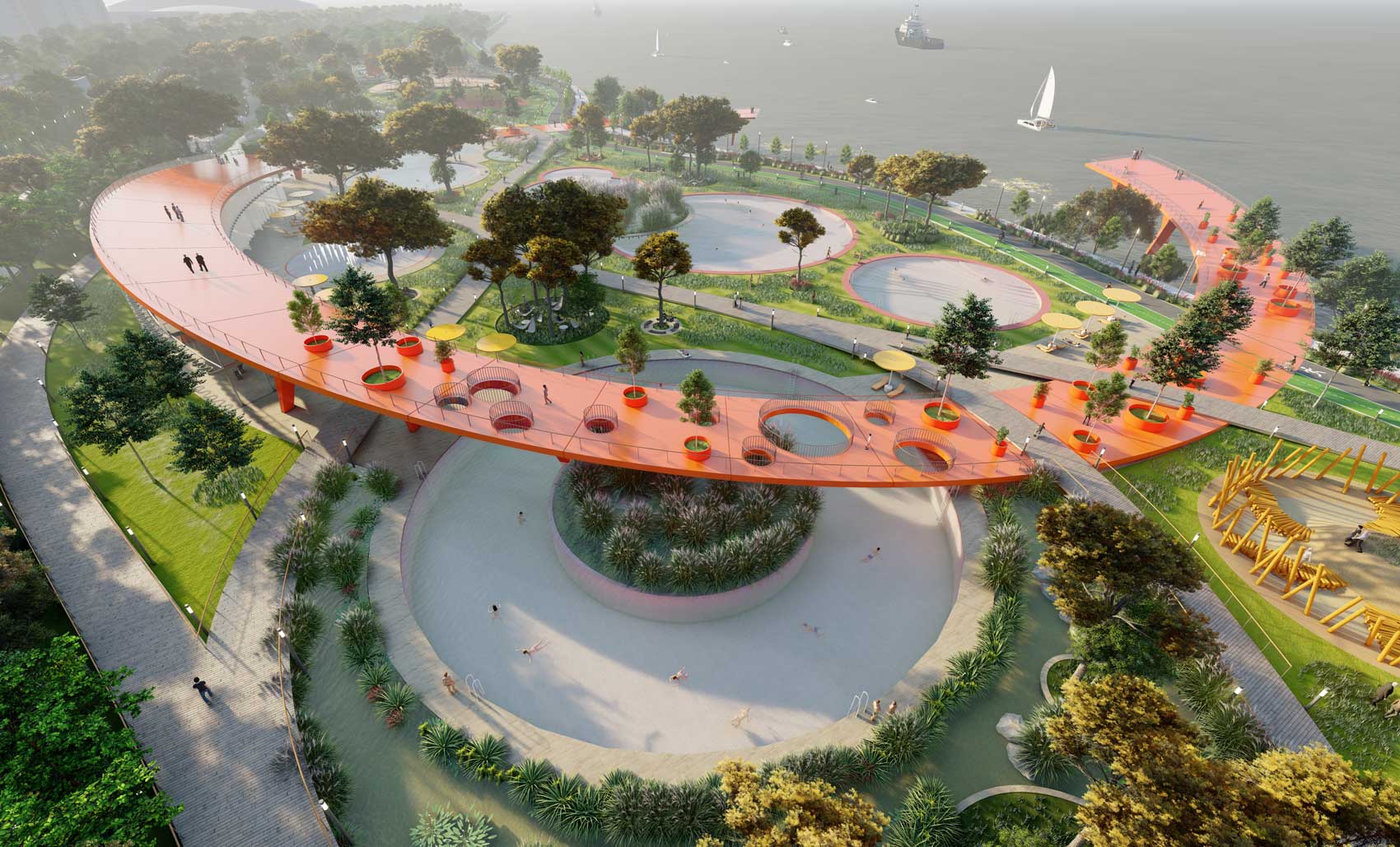
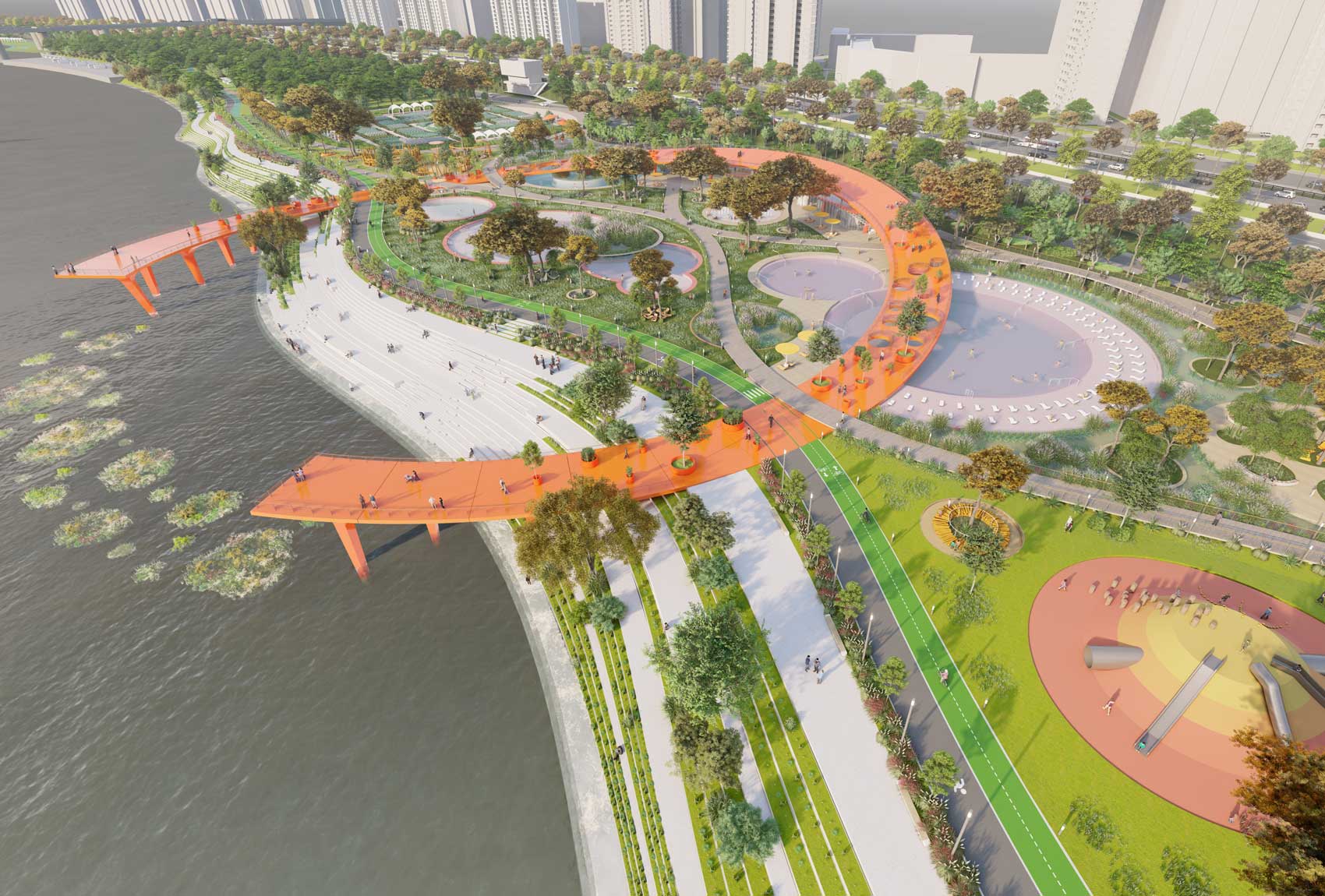
The search for this balance between nature & architecture, is the core of our design, translating the Taegeuk into an orange circular object, a pedestrian walkway shaped as a ring that encloses the main pool facility. This circular walkway is interrupted at the riverbank, hovering over the river, a belvedere allowing amazing views over the Hang River.
© 100architects
© 100architects
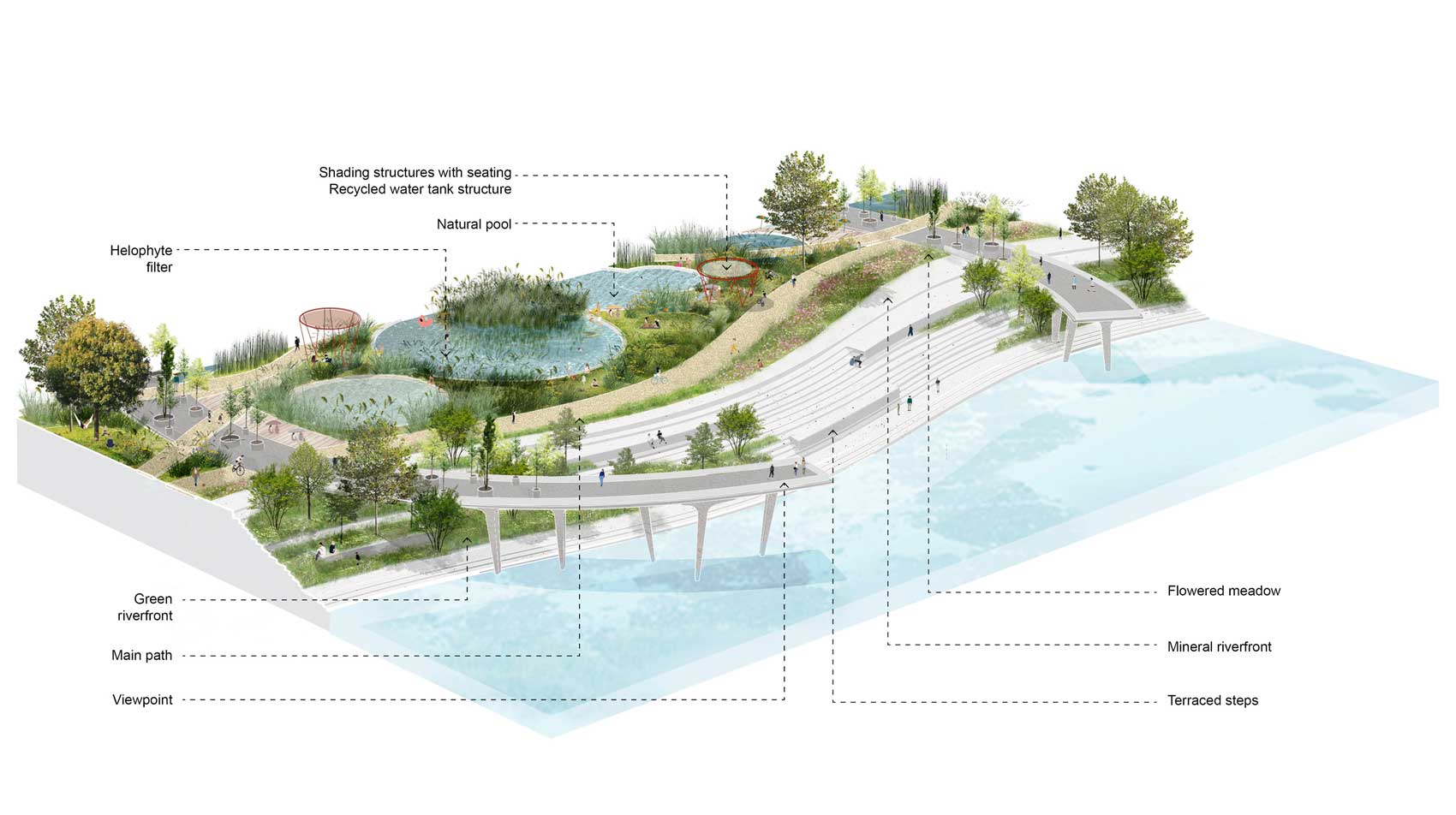
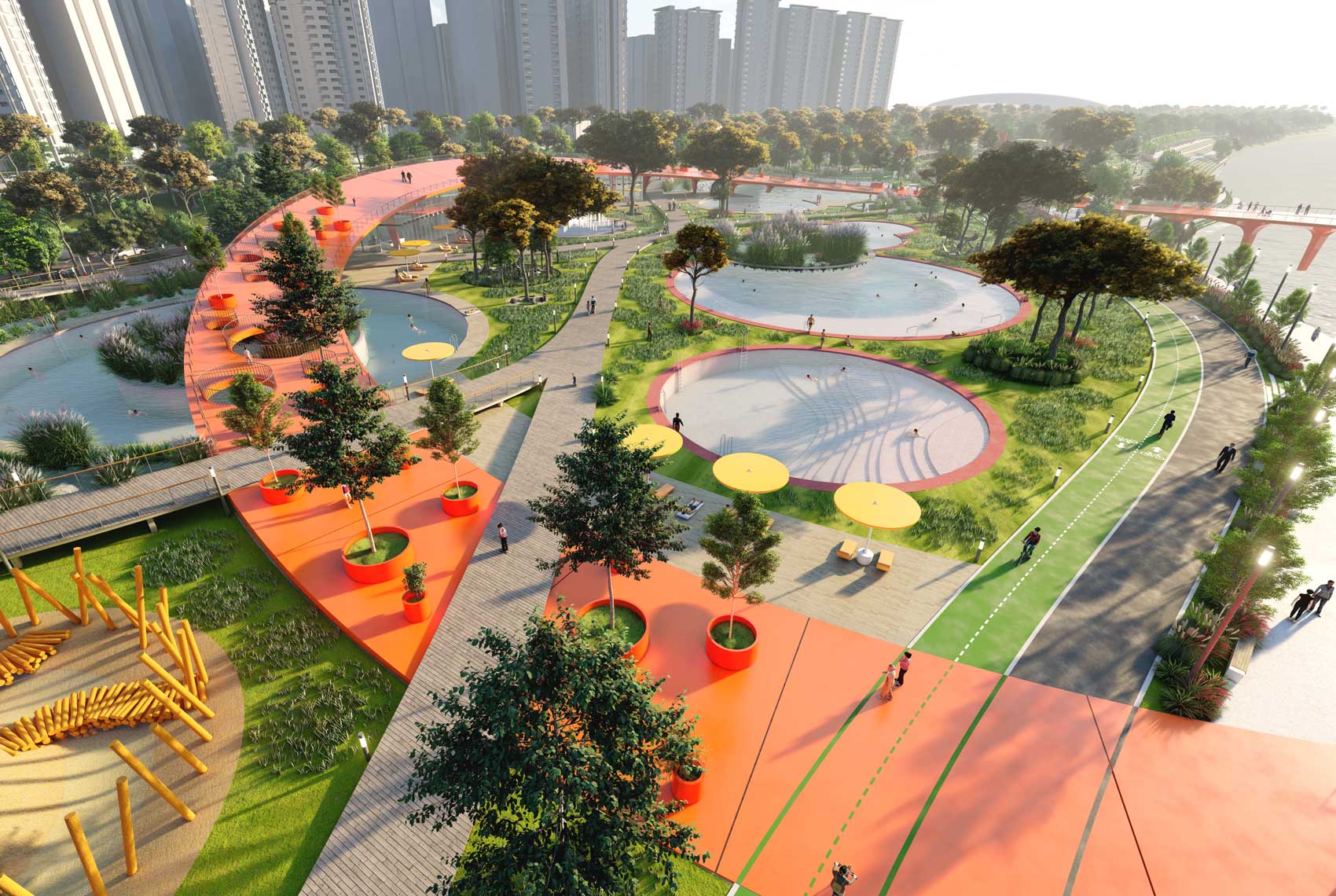
Curving upwards towards the highway, the elevated pedestrian walkway shields the pools from the traffic noise, and accommodates necessary indoor facilities under its roof at the same time. It flattens at the intersection with the riverfront promenade, in order to ease pedestrian connectivity; and finally, it protrudes over the riverbank, creating two walkable piers overlooking both, the river and the restored nature of the riverbank.
© 100architects
© 100architects
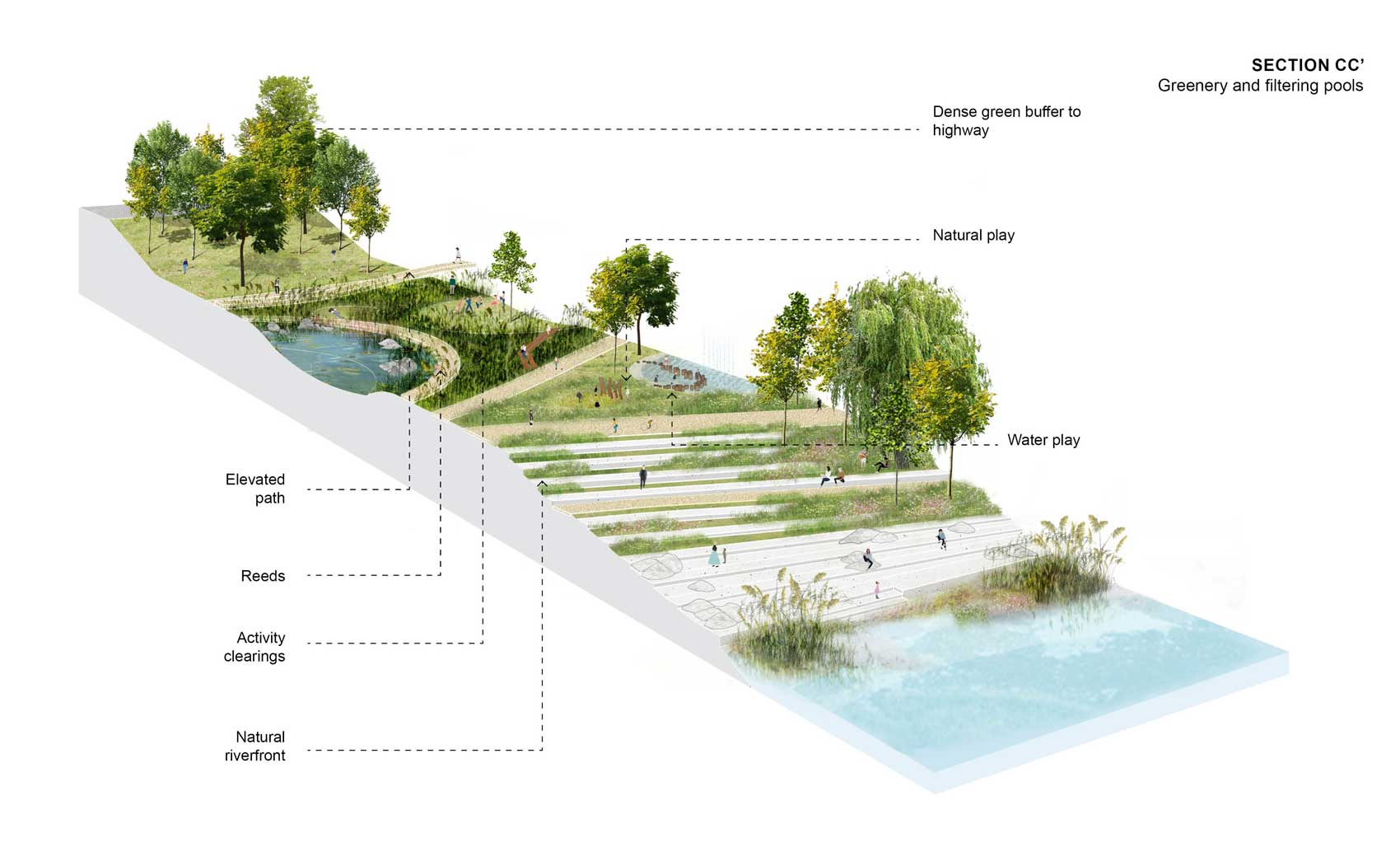
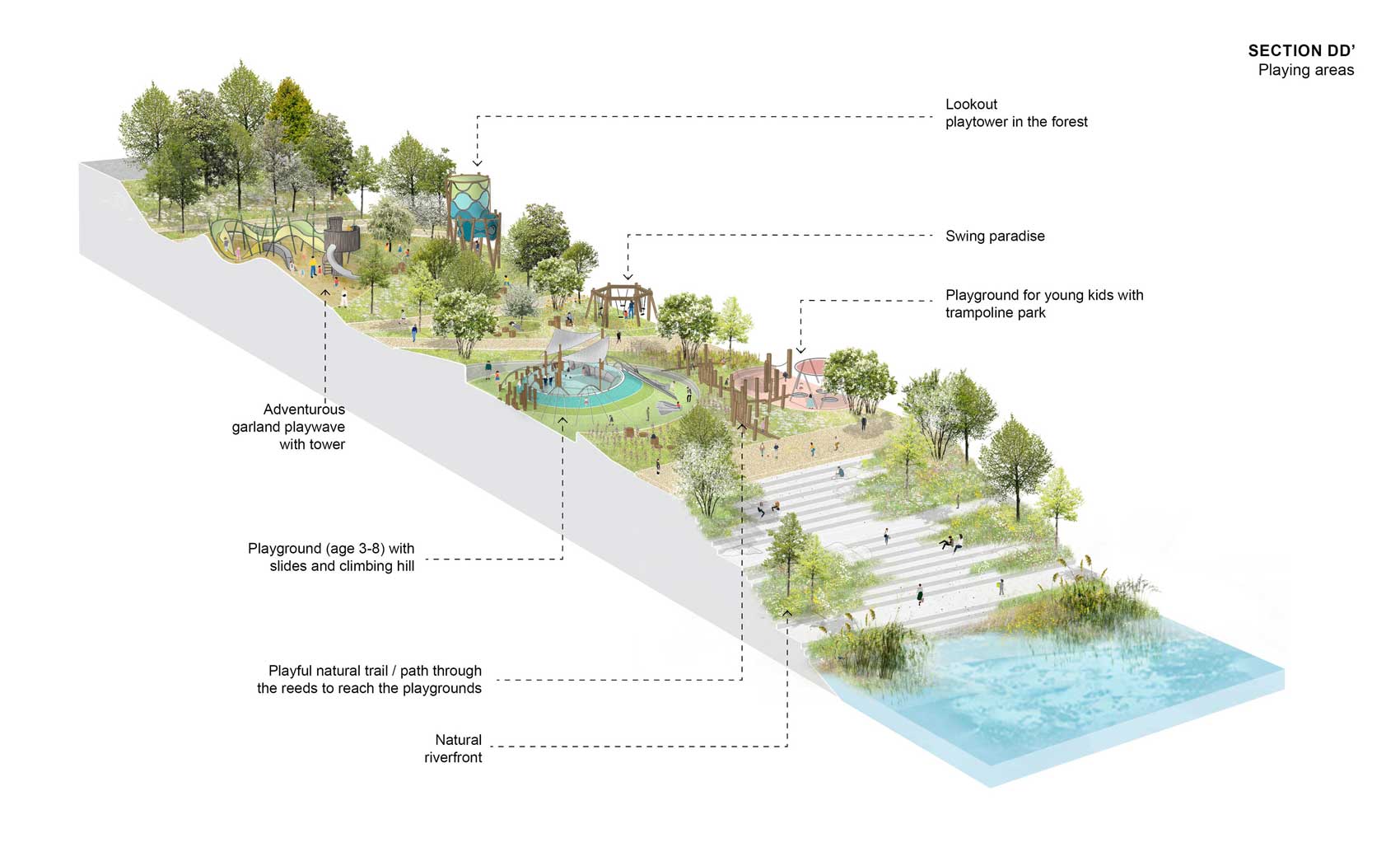
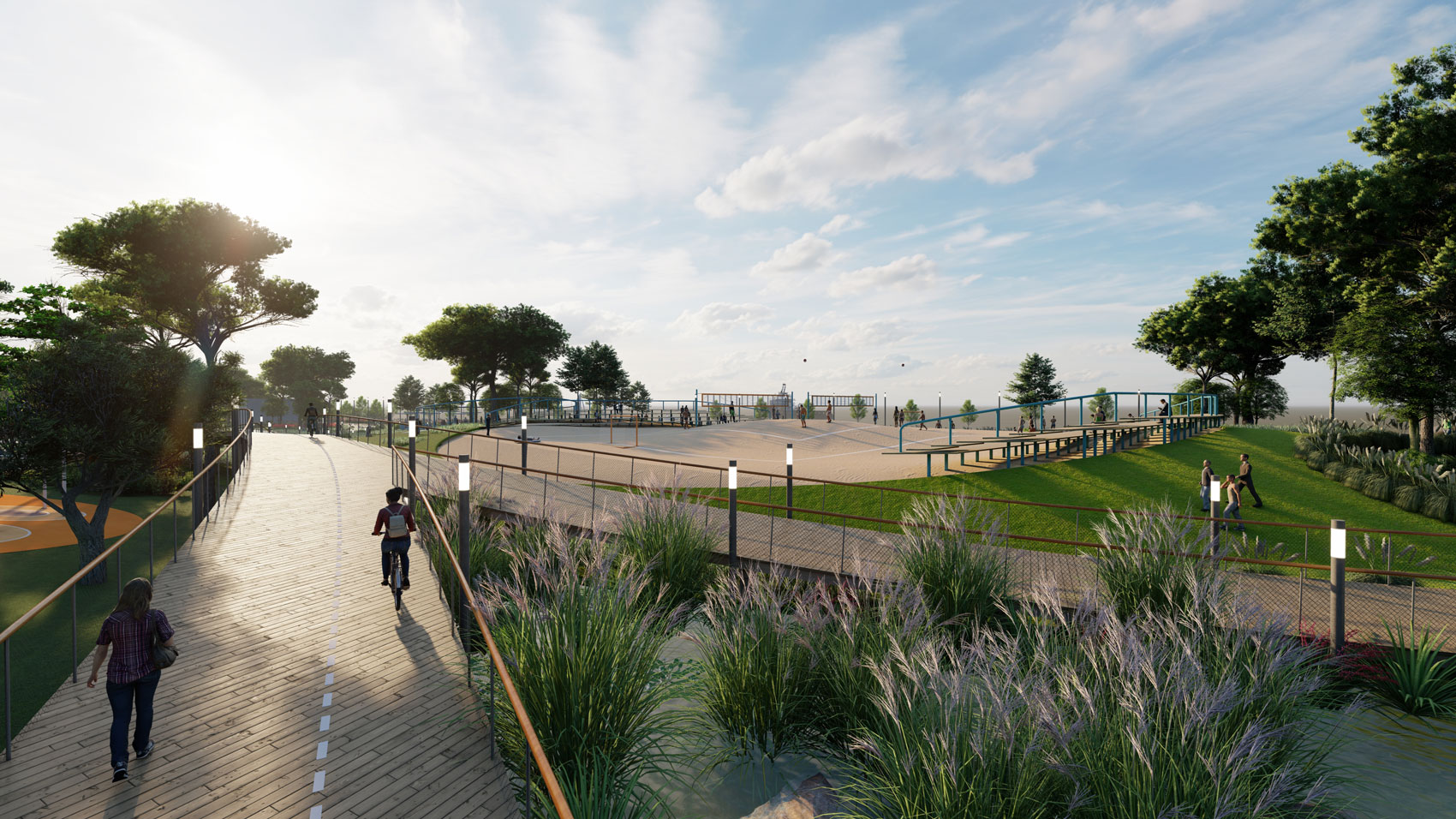
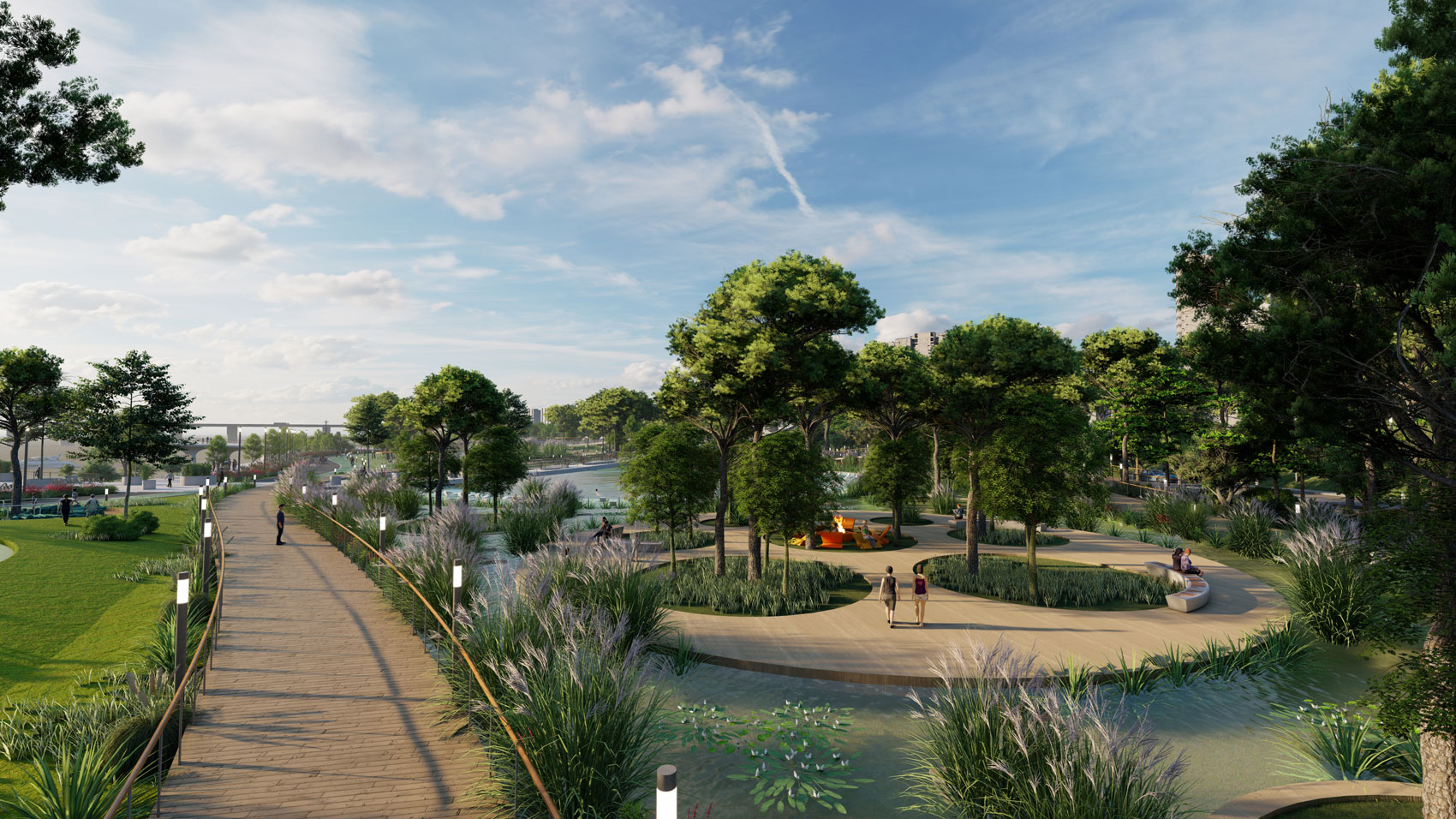
The undulating intertwined pedestrian paths create opportunities and affordances for the park’s public program. Programmatic interventions for entertainment and leisure spaces within the natural environment are envisioned, offering valuable interactions with nature. Spaces for practicing a wide range of sports, resting areas, shading structures and natural kids playscapes, resulting in a multifunctional park suitable for all kind of ages.
© 100architects
© 100architects
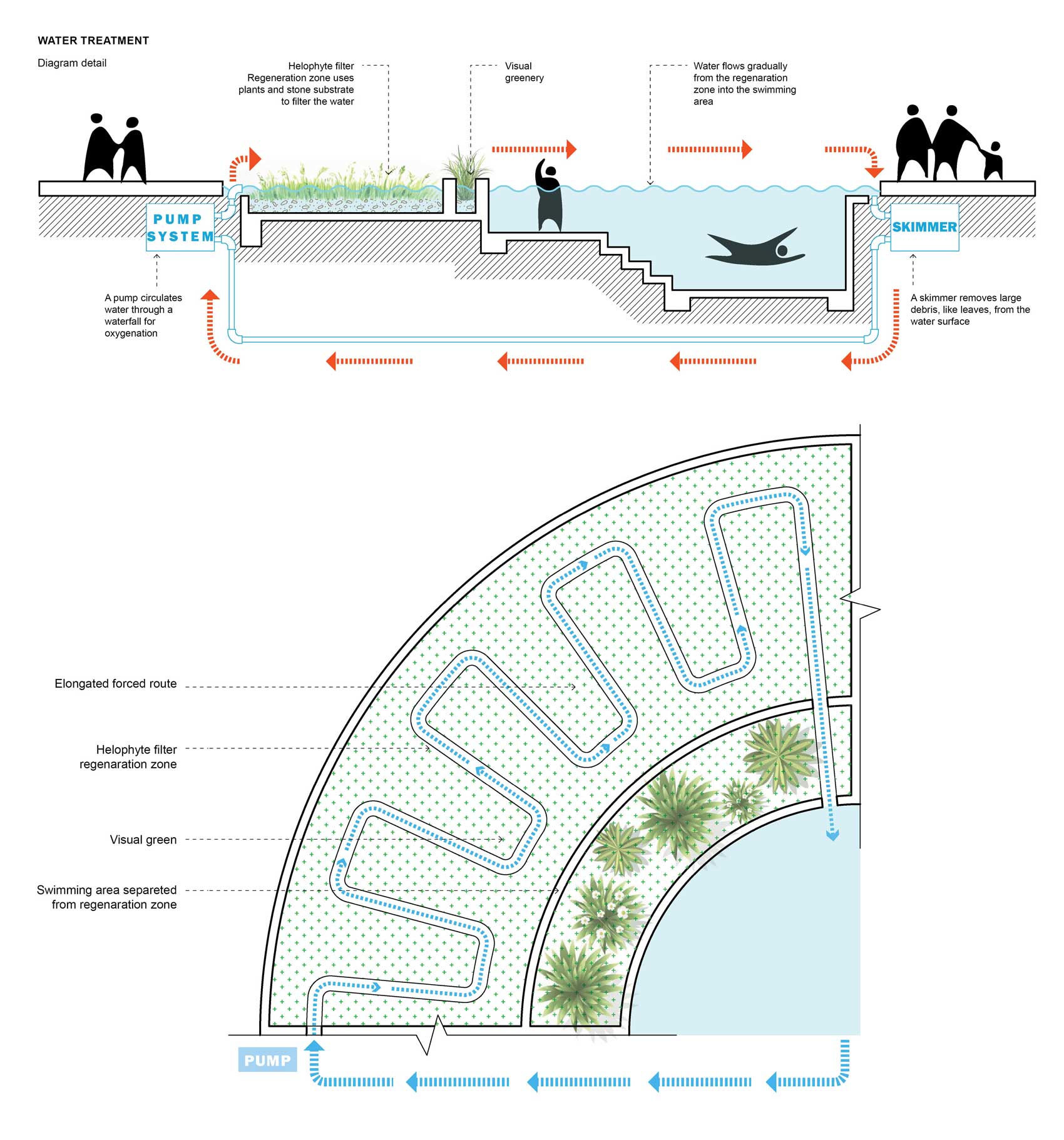
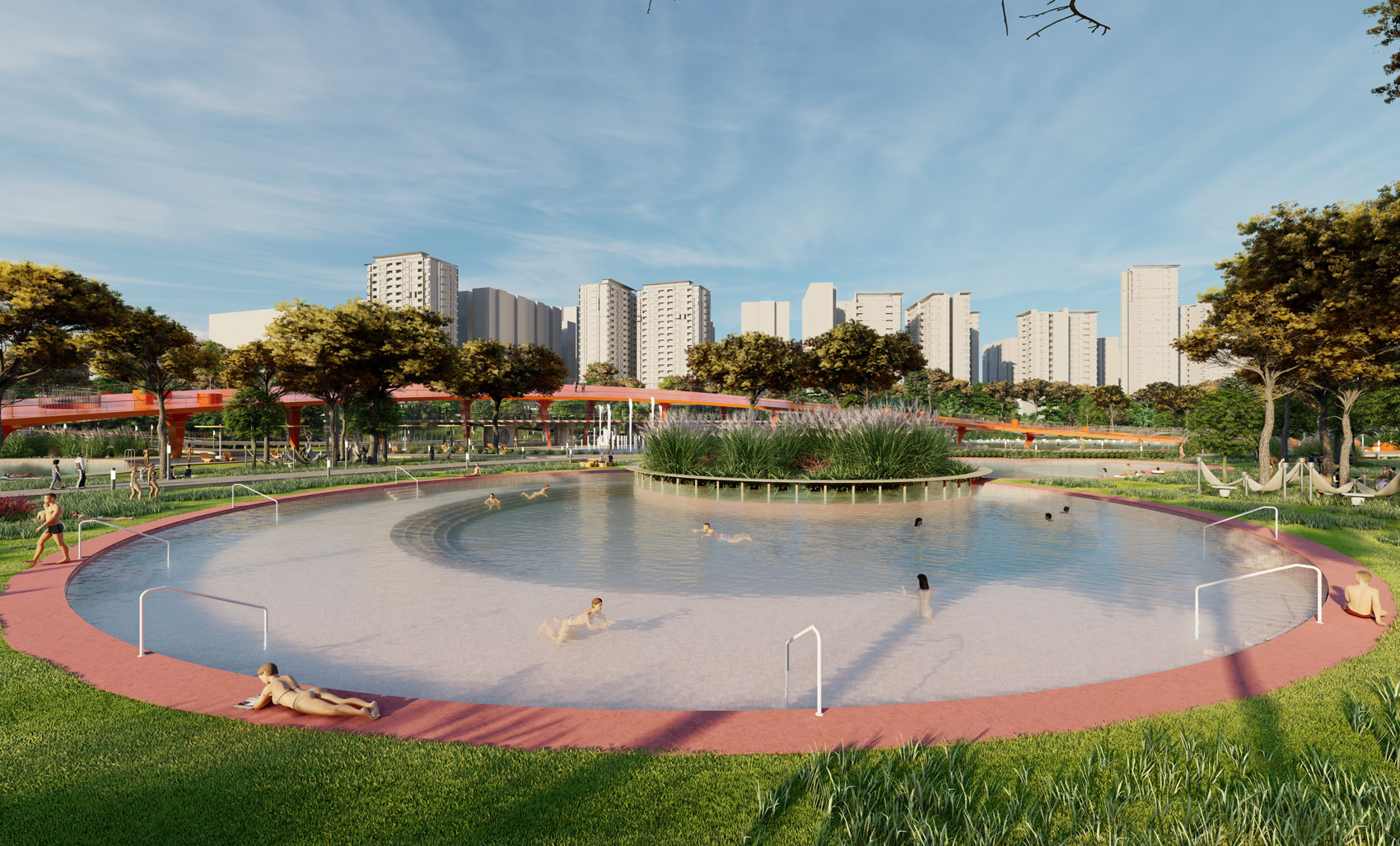
All pools are designed in a sustainable way to naturally clean its water by using a helophyte filtering system with reeds planted around the pools. The treatment of cleaning the water is naturally done by bacteria living in the roots of the planted reeds.
This project is a creative international collaboration between 100 Architects (Shanghai), Carve (Amsterdam) and Urien (Seoul), with the local coordination & support of the landscape architect Walter Ryu.
© 100architects
© 100architects
© 100architects
© 100architects
© 100architects
© 100architects
© 100architects
© 100architects
© 100architects
CREDITS:
Project Name: The Orange Ring
Design: 100 Architects (Shanghai) + Carve (Amsterdam)
100 Architects’ Design Team: Marcial Jesús, Javier González, Lara Broglio, Mónica Páez, Keith Gong, Cosima Jiang, Ponyo Zhao, Elena Michelutti.
Carve’s Design Team: Elger Blitz, Marleen Beek, Elke Krausmann, Susanna Vissani.
Local Partner in Seoul: Walter Ryu
Korean Landscape Architects: URIEN
Client: Seoul Metropolitan City, Hangang Project Headquarters.
Location: Jamsil Hangang Park, Seoul, South Korea
Area: 75,000 m2
Status: Concept Design
About
The Orange Ring it is a project that will contribute to the city brand identity with a functional and eye catching project that will serve the entire city.
More images
© 100architects
What is a metropolitan intervention?
This is the largest scale type of interventions that take place in the public realm of a city, related to the altering of an important portion of a city. A type of intervention of such magnitude and notoriety that impacts not only at neighborhood scale, but rather the way the city is perceived and experienced, becoming a metropolitan landmark, a metropolitan super-attractor of social interactions, and a trendy international destination for local citizens & tourists.
This typology combines urban planning and landscape design, intervening the city at waterfronts, bridges, parks, or whole districts, by improving the quality of its public realm, creating spaces of opportunity for collective outdoor leisure, mixed-use entertainment spaces, play & joy, etc. Interventions of this proportions catalyze major social interactions across the city, boosting commercial activity and real estate development.
This typology is normally used by Municipalities & Local Governments to revitalize public spaces and establish a unique brand and identity for their cities, making them more functional, aesthetically pleasing, and engaging for the community, with innovative urban solutions that enhance the quality of life and promote economic development & tourism.
Projects
insta100

Loved seeing the kids get along!!
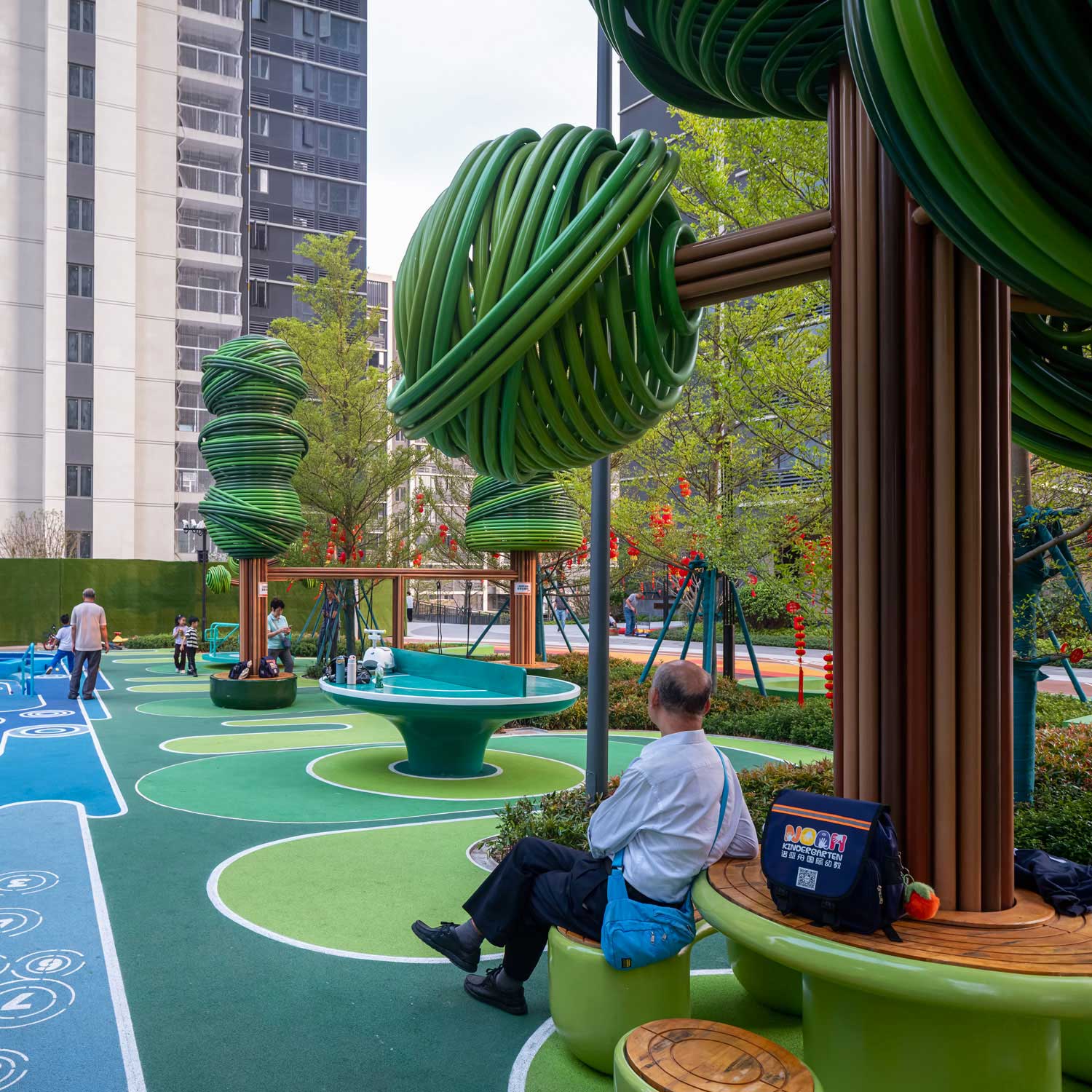
There are places that just stop you in your tracks. This one does exactly that! every view, every moment feels like it’s straight out of a dream.
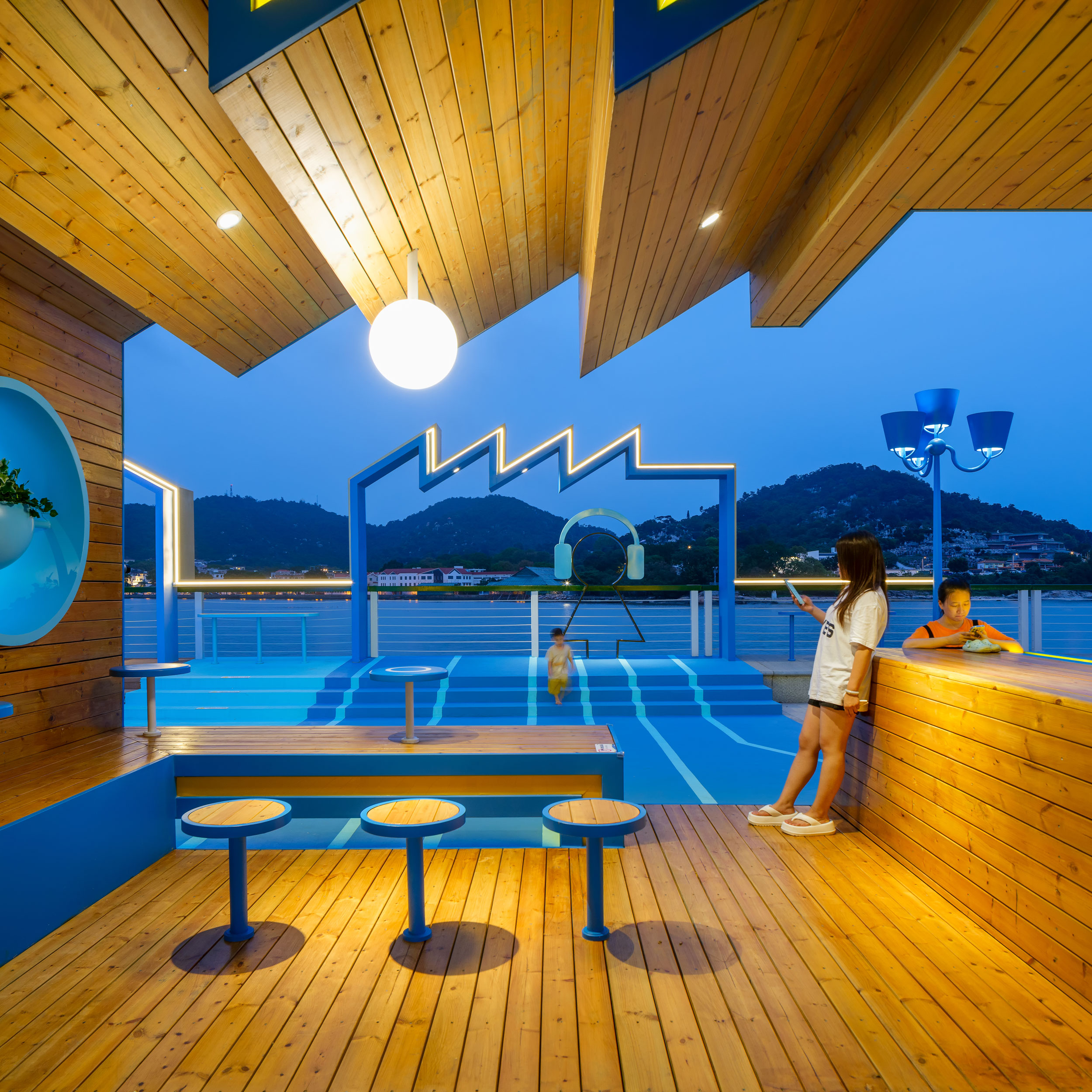
My favorite place from now on!!!!!!!!
Publications
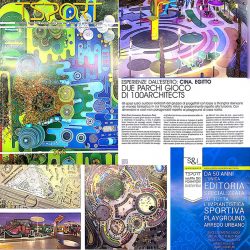
Wired Scape, designed by 100architects, is a groundbreaking playscape in Guangzhou, China, blending natural landscapes with dynamic, fluid forms. This innovative public space offers a unique play experience for all ages, combining nature, design, and adventure into one captivating destination.

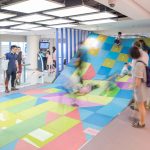
It is an explosion of colors, where vibrant hues blend seamlessly to form four distinct rectangular stripes, each representing a unique activity zone. These stripes create a dynamic flow, inviting users to engage with the space in different ways. The interplay of colors and design transforms the area into an interactive and playful environment.
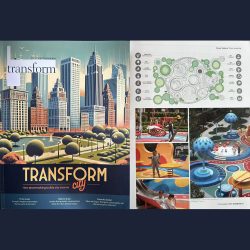
It’s not classical landscape architecture where design focuses on elegant alignment with a space’s existing character, but “injecting identity into places that do not have one,” he says.
Moments & Experiences




 Home
Home
 Projects
 Moments
 Products
 About
About